
Wimbledon Prize Money and Betting: Why the £53 Million Fund Changes the Odds
 Available in US
The Wimbledon 2026 prize fund stands at a record £53.55 million — a 7% increase on 2025, and exactly double what was on offer a decade ago in 2015. That number matters for bettors in ways that go beyond the obvious. Yes, larger prize money makes Wimbledon a bigger event commercially and attracts the deepest possible field. But the specific distribution of prize money by round — and the particular psychology it creates in players at different stages of the tournament — has direct implications for how you should assess certain markets, particularly ante-post outrights and match handicaps in the early rounds.
“We’re incredibly proud of the growth over the past 10 years, and this year’s 7%,” said AELTC chairman Deborah Jeavons at the prize announcement in June 2025. That consistent upward trajectory is not accidental: Wimbledon’s commercial scale, led by broadcasting rights that represent nearly half of the tournament’s total revenue, directly funds prize money growth, which in turn deepens the competitive field and the betting market that surrounds it. The link between commercial scale and betting market quality is tighter at Wimbledon than at any other Grand Slam.
Prize Money by Round: What Each Stage Pays in 2026
The round-by-round structure of Wimbledon prize money in 2026 begins at £66,000 for a first-round singles loss — a 10% increase on 2025. This is the number that most directly influences first-round betting dynamics. At £66,000 for losing in round one, every player in the draw has meaningful financial incentive to compete at full intensity from the opening ball. Tanking — playing below effort to preserve energy or avoid injury risk — simply does not happen at Wimbledon in the way it occasionally surfaces at smaller events where prize money is negligible and ranking points are the primary consideration.
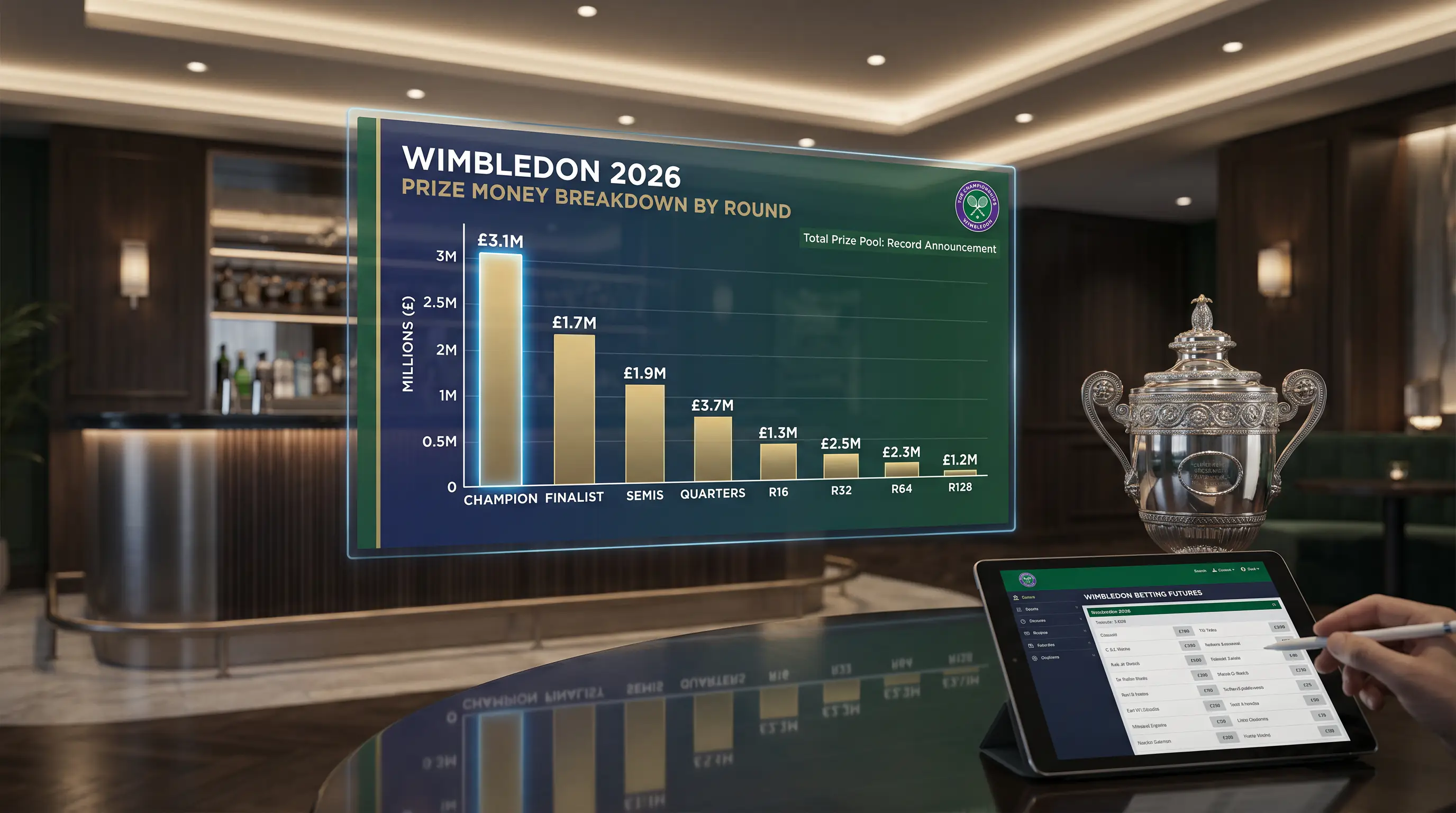
Working through the rounds: the second-round loser receives approximately £100,000; the third-round loser roughly £145,000; and the fourth-round loser approximately £215,000. These figures are approximate and subject to annual adjustment, but the structure creates a compounding incentive: each additional win at Wimbledon produces a meaningful financial step-change. By the quarter-finals, a losing quarter-finalist receives over £400,000. A losing semi-finalist receives approximately £700,000. The finalist receives around £2 million, and the champion takes home £3 million.
For bettors assessing match handicap and game-total markets, this structure is relevant in one specific way: from the last-16 onwards, every player remaining in the draw has won enough prize money to be financially comfortable regardless of their subsequent result. The competitive intensity does not diminish at this stage — quite the opposite — but the financial anxiety that might cause a lower-ranked player to take unnecessary risks in earlier rounds has been relieved. Match quality and tactical purity typically improve from round three onwards as a result.
How Prize Money Affects Player Motivation — and Your Bets
The prize money structure at Wimbledon creates three distinct motivational profiles that are relevant for betting.
Profile one: the established top-20 player who is financially secure and highly professional. For this player, the round-by-round prize money is a background variable — significant but not the primary motivation, which is ranking points and tournament prestige. This profile produces the most predictable match-by-match performance and the most reliable form-to-outcome correlation.
Profile two: the player ranked 60th to 120th in the world who relies on prize money as a meaningful part of their annual income. For this player, reaching round three (approximately £145,000) versus losing in round two (approximately £100,000) represents a meaningful financial difference. The motivation to compete fully is at its highest in the second round, and these are the matches where I find the most reliable straight-sets handicap opportunities for the higher-ranked player who is heavily favoured — the opponent is fully motivated, but the quality gap is real.
Profile three: the qualifier or lucky loser who has never before earned this level of prize money in a single tournament. First-round prize money of £66,000 is, for some qualifiers, their entire annual earnings from the prior season. The financial relief of securing that sum can occasionally manifest as reduced risk-taking in subsequent rounds — a psychological effect that is real, if difficult to quantify precisely. I treat it as a minor factor, not a primary driver.
Equal Prize Money and the Women’s Draw Implication
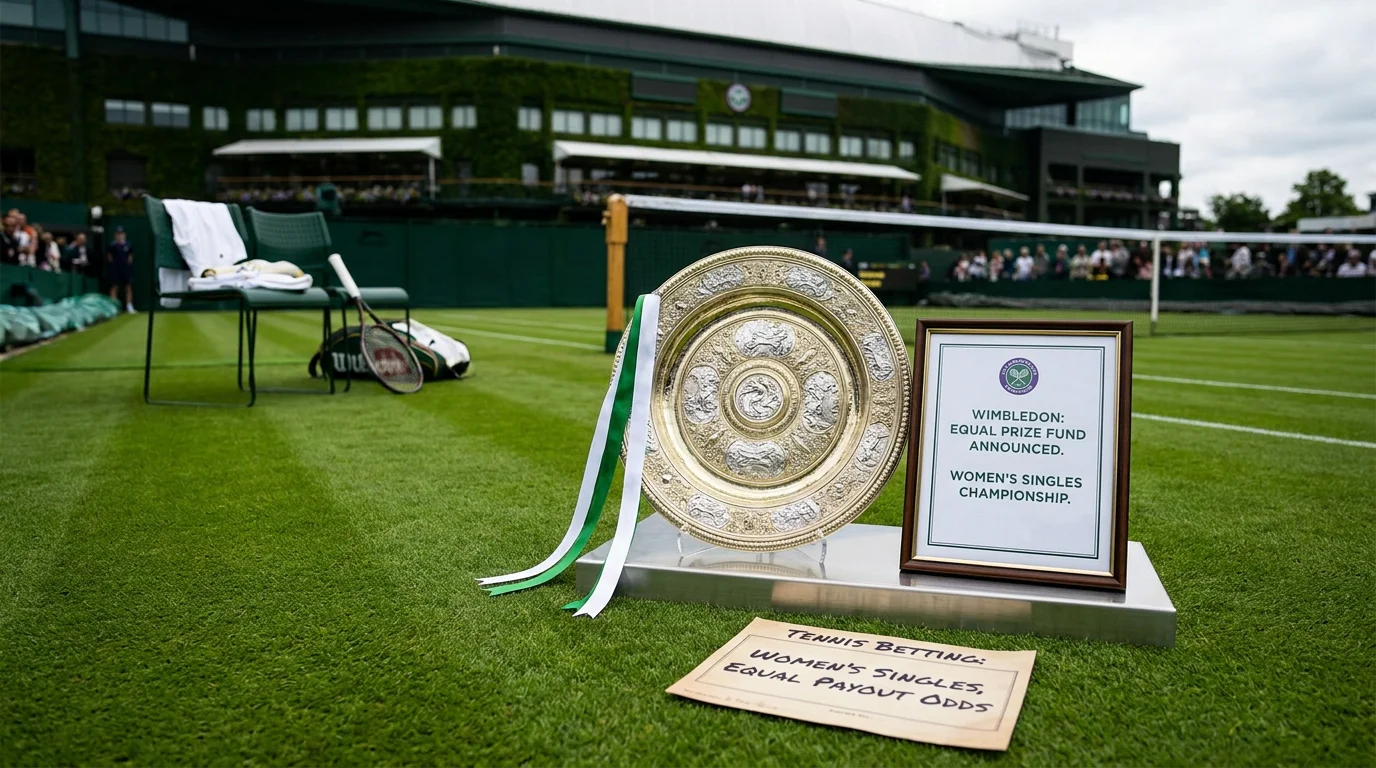
Wimbledon has paid equal prize money to men and women since 2007 — a policy that has concrete betting implications beyond the symbolic. Both singles champions take home the same £3 million in 2026. Both finalist runners-up receive the same amount. The parity runs through every round of both draws, which means the financial motivation structure I described above applies equally to female professionals. There is no prize money discount in the women’s game at Wimbledon that might affect competitive intensity at any stage.
Where this matters for betting is in the comparison with non-Grand-Slam events. At the WTA 1000 level and below, female players are sometimes operating in prize money environments significantly below the equivalent ATP event. Wimbledon’s parity means that a female player ranked 80th in the world faces an identical financial incentive structure to her male equivalent when they walk onto Court 14 for a first-round match. The competitive urgency is equivalent. Bettors who mistakenly assume the women’s draw is less “serious” in its early rounds are misreading the motivation picture.
The other implication is that the women’s draw is genuinely more open in terms of betting value. Not because female players are less consistent — they are more consistent in their approach to match preparation — but because the grass-court surface produces more volatility in the women’s game than in the men’s, where serve dominance can mask otherwise inconsistent form. The combination of a financially motivated field and higher grass-court volatility is why women’s outright markets have historically offered more mid-range value than the men’s draw, where the price difference between the top four and the rest is often enormous.
Withdrawal Risk at Wimbledon: Ante-Post Bettors Beware
The gap between Wimbledon’s January ante-post market opening and the tournament beginning in late June is approximately six months. Over six months, even the best-conditioned professional tennis player faces injury risk: wrist, shoulder, knee — the chronic injuries of a sport that demands explosive rotation on every shot. Withdrawal from a Wimbledon ante-post market can cost a bettor their entire stake if the operator’s terms do not include a non-runner, no-bet rule.
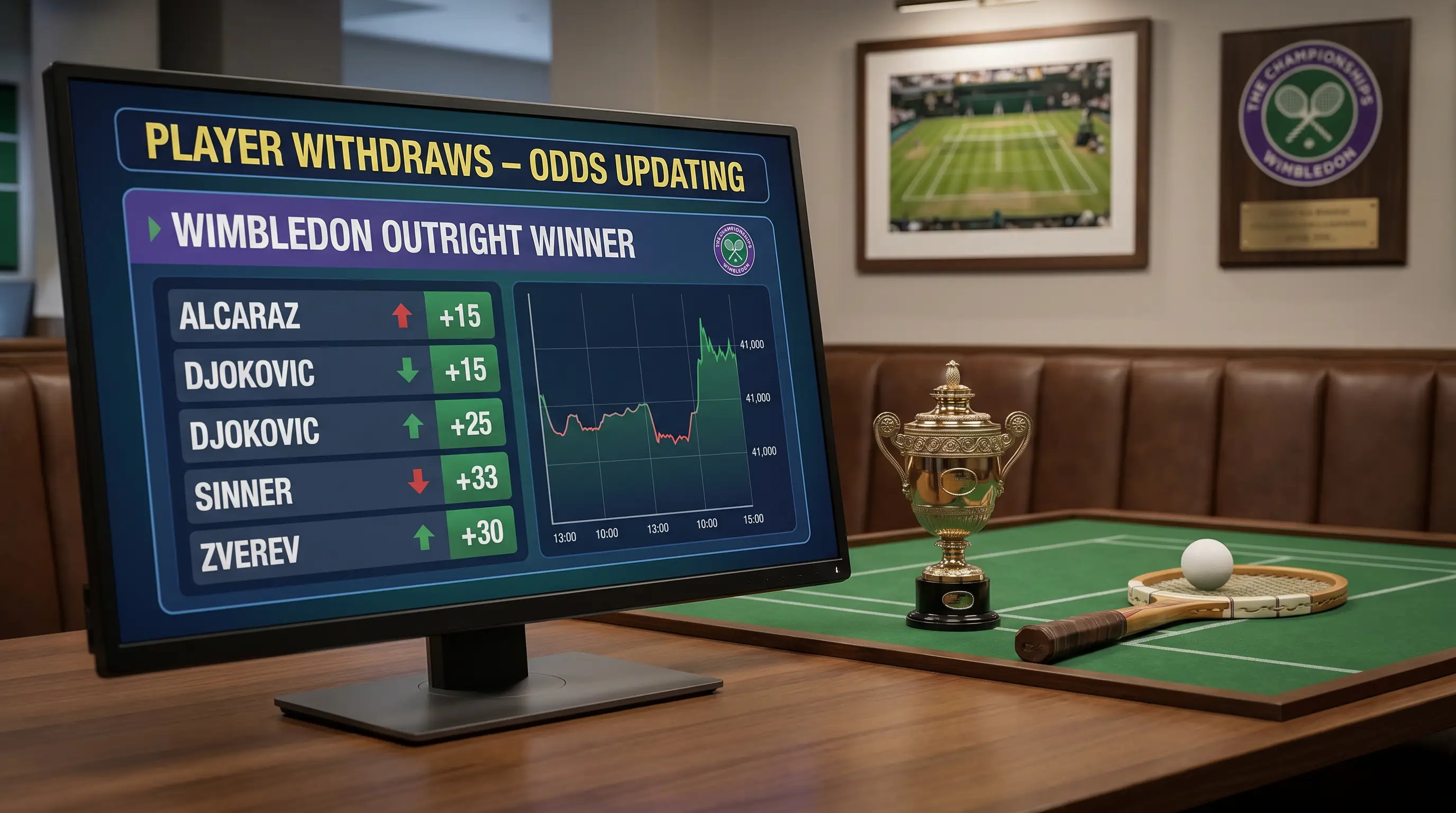
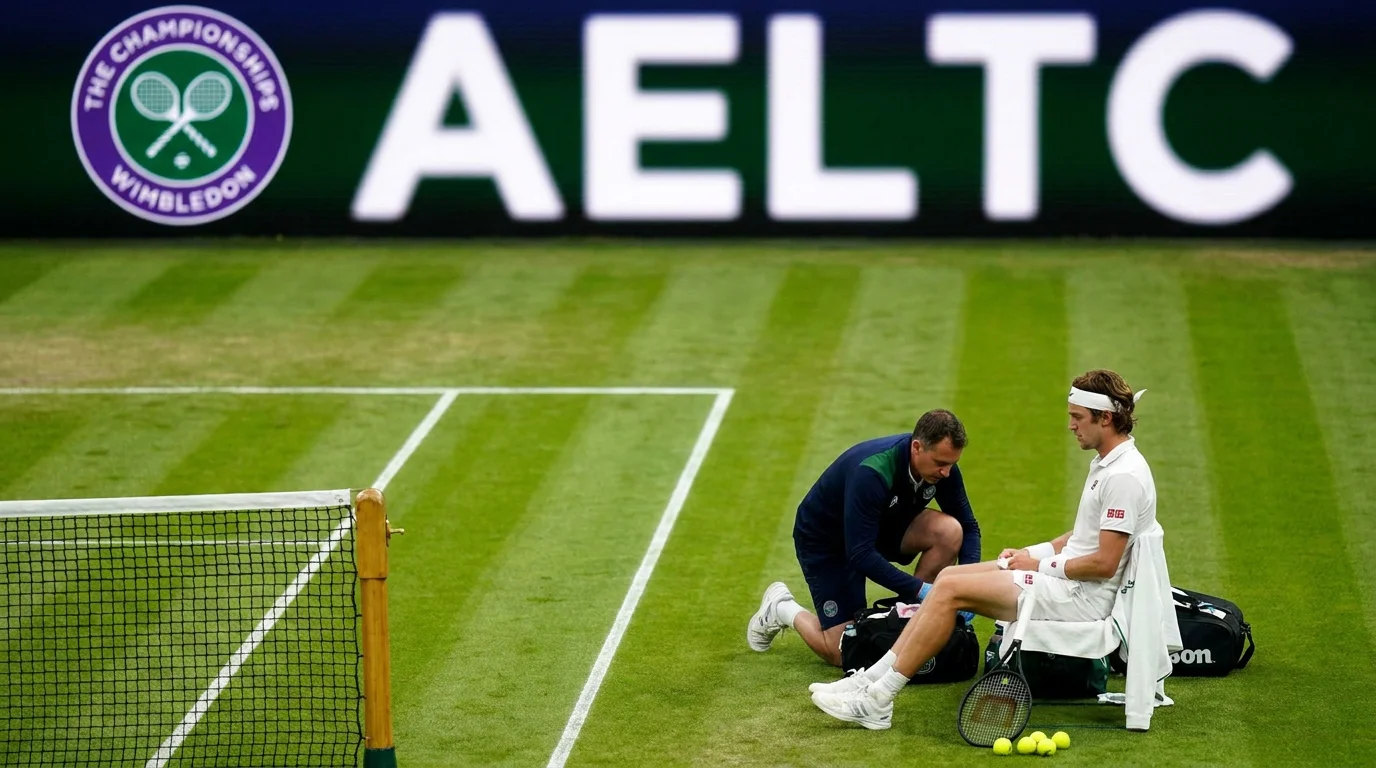
This is not a hypothetical concern. Several elite players have withdrawn from Wimbledon in recent years in the weeks before the tournament. The pattern is consistent: players who push hard to maximise clay-court results before the grass swing sometimes arrive at their warm-up events carrying fatigue or minor physical concerns that develop into withdrawals. The most-backed ante-post players are often those who play the most demanding clay-court schedules, which creates a correlation between popularity and withdrawal risk.
Before placing any Wimbledon ante-post outright bet — in either the men’s or women’s draw — confirm the operator’s rule on withdrawals. The standard is either: (a) non-runner, no-bet — your stake is returned if the player withdraws before or during the tournament; (b) ante-post rules apply — the bet is settled as a loss if the player does not compete, regardless of reason. Option (a) is clearly preferable, and some operators apply it as standard for Wimbledon singles outright markets. Others do not. The two minutes spent confirming this before placing a significant ante-post bet can save genuine money.
For the full analysis of how to time ante-post entry points and manage withdrawal risk systematically, the dedicated guide is at Wimbledon 2026 men’s singles outright odds.
Frequently Asked Questions
Articles


Written by the editors at bettingonwimbledontennis.
