
UK Betting on Wimbledon Tennis: The 2026 Analytical Guide
 Available in US
UK betting on Wimbledon tennis is a different discipline from betting on other Grand Slams -- and if you've ever wondered why your clay-court form guides fell apart the moment the fortnight moved to SW19, the surface is the answer. Grass is the only playing surface where a single break of serve in a tight third set can settle a match in under an hour, where first-serve percentages above 70% make the favourite considerably harder to shift, and where the betting lines consequently behave with their own internal logic. Wimbledon is the only grass-court major on the calendar. That exclusivity is not a marketing line -- it's a market condition.
I've spent nine years analysing Grand Slam betting markets with a particular focus on the grass season, and the single most consistent mistake I see UK punters make is treating Wimbledon as a straightforward extension of the ATP or WTA year-round tour. The players haven't played on this surface since last July. The seedings are adjusted by a grass-specific formula that diverges from the ATP and WTA rankings. The serve-and-volley patterns that define outcomes here don't exist anywhere else in professional tennis. What works at Roland Garros won't work at SW19 -- and if you're using the same analytical framework for both, you're leaving value on the table.
This guide is written for UK punters who want to understand the mechanics, the markets, and the strategy behind Wimbledon betting -- not just a list of things to click. According to a 2025 YouGov survey, 13% of UK sports bettors plan to stake on Wimbledon this season, yet the event accounts for just 11% of events UK punters are targeting across the full year. That gap between intent and relative weight tells you this is a seasonal market with concentrated liquidity and, for the prepared bettor, concentrated opportunity. Every UKGC-licensed bookmaker will be competing hard for your stake during the fortnight -- knowing how to read that competition is part of the edge.
Important: Betting on sports carries financial risk. This guide is for educational and analytical purposes. You must be 18 or over to bet in the UK. Please gamble responsibly. If betting is affecting your life, visit BeGambleAware.org or call the National Gambling Helpline on 0808 8020 133 (free, 24/7).
Five Numbers That Shape Every Wimbledon Bet This Season
- UK online betting GGY reached £7.8 billion in 2024-25, up 13.1% year on year -- and tennis is the fastest-growing sports betting segment with a CAGR of 13.83%.
- Only UKGC-licensed operators are legal for UK bettors. Since April 2025 a Statutory Gambling Levy applies across the industry, funding research and treatment at £100 million per year.
- Grass changes the probabilities: surface-specific win rates over the last 2-3 seasons are a stronger predictor of Wimbledon outcomes than general ATP or WTA rankings.
- In-play betting now accounts for 62% of the online sports betting market -- and Wimbledon's 14-day format with multiple simultaneous matches makes it the ideal live-betting event of the year.
- Player form is the primary decision factor for 37% of UK Wimbledon bettors. Intuition ranks second at 19%. Grass-court statistics -- the most predictive variable -- are used by only 12%.
Why Wimbledon Creates a Betting Market Like No Other Grand Slam
Here's a question I find myself returning to every summer: why do bookmakers sharpen their lines harder for Wimbledon than for any other tennis event? The obvious answer is "it's the biggest" -- but that's vague. Let me put a number on it. The All England Lawn Tennis Club generated revenues of approximately $555 million in 2024, a 162% increase on a decade earlier. For context, nearly half of that revenue comes from media rights alone. When you combine that scale with the fact that the BBC's exclusive UK rights deal is worth £44 million per year, you start to understand why Wimbledon occupies a category of its own in the betting market: it is the most televised, most commercially saturated grass-court event in existence, and that translates directly into betting market depth and bookmaker competition for your stake.
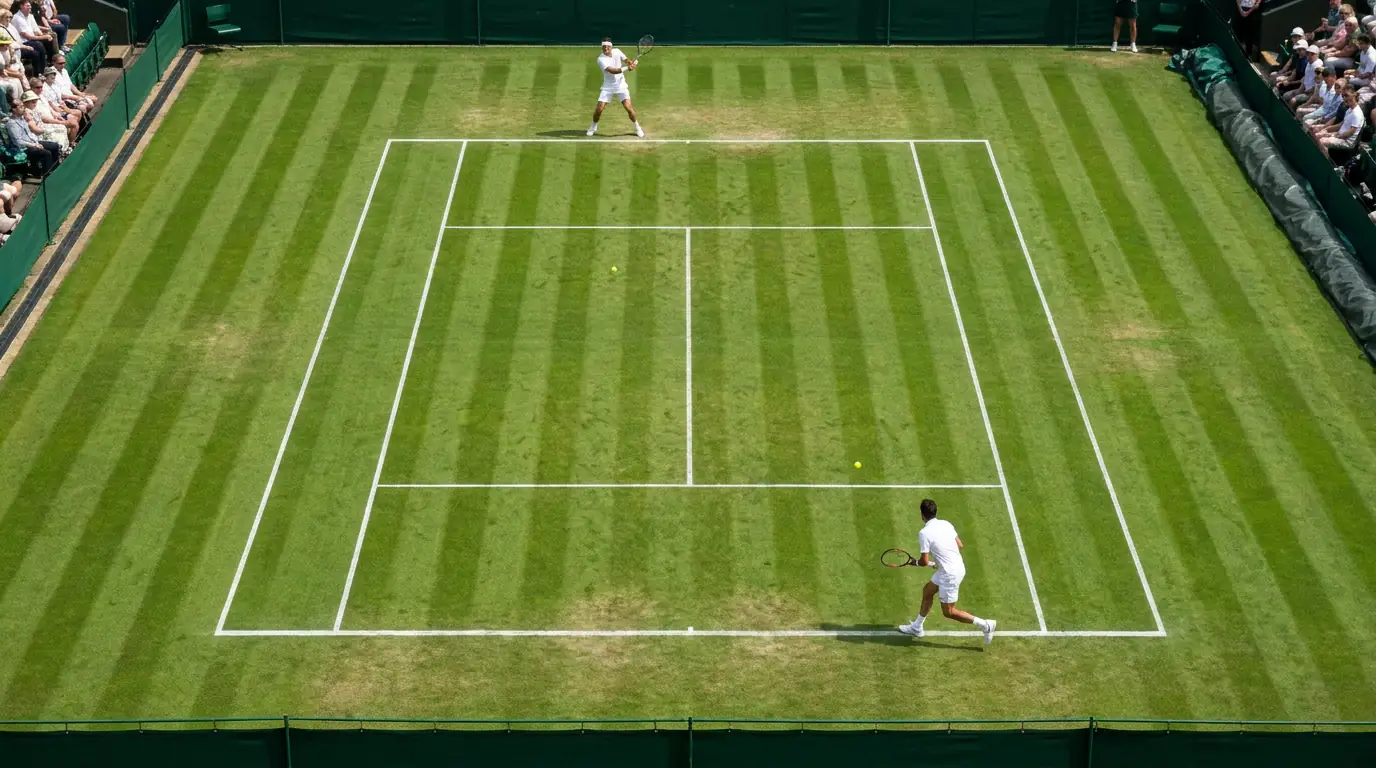
$555 million -- Wimbledon's total revenue in 2024, the highest of any Grand Slam. Growth of 162% over ten years.
$124.7 million -- Wimbledon's sponsorship income in 2024, the largest sponsor portfolio of all four Grand Slams, covering 17 partner deals.
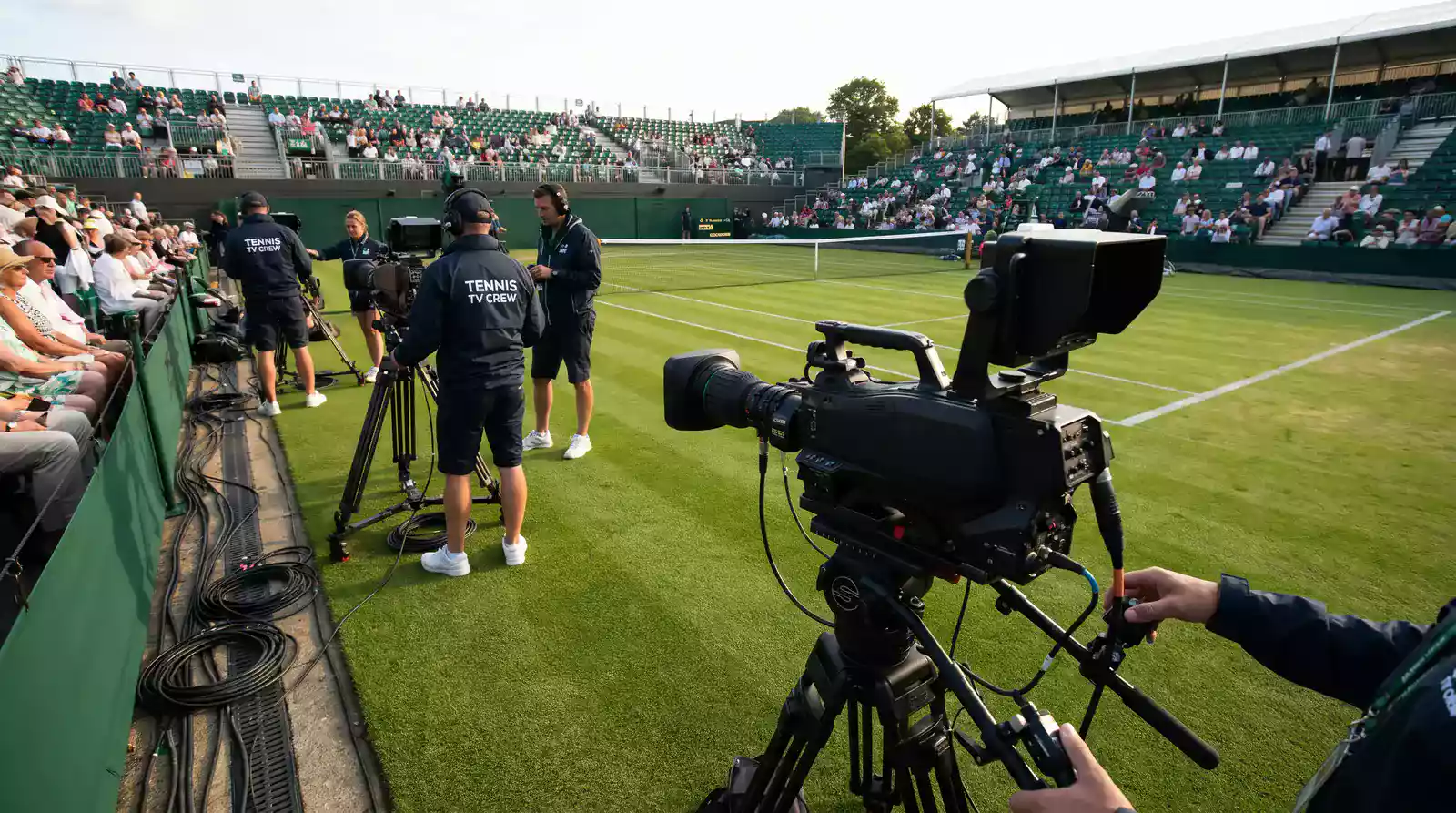
The commercial scale matters to bettors because it drives liquidity. Bookmakers compete aggressively to offer the most markets, the keenest prices, and the best in-play product during Wimbledon fortnight because the audience is enormous. BBC's peak UK audience reached 7.5 million viewers in 2024 -- a record for any Grand Slam. Those viewers aren't all bettors, but the overlap is significant: the same awareness, the same schedule familiarity, the same emotional investment that brings 7.5 million people to their televisions on a Sunday afternoon also drives betting volumes. As AELTC chair Deborah Jewell put it at the 2025 prize money announcement, the interest in attending Wimbledon is "unprecedented" -- demand for ballot tickets and corporate hospitality alike breaking records.
£53.55 million
Wimbledon 2025 prize fund -- a record, up 7% on 2024 and exactly double what players competed for ten years ago. Singles champions take £3 million each.
7.5 million
Peak BBC UK viewership in 2024 -- the highest audience of any Grand Slam, driven by free-to-air coverage that no other major can match in the UK.
£44 million/year
The BBC's annual rights fee to AELTC, locked in until 2027. Free-to-air coverage creates a mass betting audience with no subscription barrier.
The prize fund trajectory matters for bettors in a specific way: higher stakes at the top of the draw, combined with a uniquely grass-court format, mean that player motivation and match intensity remain high even when a top seed faces an unseeded qualifier in round one. A first-round loser takes home £66,000 in 2025 -- up 10% on 2024. Players are not protecting their bodies for a future clay date; they are here for grass, and only grass.
There is a structural argument, too. Wimbledon's commercial weight -- $1.2 billion market value within the Grand Slam ecosystem -- forces bookmakers to dedicate their best pricing teams, their deepest ante-post books, and their most sophisticated in-play infrastructure to this fortnight. That competition between operators is what makes the betting market genuinely interesting for an informed punter: sharper lines mean less margin for the bookmaker and better value for you -- provided you've done the surface-specific groundwork that most casual bettors skip entirely.
The UK Betting Market in 2026: Where Wimbledon Fits
Every year someone writes that "the UK is a nation of gamblers." It's both true and slightly misleading. The more precise picture is this: the UK gambling industry generated gross gambling yield of £16.8 billion in the financial year April 2024 to March 2025 -- a 7.3% increase year on year and a record high. The remote sector (online betting, casino and bingo) drove most of that growth, reaching £7.8 billion in GGY at 13.1% annual growth. Roughly 10% of UK adults now bet online on sports -- a penetration figure that has been climbing steadily.
| Segment | GGY (2024-25) | Year-on-year change |
|---|---|---|
| Remote (online) total | £7.8 billion | +13.1% |
| Non-remote (shops, venues) | £2.5 billion | +0.7% |
| UK total GGY | £16.8 billion | +7.3% |
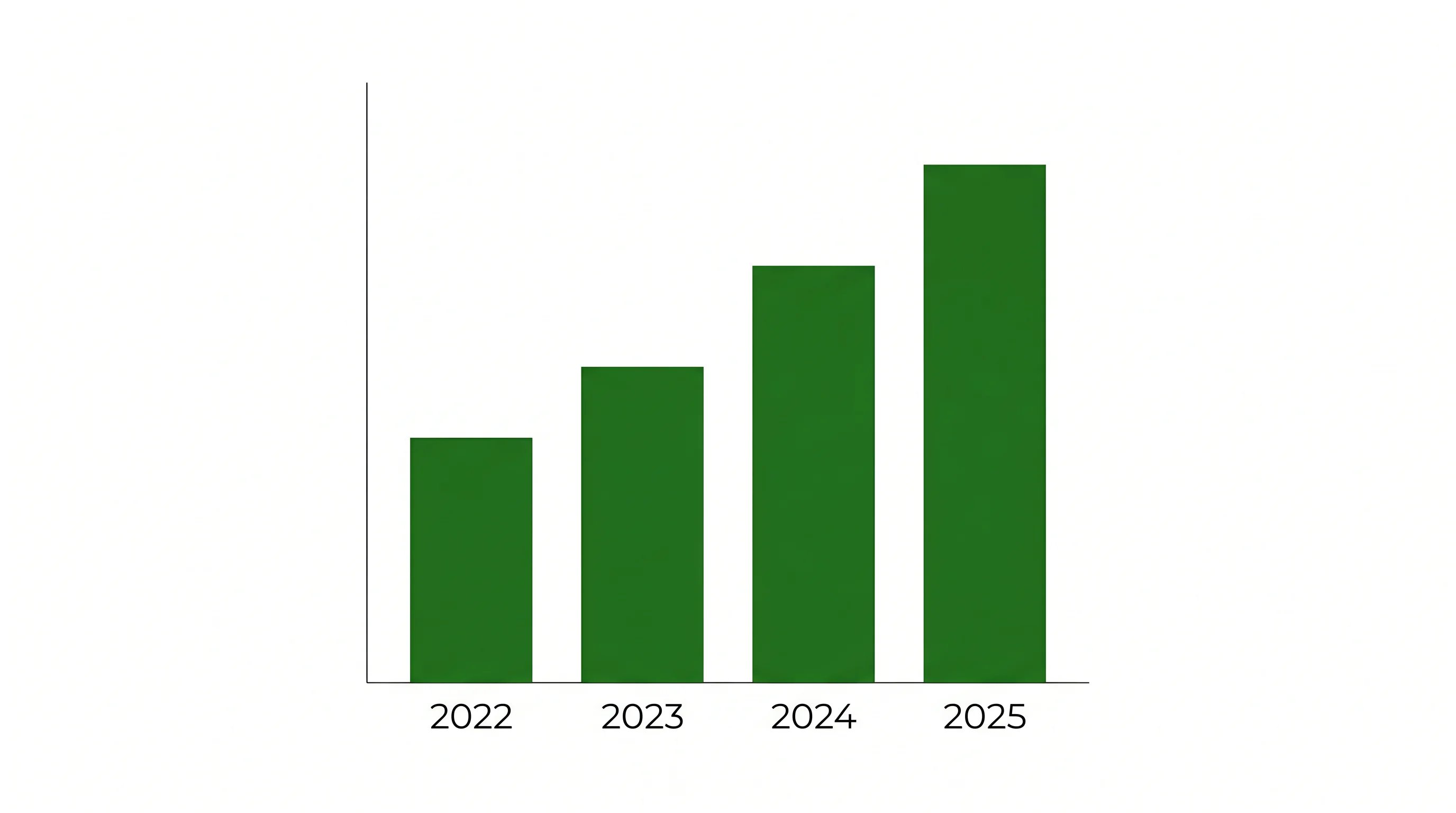
Within the online sports betting market, tennis is the fastest-growing vertical -- not football, not horse racing. The CAGR for tennis sports betting is projected at 13.83% through to 2031, outpacing every other sport. The structural reason is straightforward: tennis has year-round schedules and multiple simultaneous matches on any given day, which makes the in-play product unusually rich. Wimbledon is the peak of that curve.
Now, where does Wimbledon actually sit relative to other events? A 2026 YouGov/OLBG survey asked UK bettors which sporting events they plan to target. Grand National led at 51%, followed by the FIFA World Cup at 43%, Cheltenham at 29%, and the FA Cup Final at 25%. Wimbledon ranked at 11%. That number is lower than most people expect -- and it underlines something important. Wimbledon is not the UK's biggest betting event by participation rate. It is, however, one of the most commercially dense: a fortnight of continuous play, with live markets running on five or more courts simultaneously, generating sustained engagement across 14 days rather than the single-day spike of, say, Grand National.
Regulatory context 2025-26: The Statutory Gambling Levy came into effect on 6 April 2025, requiring all licensed operators to contribute to a £100 million annual fund for gambling harm research, prevention and treatment. UK betting remains regulated exclusively by the Gambling Commission (UKGC) -- only operators holding a valid UKGC licence can legally accept bets from UK residents. Betting with an unlicensed offshore operator means no regulatory protection and no access to the UK's dispute resolution framework.

Andrew Rhodes, CEO of the Gambling Commission, captured the dynamic precisely at the BGC AGM in February 2025: online betting "follows the pattern of major market-making events" -- which is exactly the phenomenon Wimbledon exemplifies. The record GGY of £16.8 billion was achieved in a year when Wimbledon, the Euros, and several high-profile boxing events aligned. When the commercial calendar works well, the numbers accelerate. The implication for bettors is practical: during the fortnight, your market is well-resourced, your prices are competitive, and your operators are competing for your custom. That's a good environment to operate in.
Non-remote betting shops have been declining for eleven consecutive measurement periods, falling to 5,825 outlets nationwide. If you're still placing your Wimbledon bets over the counter, you're using a product channel that is structurally shrinking and offering fewer markets than its digital equivalent.
How to Bet on Wimbledon in the UK: Step-by-Step
The gender data from the Gambling Commission makes me think about who this section is actually for. In Q1 2025, 15% of UK men were active online sports bettors -- against just 4% of women. That gap probably reflects something about how sports betting has traditionally been presented, but the practical upshot is that a significant portion of the audience arriving at Wimbledon fortnight as bettors for the first time are encountering this process cold. So let me be direct about what it actually involves.
Before You Place a Wimbledon Bet: Six Steps
- Choose a UKGC-licensed operator. Check the Gambling Commission's public register at gamblingcommission.gov.uk -- every legitimate bookmaker's licence number is there. If you cannot verify the licence, do not deposit.
- Register your account. You'll need a valid email address, date of birth confirmation (you must be 18+), and basic personal details. Most operators complete this in under five minutes.
- Complete identity verification (KYC). UK regulations require operators to verify your identity before you can withdraw winnings, and increasingly before you can bet at all. Upload a passport or driving licence and a recent utility bill or bank statement. Do this proactively -- if you win and haven't verified, your payout will be held.
- Make your first deposit. Set a deposit limit at this stage. You can always increase it (with a 24-hour delay), but a decrease takes effect immediately. Most punters staking on Wimbledon bet between £5 and £50 per tournament -- match that to your means, not your confidence level.
- Navigate to tennis markets. Use the A-Z sports menu or search directly for "Wimbledon" or "The Championships". Markets are usually active 24-48 hours before first serve; ante-post outright markets open months in advance.
- Select your market, review the odds, confirm your stake. Double-check the odds before confirming -- prices can shift between clicking and settlement, particularly in-play. Review your bet slip before submitting.

A note on affordability checks: since the 2025 regulatory changes, operators are required to conduct enhanced financial vulnerability assessments when they identify potential risk markers. If your account is flagged -- usually based on velocity of deposits, stake sizes relative to disclosed income, or frequency of play -- the operator may request documentation of your financial circumstances. This is a legal requirement, not discrimination. It applies to a small fraction of accounts and is most likely to be triggered during high-volume events like Wimbledon.
One thing that still trips up new UK bettors is the odds format. British bookmakers default to fractional odds, which remain the standard display at most UK operators. They're intuitive once you understand the logic: the left number is how much you win, the right number is how much you stake. Fractional odds of 6/4 mean you win £6 for every £4 staked -- a total return of £10 on a £4 bet.
Fractional odds in practice: a Wimbledon match bet
Scenario: Player A is priced at 6/4 against Player B. You stake £20.
Calculation: (6 ÷ 4) x £20 = £30 profit. Total return = £50 (profit plus stake returned).
Implied probability: 4 ÷ (6+4) = 40%. The market is saying Player A wins 40% of the time.
What to check: Is 40% genuinely accurate given Player A's grass-court win rate? If your analysis suggests 55%, the odds represent value. If your analysis suggests 30%, Player A is overpriced and Player B at, say, 8/11 offers better value.
Note: Bookmakers also display decimal odds (e.g. 2.50 = same as 6/4). Toggle the format in your account settings if you prefer decimals -- both formats represent identical probabilities.

Typical Wimbledon staking among UK bettors skews small: the OLBG/YouGov survey found that 11% of those planning to bet intend to stake between £5 and £50 across the fortnight, with fewer than 1% planning to exceed £500 total. Even modest analytical improvements in your selection process can produce meaningful returns at normal betting volumes. You don't need a large bankroll to benefit from thinking more carefully about grass-court form.
Wimbledon Betting Markets Explained: From Outright to Bet Builder
There are more markets available on a single Wimbledon first-round match than most bettors ever look at. Match betting is only the entry point. Here's a structured overview of the main market categories -- the full analytical treatment is in Wimbledon Betting Markets Explained, but you need this foundation before the strategy sections make sense.
Outright Winner
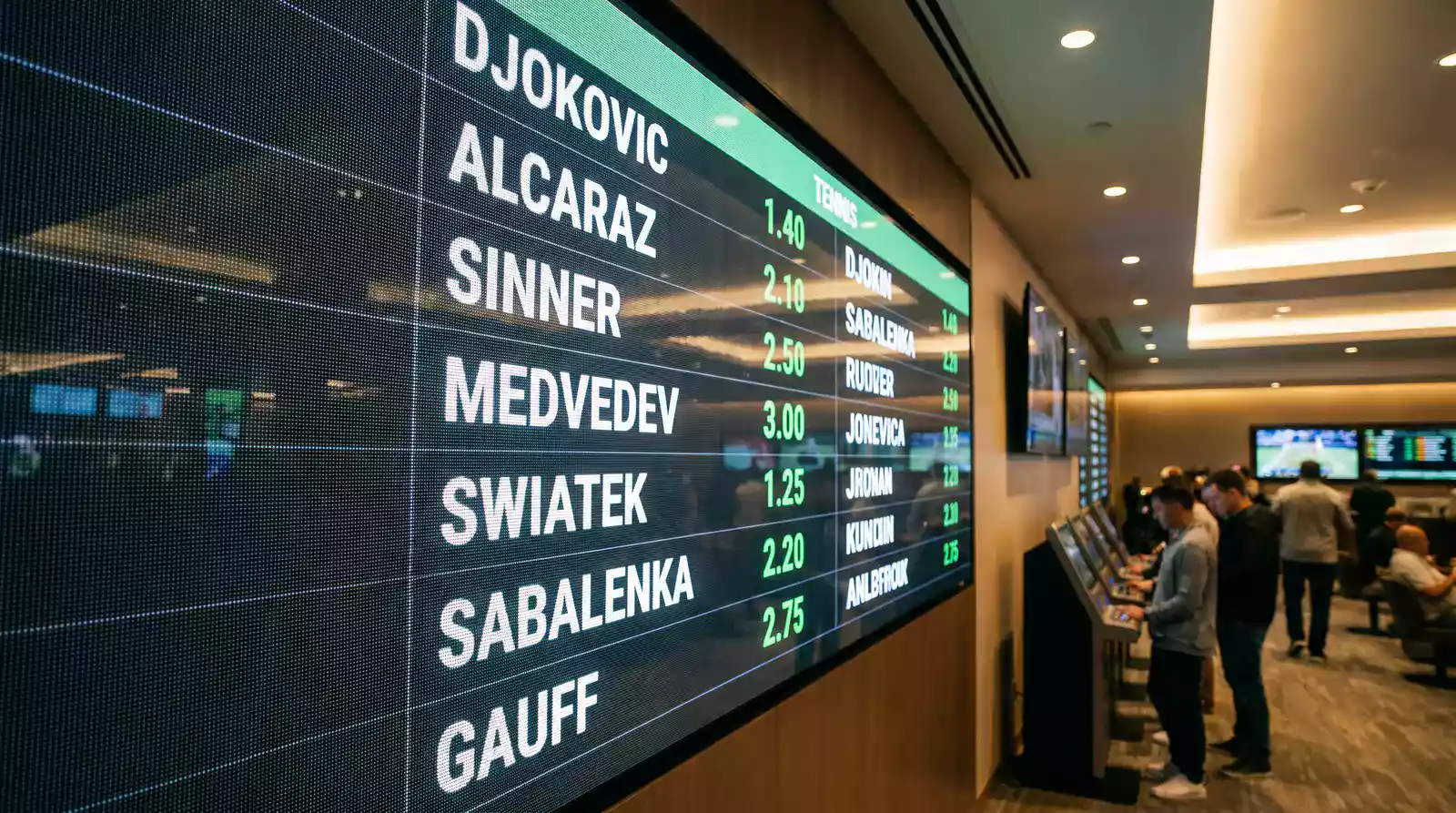
The most popular ante-post market: back a player to win the Men's Singles or Women's Singles title outright, at a price fixed when you bet. Wimbledon outrights open months before the draw -- sometimes around Christmas -- and the price landscape changes dramatically as the season progresses, Queen's Club and Halle results come in, and injury news emerges.
Outright example: Men's Singles ante-post favourite quoted at 5/2 pre-draw. If your analysis suggests the true probability of their winning is above 29% (the implied probability at 5/2), this represents value. If they win, a £20 stake returns £70 total (£50 profit + stake back).
Ante-post -- a bet placed before the event or draw, at a fixed price. Stakes are generally lost if the player withdraws, unless "non-runner no-bet" terms apply -- always check before placing outright bets weeks in advance.
Match Betting and Set Betting
Match betting -- pick the winner of a specific match, two-way market -- is the bedrock of the Wimbledon in-play product. Lines open 24-48 hours pre-match and move with injury news, weather forecasts and overnight market activity. Set betting is the more surgical option: you predict the exact scoreline in sets (e.g. 3-1 in a men's match). The odds are longer, the margin is tighter, and on grass -- where the serve is dominant -- the range of realistic outcomes is actually narrower than on clay, making correct-score analysis more tractable than it appears.
Set betting example: A men's match with Player A at 6/4 to win. The 3-0 set score (straight sets) might be priced at 7/2, and 3-1 at 5/2. If your analysis says Player A wins cleanly 35% of the time (implied by 3-0 at 7/2 = 22%), the 3-0 scoreline is likely underpriced relative to your model.
Handicap betting -- a market where one player starts with a games or sets advantage. A -3.5 games handicap means your chosen player needs to win by more than 3.5 games (net of the handicap) for the bet to win. Useful when heavy favourites are too short on the match line.
Each-Way Bets at Wimbledon
Each-way betting on Wimbledon outrights -- particularly the Men's Singles -- splits your stake in two: half on the player to win, half on them to place (typically a reach of the final, last four, or quarter-finals, depending on the operator's terms). The place part pays at a fraction of the win odds -- usually one-quarter. Each-way betting becomes genuinely interesting at Wimbledon when you have a value opinion on a player who is realistic about reaching the final four but faces heavy competition for the title itself.
Each-way example: Player B at 12/1 for the Women's Singles. Each-way bet of £10 (total stake £20): win part returns £130 (£120 profit + £10 stake) if they win the title. Place part at quarter-odds (3/1) returns £40 (£30 profit + £10 stake) if they reach the semi-finals or better. Minimum outcome for any return: the operator's specified each-way places.
In-Play and Live Betting
In-play betting now accounts for 62.35% of all online sports betting volume -- and Wimbledon is a primary driver of that figure. Tennis is structurally ideal for live betting: each game and set represents a discrete binary event with calculable momentum shifts, and on grass those shifts are sharper and faster than on other surfaces. A single break of serve in the first set on Centre Court can move the match winner price by 30-40 points within seconds. Prices are continuously recalculated by algorithms that factor in serve percentage, rally length, and historical patterns for this specific surface and these specific players.
Cash out -- a feature offered by most UKGC-licensed bookmakers allowing you to settle a bet before the match concludes, at a price based on the current state of play. Full cash-out settles the whole bet; partial cash-out withdraws a portion while leaving the rest in play.
Prop Markets and Bet Builder
Proposition markets at Wimbledon extend well beyond the match result: total games in a match, whether a tiebreak will occur in a specific set, the number of aces, first-set winner, and individual game betting are all commonly available. Bet Builder (also marketed as Same Game Multi, or SGM, at some operators) allows you to combine multiple props from the same match into a single bet, with odds multiplied together. The caveat -- one you should take seriously -- is that many prop outcomes are correlated. Backing a player to win and to win in straight sets, for example, are not independent outcomes; they derive from the same underlying performance, which means the implied odds on a Bet Builder combining them may be less favourable than they appear. The full market breakdown covers correlation pitfalls in detail.
Bet Builder / Same Game Multi (SGM) -- a bet combining multiple selections from the same match. The combined odds are calculated by multiplying individual prices, but correlated selections reduce the genuine value of the combination. Available at most major UK bookmakers during Wimbledon.
Best UKGC-Licensed Bookmakers for Wimbledon Betting
Last summer, a friend asked me which bookmaker he should use for Wimbledon. I asked him three questions before answering: how many markets does it carry on first-round matches simultaneously? Does it offer live streaming? And what does it do with in-play pricing when play is suspended for a roof closure? Those questions filter the list quickly.
The UK's licensed operators are not all equal for tennis. The two dominant groups -- Flutter Entertainment (Sky Bet, Paddy Power, Betfair, $15.91 billion in 2025 revenues) and Entain (Ladbrokes, Coral, with £5.3 billion in net gaming revenue and 15% UK online growth) -- have the infrastructure to run deep Wimbledon markets. But scale doesn't automatically mean the best product for a tennis bettor. Here's what to evaluate.
How to verify a UKGC licence in 30 seconds: Go to gamblingcommission.gov.uk, select "Check if gambling is legal," enter the operator's name or licence number. A valid, current licence will appear with an active status. If it isn't there, don't bet with them. This is non-negotiable for UK residents -- unlicensed offshore operators provide no consumer protection under UK law.
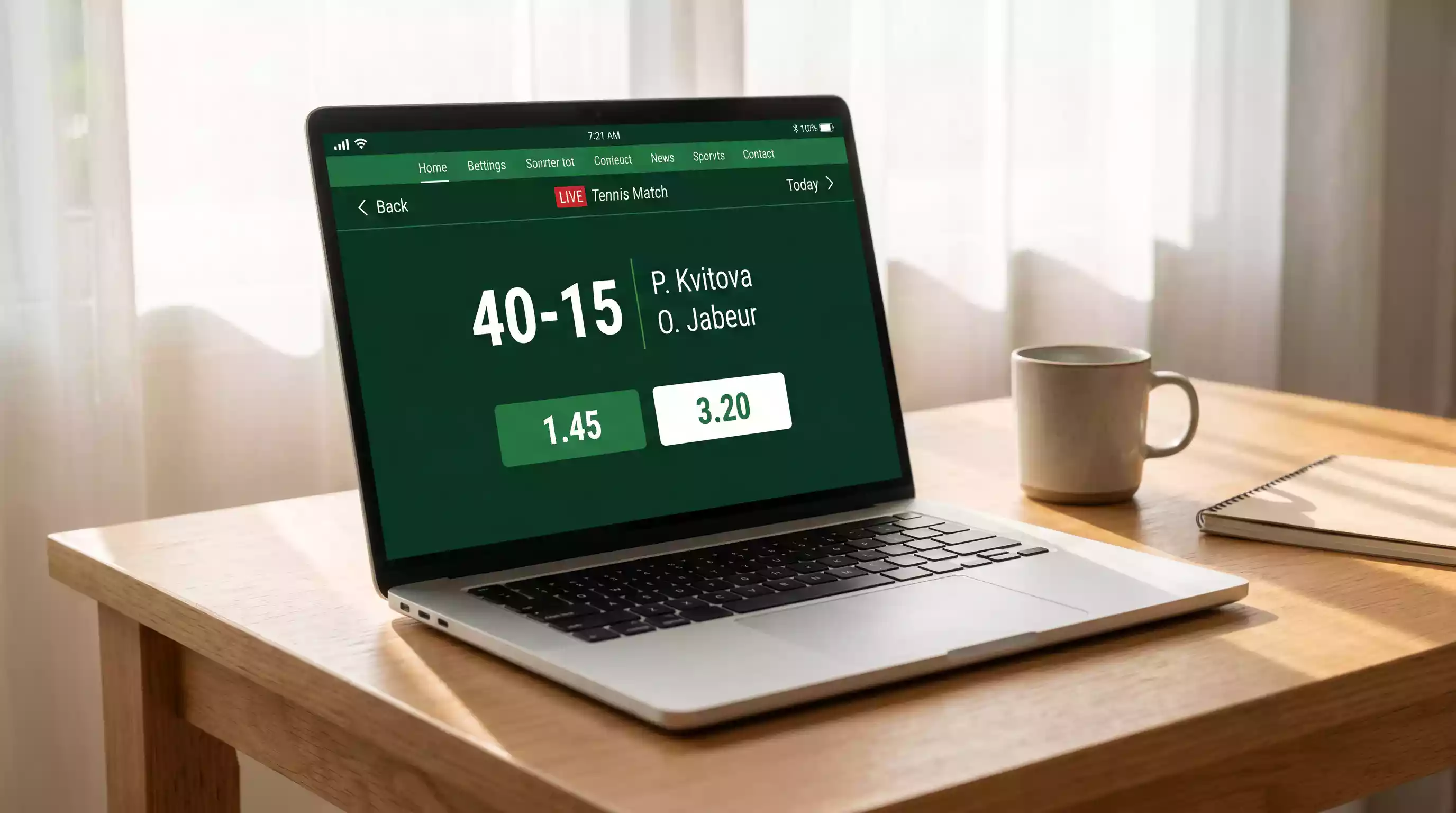
The criteria that genuinely separate operators for Wimbledon betting are these. First, market depth: the number of prop and in-play markets on second and third-round matches -- not just marquee Centre Court fixtures -- signals how seriously the operator treats tennis. Second, cash-out availability: does the book offer partial cash-out during a tiebreak, or does it suspend the feature whenever a set gets close? Third, live streaming: UK operators including Sky Bet, Bet365 and Ladbrokes offer streaming of selected Wimbledon matches through their apps -- valuable if you're placing in-play bets without a separate feed. Fourth, Bet Builder quality: specifically, which prop combinations are available and whether the odds engine handles correlations sensibly rather than mechanically multiplying everything.
Andrew Rhodes, the Gambling Commission's CEO, said at the September 2025 Allwyn Participant Protection Conference that "the customer should come first -- that is the foundation of sensible regulation." That principle translates practically into this: your operator must have a valid licence, must maintain responsible gambling tools as a baseline, and must have a functioning dispute resolution process. These are legally mandated baselines. Beyond the baseline, competition drives quality.
One further consideration for the 2026 season: the Statutory Gambling Levy has tightened operator margins on promotional budgets. Welcome offers and free bet promotions remain available but have reduced in scale at some operators. If you're opening a new account ahead of the grass season, the promotional terms matter less than the underlying market depth -- a short-term sign-up bonus is less valuable than a platform that will give you sharp in-play prices across 14 days of tennis. For a full evaluation of licensed operators by market quality and product features, see UKGC Licensed Bookmakers for Wimbledon.
What to assess: market depth
Count the prop markets on a third-round match between two unseeded players. Minimum 15 markets signals genuine tennis investment.
What to assess: in-play quality
Check whether cash-out suspends during tiebreaks. Operators that keep cash-out active throughout offer measurably more tactical flexibility.
What to assess: streaming
Streaming from the betting account eliminates the need for a secondary screen during live bets and enables more accurate timing of in-play entries.
What to assess: Bet Builder range
Can you combine match winner with total games and set winner on the same ticket? Broader SGM options create more value-finding opportunities.
Grass-Court Betting Strategy: What the Numbers Actually Tell You
Nine years of watching how UK bettors approach Wimbledon has taught me one thing clearly: almost everyone overweights recent form on non-grass surfaces and underweights grass-specific statistics. The player who won two clay tournaments in May is not necessarily a Wimbledon threat. The player who lost at Roland Garros but reached the Halle final on grass three weeks later is. The surface transition is real, quantifiable, and systematically underpriced by the market -- which is where the analytical edge lives for Wimbledon betting.
Surface Records and Seedings
Wimbledon does not use the ATP or WTA live rankings directly to determine seedings. It applies a grass-court adjustment formula that modifies ranking points based on performance in the 12 months preceding the tournament, with a specific weighting for grass-court results. This formula was introduced precisely because the standard rankings -- built predominantly on hard-court and clay-court points -- are a poor predictor of Wimbledon outcomes for a meaningful subset of players.

The practical consequence: a player seeded 8th by ATP ranking may be seeded 5th at Wimbledon if their grass record is strong, and vice versa. For match betting purposes, the seeds matter more than the ranking because they determine the draw -- but the underlying grass-court win percentages over two or three full seasons are more predictive of round-by-round outcomes than the seeding itself. I focus on a three-year rolling grass win rate rather than a single pre-tournament result. One bad year on grass is often recoverable; a consistent pattern of losing in rounds one and two on grass to players ranked outside the top 50 is not a coincidence.
Seedings also have an important bearing on outright betting value. In the men's draw, the top eight seeds are protected from each other until the quarter-finals. An accurate opinion on which of seeds one through eight will underperform their seeding -- because their grass record is weaker than their ranking implies -- can create significant outright value on the unseeded or lower-seeded opponents they will face in rounds three and four.
WIMSTAKE proprietary model
The Hold Gap
Turn two players' grass-court serve and return numbers into a hold probability, a fair price and a set-score distribution — then test that against the price your bookmaker is actually offering.
Player A — grass form
Player B — grass form
Bookmaker price on Player A
At 4/7 the market implies 63.6%. The model says 66.1% — an edge of +2.5 points, worth +3.9% on turnover if the inputs are right.
Set-score distribution
| Set score | Model | Fair odds |
|---|---|---|
| A 3–0 | 19.7% | 4/1 |
| A 3–1 | 25.2% | 3/1 |
| A 3–2 | 21.1% | 7/2 |
| B 3–2 | 14.9% | 11/2 |
| B 3–1 | 12.3% | 7/1 |
| B 3–0 | 6.8% | 14/1 |
How it works: each player's serve-point win rate is adjusted by the opponent's return strength against the grass-court tour baseline (66% of serve points won for men, 62% for women). That single number drives a game-by-game Markov chain through holds, breaks, tiebreaks and the 10-point deciding-set tiebreak used at Wimbledon.
Fair odds carry no bookmaker margin, so a listed price will normally sit below them. Only a gap wide enough to survive the overround is a real edge — and the model is only as good as the grass sample behind your inputs. Use a minimum of 15 matches on the surface. Educational tool, not a tip. 18+ · begambleaware.org
Form Hierarchy: Player Form vs. Intuition vs. Stats
The OLBG/YouGov survey data from the 2025 Wimbledon season gives us an honest window into how UK bettors actually make decisions: 37% say player form is their primary factor, 19% rely primarily on intuition, and 12% use grass-court statistics. The remaining 10% prioritise head-to-head record, with the rest scattered across rankings, tips and other inputs.
37% of UK Wimbledon bettors put player form first. Only 12% use grass-court statistics -- the most surface-specific and predictive variable available.

This hierarchy reveals a systematic market inefficiency. "Form" as most bettors use it means recent match results across all surfaces -- which is a much noisier predictor of grass outcomes than grass-specific win rates. A player on a 10-match winning streak on clay has told you almost nothing about how they'll perform on the Wimbledon grass. Meanwhile, the 12% who do use grass statistics are consistently operating with better inputs than the 37% relying on general form.
The variables I weight most heavily, in order: grass-court win percentage over the past 24 months (minimum 15 matches for statistical relevance); result at Queen's Club or the Stuttgart Porsche Open in the current season (the most proximate grass preparation events before Wimbledon); serve dominance metrics on grass specifically -- ace rate, first serve points won, break points faced and saved. Head-to-head records on grass are a fourth-order consideration, useful only when the sample size exceeds five matches on the surface. General H2H -- including clay and hard court results -- I weight barely at all.
Only 7% of UK bettors stake on tennis year-round. The 93% who arrive at Wimbledon as seasonal participants are operating without embedded grass-court knowledge -- relying on media narratives, tips and recent non-grass results. If you've done systematic surface work, you're operating against a market shaped partly by analysis and partly by that large, less-informed seasonal audience. That's where value gets generated.
When Underdogs Win at SW19
Wimbledon upsets follow a pattern -- they're not random. First-round upsets on grass are structurally more common in the women's draw than the men's, for a specific reason: the women's game has lower ace rates and shorter average rally counts, which means that while serve dominance still matters, it's less absolute. A big server in the men's draw can win a service game 80-90% of the time on grass regardless of their overall form; the women's game doesn't produce that level of serve protection, so surface-specific errors and variance have more room to operate.

Key grass-court variables for every betting decision: grass W/L ratio (last 24 months); Queen's or Halle result (current season); first-serve percentage and ace rate on grass; break points faced per service game; head-to-head on grass only; movement and injury status entering the fortnight; draw section quality (who specifically stands between this player and the quarter-final).
In the men's draw, genuine outright upsets -- an unseeded player winning the title -- are rare (it has happened, but not consistently), but unseeded players reaching the round of 16 or quarter-finals is a persistent pattern. The bracket structure is key: if an unseeded heavy server draws a high seed who is primarily a clay-court champion with a modest grass record, the price differential between those two players may not accurately reflect the surface advantage held by the lower-ranked opponent. The more detailed framework for identifying those spots is in Grass Court Tennis Betting Strategy.
One final underdog consideration: Wimbledon qualifying. The players who come through three rounds of qualifying to reach the main draw have played six or more matches on grass in the ten days before the main event starts. By contrast, some top seeds skip all preparation events and arrive having not touched grass in eleven months. The mismatch in surface freshness -- not ability -- is real, and it occasionally produces extraordinary first-round prices on an in-form qualifier facing a high-seeded player who hasn't played on grass since the previous Championships.
Betting Responsibly at Wimbledon: UKGC Rules and Your Rights
Almost half of all UK adults -- 47%, according to the Gambling Commission's 2025 survey data -- engage with some form of gambling in any given four-week period. Wimbledon fortnight concentrates that behaviour: the visibility of the event, the availability of markets, and the festive atmosphere around SW19 create conditions where it's easy to bet more, more frequently, and with less deliberation than at any other point in the tennis calendar. That's worth naming directly.

The Statutory Gambling Levy, in effect since 6 April 2025, funds £100 million annually for gambling harm research, prevention and treatment. It represents the most significant regulatory development in UK gambling since the 2005 Gambling Act -- and for active sports bettors, its practical effect shows up in the affordability check framework.
Affordability checks 2025-26: UK operators are required to apply enhanced checks when specific financial vulnerability markers are triggered. At a basic level, this means monitoring velocity of deposits and stakes relative to disclosed financial circumstances. If your account is flagged, the operator may request bank statements or proof of income. Declining to provide these will typically result in account restrictions. This is a regulatory requirement, not discretionary operator behaviour -- it applies across all UKGC-licensed bookmakers.
For most Wimbledon bettors operating at typical UK stake levels -- £5 to £50 per tournament -- these checks are unlikely to affect you. They are primarily designed to identify accounts showing signs of disordered gambling or financial vulnerability at higher volumes. But if you do receive a request for documentation from your bookmaker during the fortnight, responding promptly is both the legally correct course of action and the fastest route to having your account restrictions lifted.
Your practical toolkit for staying in control during Wimbledon: set deposit limits before the fortnight starts, not during it -- every UKGC-licensed operator allows daily, weekly or monthly limits, with reductions taking immediate effect and increases requiring a 24-hour cooling-off period. GAMSTOP (gamstop.co.uk) enables simultaneous self-exclusion from all UKGC-licensed online operators for a minimum period of six months, one year, or five years. Session time reminders and balance reality checks are configurable in your account settings at all major operators and are part of the 2025 UKGC safer gambling requirements.
Support organisations: GambleAware at begambleaware.org provides free, confidential support and treatment referrals. The National Gambling Helpline is 0808 8020 133 (free, 24/7). GamCare at gamcare.org.uk offers counselling and online chat support. If you're concerned about someone else's betting, all three organisations provide guidance for friends and family.
Your rights as a UK bettor are specific and enforceable. If you have a dispute with a licensed operator that remains unresolved after eight weeks (or after they issue a final response), you can escalate to an Alternative Dispute Resolution provider. The operator is legally required to tell you which ADR service covers your dispute. The Gambling Commission itself handles licensing complaints and can be contacted at gamblingcommission.gov.uk. Document your bets, keep your correspondence, and know that the regulatory framework exists to protect you -- not just to regulate the operators.
Frequently Asked Questions About Wimbledon Betting in the UK
What do I need to check before placing my first Wimbledon bet?
Three things, in this order. First, confirm that the operator you're using holds a valid UKGC licence -- check the Gambling Commission's public register at gamblingcommission.gov.uk. Without a UKGC licence, the operator cannot legally accept bets from UK residents and you have no regulatory protection. Second, complete your identity verification (KYC) before you need to withdraw anything -- upload your ID and proof of address proactively so you're not held up if you win. Third, set a deposit limit before the fortnight starts. Wimbledon runs for 14 days with markets active continuously; having a limit in place before you begin is structurally more effective than trying to impose one mid-tournament. Everything else -- market selection, odds reading, strategy -- comes after these three boxes are ticked.
Which betting markets are available for Wimbledon?
The full menu is considerably wider than most bettors use. At the headline level: outright winner (Men's Singles, Women's Singles, Doubles), match betting, set betting, handicap betting, and in-play markets covering every live match. Below that level you have prop markets including total games in a match, tiebreak occurrence, first-set winner, total aces, and exact set-score betting. Bet Builder -- also marketed as Same Game Multi -- allows combinations of props from the same match on a single ticket. Ante-post markets, which open months in advance, cover outrights, semi-final and quarter-final qualifiers, and specials like nationality of winner. The full market breakdown is in Wimbledon Betting Markets Explained.
Which UKGC-licensed bookmakers are best for Wimbledon betting?
The honest answer is that "best" depends on what you're prioritising. For in-play depth and simultaneous market availability during peak play, the largest operators -- those with the pricing infrastructure to run live lines on six or more courts simultaneously -- tend to outperform smaller books. For ante-post outrights, look specifically at the each-way terms and the number of places paid, which vary between operators. For Bet Builder, assess which prop combinations are available and whether the operator maintains cash-out during tiebreaks. Live streaming availability -- free to use with a funded account at most major UK operators -- is a meaningful practical advantage if you're placing in-play bets without a television. A full evaluation by product criteria is at UKGC Licensed Bookmakers for Wimbledon.
How do fractional odds work at Wimbledon?
Fractional odds express your profit relative to your stake. Odds of 3/1 mean you win £3 for every £1 staked; odds of 1/2 mean you win £1 for every £2 staked (i.e. the selection is odds-on). To calculate implied probability from fractional odds: divide the right number by the sum of both numbers. So 6/4: 4 divided by (6+4) = 0.40, meaning the market implies a 40% probability of that outcome. Most UK operators also display decimal odds alongside fractionals -- toggle in account settings. Decimal odds include your stake in the return figure: 2.50 (decimal) is identical to 6/4 (fractional). A total return of 2.50 on a £10 bet = £25 back, with £15 profit. For a tournament with many simultaneous markets, converting all odds to implied probabilities and comparing them to your own assessments is the most systematic approach to finding value.
What makes grass-court betting different from other surfaces?
The serve. On grass, first-serve points won by the server is substantially higher than on clay or hard courts, which means break-of-serve opportunities are rarer and more decisive. A player who is vulnerable on second serve -- exploited easily on clay -- may be far more defensible on grass where the natural pace reduces the receiver's leverage. This changes the analysis in three ways. First, match betting becomes more about identifying whose serve is genuinely vulnerable on grass, not in general. Second, correct-score betting in the men's draw benefits from a narrower realistic range of outcomes because straight-sets wins by the favourite are more common. Third, the upset rate in the women's draw, where serve dominance is lower, is persistently higher than in the men's draw -- meaning the odds on women's underdogs are structurally more likely to represent value. For the detailed analytical framework, see Grass Court Tennis Betting Strategy.
What is an each-way bet on Wimbledon and when does it offer value?
An each-way bet splits your stake in two: half on your selection to win the event outright, half on them to finish in a specified number of places (typically the last four or the last eight, depending on the operator and market). The place portion pays at a fraction of the win odds -- usually one-quarter. Each-way betting offers clear value when you're backing a player at long odds who you genuinely believe can reach the semi-finals or final, but whom you don't expect to win the title. If your model says a 14/1 player has a 20% chance of reaching the semi-final but only a 6% chance of winning the title, the each-way construction captures that probability more efficiently than a straight win bet. Always check the specific each-way terms before placing, as the number of places and the fraction paid vary between operators -- particularly at Wimbledon, where terms are sometimes more generous than standard to attract action on outsiders.
How does in-play betting work during Wimbledon matches?
In-play markets on Wimbledon are driven by live algorithmic pricing that recalculates continuously as each point is played. The key mechanics: markets typically open when the match starts and remain active throughout, with brief suspensions during point-in-play and during serve changes at the end of a game. Cash-out is available on most pre-match selections and on in-play bets placed during the match. Prices shift most sharply after break points, when sets are clinched, and during tiebreaks -- these are also the moments when liquidity temporarily decreases and the spread between backing and laying prices widens. For a systematic approach to timing in-play entries on grass -- specifically how momentum shifts after a break of serve differ from clay-court patterns -- see Wimbledon In-Play Betting.
Your Edge Starts Before the First Serve
Richard Moffat, CEO of OLBG, put it clearly when he reviewed the 2025 Wimbledon betting survey data: what distinguishes the UK bettors who approach this event methodically is "a smart, statistically grounded approach" where player form -- specifically grass-court form -- leads every selection decision. That framing is right, and the data behind it is meaningful: the punters who prioritise grass-court statistics over general rankings, intuition or single-surface form are operating with a structural advantage over the market's seasonal majority.

The UK sports betting market is projected to reach $21.3 billion by 2030 at an 11.4% CAGR. Tennis is growing faster than that average -- and Wimbledon, with its commercial scale, free-to-air reach and two-week format, sits at the centre of that expansion. The markets are competitive and the pricing is sharp. None of that makes betting a guaranteed source of profit. What it means is that the tools available to an informed UK bettor are better than they have ever been, and the 93% of Wimbledon bettors who operate without embedded grass-court knowledge ensure that surface-specific analysis generates real price inefficiencies for those who do the work.
Ready to go deeper? Wimbledon Betting Markets Explained covers every available market with worked examples. UKGC Licensed Bookmakers for Wimbledon evaluates operators by product criteria for the grass season. Grass Court Tennis Betting Strategy builds a full analytical checklist for surface-specific decision-making. Wimbledon In-Play Betting takes the live-betting framework from overview to operational. And UK Gambling Regulation and Wimbledon Betting covers the 2025 regulatory changes and your rights as a UK bettor in full detail. The grass season is short. The preparation doesn't have to be.
Read also


Published by the bettingonwimbledontennis team.
