
Wimbledon Seedings and Betting Odds: Where Ranking and Grass Reality Diverge
 Available in US
Nine years of betting on Wimbledon has taught me one lesson more reliably than any other: the seeding list is not the betting market, and confusing the two costs money. Every summer, punters look at the seedings, assume they mirror competitive ability on grass, and place bets accordingly. That assumption is partially correct — and partially wrong in ways that produce genuine value for those who understand where the divergence lies. The form data confirms it: player form is the number one decision factor for bettors who have actually wagered on Wimbledon before, cited by 37% as their primary input, with grass-court statistics cited by only 12%. Seedings don’t make the top four.
How Wimbledon Seeds Its Players — and Why It Differs from ATP/WTA Rankings
I remember the first time I saw a Wimbledon draw and noticed that the seedings did not match the ATP rankings. It seemed like an error. It wasn’t — it’s policy, and understanding the policy is the foundation of intelligent seedings-based betting.
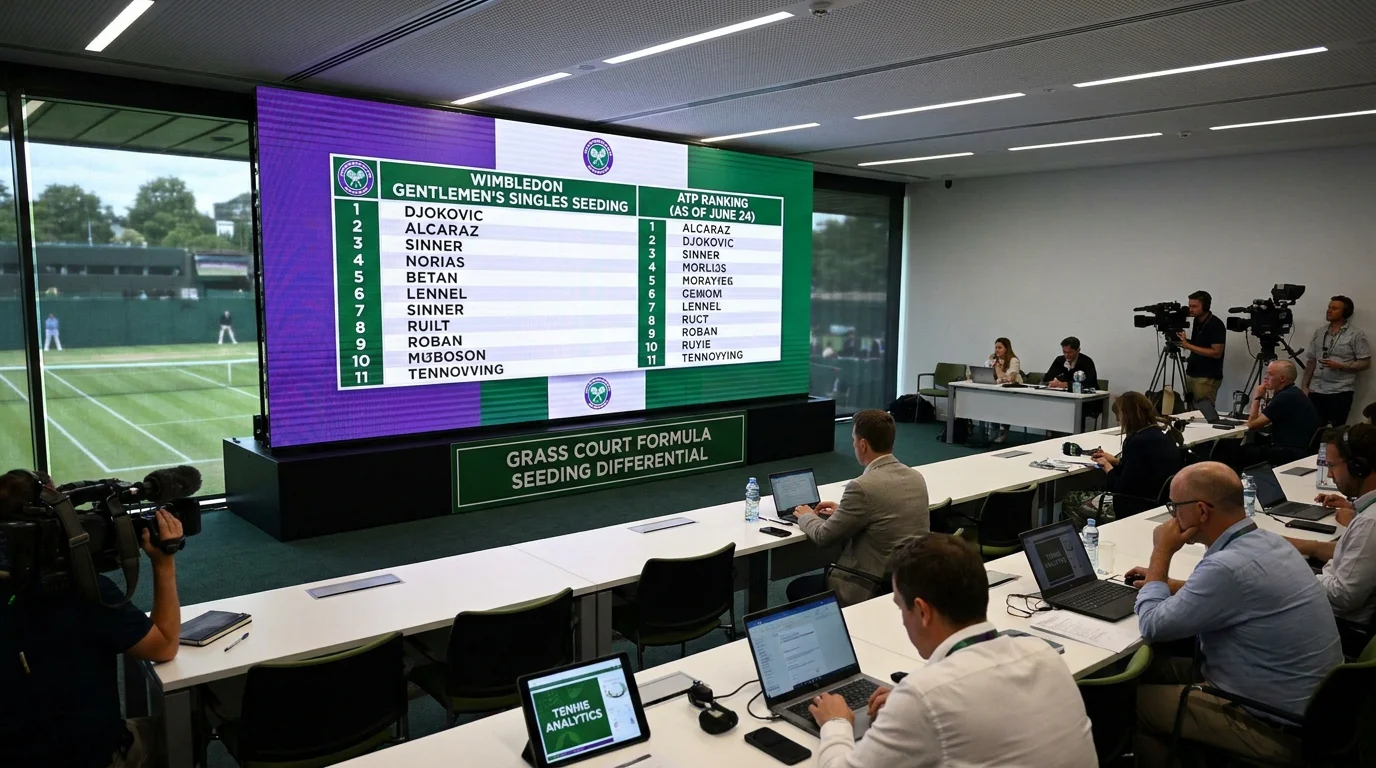
The AELTC uses a modified formula to determine men’s singles seedings. The official approach starts with the ATP ranking but then adjusts it based on grass-court performance over the previous two years, with additional weight given to Wimbledon results specifically. A player ranked seventh in the world who has consistently reached the second week at Wimbledon and won titles at Queen’s Club may be seeded third or fourth. Conversely, a player ranked fourth who plays almost exclusively on hard courts and has never passed the third round at Wimbledon may be seeded seventh or eighth.
The practical effect is that Wimbledon seedings are, in theory, better predictors of grass-court performance than raw ATP rankings. In practice, the formula still relies heavily on the base ranking — the adjustments are meaningful but not transformative. The result is a seeding list that is better calibrated than pure rankings but still imperfect, because grass-court performance data is sparse. Players only have a handful of grass events each year. Two seasons of Wimbledon results — four to six matches if they exit early, twelve to fourteen if they reach the final — is a thin statistical foundation on which to base a seeding decision.
The WTA uses a different approach for the women’s draw. Wimbledon seeds women by their WTA ranking directly, without the grass-court adjustment the men’s formula applies. This means the women’s seedings have a more direct relationship to the ranking list, which creates a different pattern of potential divergence from actual grass-court ability.
Wimbledon 2026 features 128 players in each singles draw — 32 seeded and 96 unseeded in the main draw, with further players entering through qualifying. The prize fund of £53.55 million ensures the competitive quality across the full 128 is as high as it has ever been, which means early-round unseeded players are often far more capable of threatening seeded opponents than the bracket position implies.
Where Seedings Overstate and Understate Wimbledon Favourites
The clearest way I can explain seedings-based pricing errors is through two recurring patterns I track every year at the draw: players who are overseeded relative to their current grass form, and players who are underseeded relative to theirs.
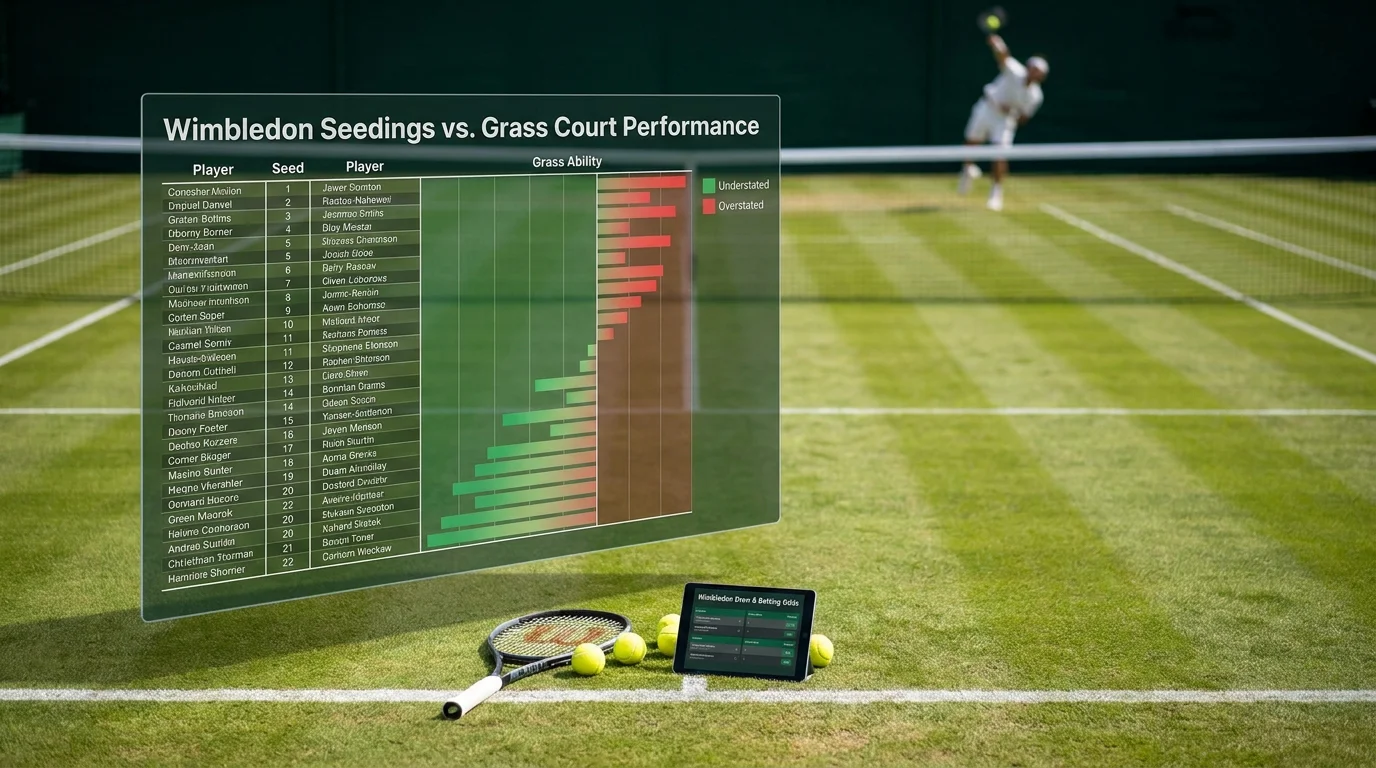
Overseeding happens when a player who performed well at Wimbledon in previous years is riding legacy credit into the current seedings. A former champion or semi-finalist who has had a difficult twelve months on hard courts — perhaps recovering from injury, or genuinely in physical decline — can carry a seeding that generates a shorter market price than their current state warrants. The seedings formula looks backward; the betting market should look at the present. When these diverge, the value is almost always on the opponent, particularly in early rounds.
Underseeding creates the opposite problem. A player who has dramatically improved on grass in the current season — particularly someone who has had a strong Queen’s Club or Halle run in the weeks immediately before Wimbledon — may carry a ranking-based seeding that does not reflect their current form peak. The market will often price them correctly via their implied tournament win probability, but their opponent in round one or two may be priced shorter than a fair reading of current grass ability justifies.
There is also a structural pattern specific to the women’s draw. Because the WTA seedings map directly to rankings, and because women’s rankings do not weight grass-court performance heavily, a player who wins consistently on hard courts and clay but rarely plays the pre-Wimbledon grass swing can carry a high seeding that misrepresents their grass credentials entirely. First and second-round opponents of such players sometimes represent genuine value — particularly if those opponents are unseeded but have strong grass-court records from lower-level ITF or WTA events.
Early-Round Seeded Exit Statistics: The Betting Data
Seeded players lose at Wimbledon more often than their market prices imply, and the pattern is pronounced in specific seeding bands. This is not a revelation to experienced tennis bettors — the “seeded player shock” is part of Wimbledon’s identity as a tournament. What is less often quantified is where exactly in the seeding list the losses are concentrated.
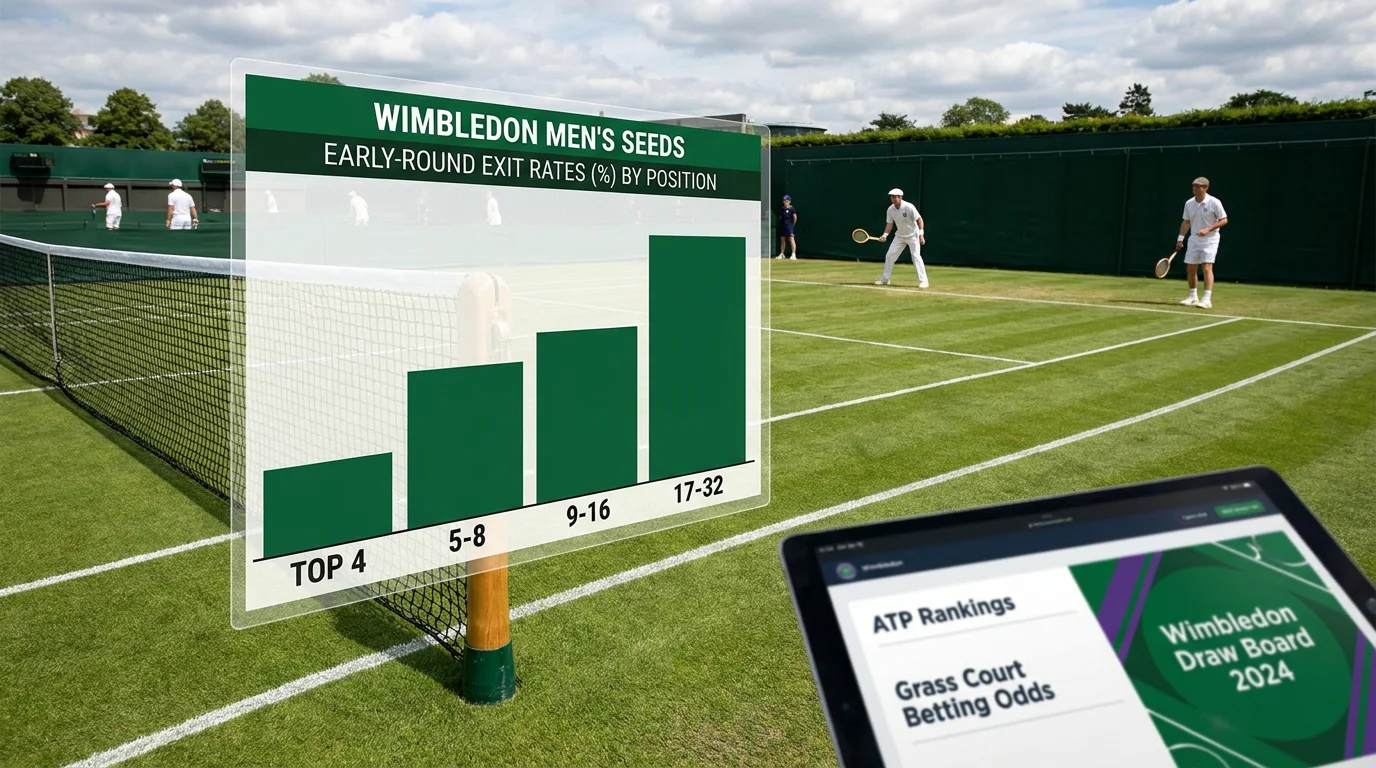
The top four seeds in the men’s draw exit in rounds one, two or three at a rate of roughly one in five across the modern era of professional tennis. That sounds high, but consider that “one in five” means one early exit in every five Wimbledon years — which given there are four top-four seeds means, on average, you should expect at least one top-four early exit most years. Market prices for top-four seeds rarely reflect this adequately in first-round match odds, where the seed is typically priced at 1/8 or shorter, implying an 88% win probability or greater. Historical first-round completion rates for top-four seeds are comfortably above 90%, so the short prices are often justified in those specific matches. The errors come further down the seeding list.
Seeds ranked 5 through 16 — the mid-range of the seeding band — show meaningfully higher first and second-round upset rates than their prices reflect. These are players good enough to have achieved a top-16 ranking, but whose grass-court credentials may be thinner than their ATP or WTA ranking suggests. A player seeded 9th at Wimbledon is priced roughly 11/1 to win the title on average. Their first-round opponent — often an unseeded specialist or experienced grass-court performer — may represent genuine value at 3/1 or 4/1 simply because the market over-adjusts for the seeding advantage.
Jack Draper leads the domestic interest list heading into 2026, with an outright following that reflects the British public’s appetite for a home champion rather than purely statistical probability. When a player carries that kind of domestic weight, their price in both outright and individual match markets can drift away from fair value — sometimes shorter than the data justifies, occasionally (after a poor warm-up result) longer. Tracking whether the market has priced Draper or any similarly popular player based on form or sentiment is a useful exercise before the draw is even made.
For the full picture of how seedings connect to the upset history at SW19, the dedicated analysis is at Wimbledon upsets history and betting — a companion piece that covers the specific rounds and seeding positions where the data is most actionable.
Reading the Seedings With Betting Eyes
The practical synthesis of everything above is straightforward. Treat the seedings as one input, not the input. Use them to understand the draw structure — who faces whom, and when — but assess each player’s current grass form independently of their bracket number. The seedings tell you who the AELTC thinks should progress. The betting market tells you who the sharp money thinks will progress. When those two things diverge significantly, that is where the most interesting pricing is found.

Specifically: look for seeded players who have not competed in a grass warm-up event, or who posted poor results in the week before Wimbledon. Look for unseeded opponents who have performed well at Queen’s Club or Halle on current form. And look for mid-table seeds — the 9-through-16 band — whose prices in match betting imply a completion rate that the historical data on this seeding band does not support. Those are the three contexts where seedings-based market pricing most consistently diverges from fair value at SW19.
Articles




Written by the editors at bettingonwimbledontennis.
