
UK Gambling Regulation in 2026 and What It Means for Your Wimbledon Bets
 Available in US
April 2025 was the most significant month for UK gambling regulation in at least a decade, and the majority of Wimbledon bettors I speak to still don’t know exactly what changed. The Statutory Gambling Levy came into force on 6 April. Enhanced affordability check frameworks were activated. Slot limits went live. None of this happened quietly, but the relationship between regulatory change and the practical experience of a sports bettor is poorly understood — because most of the commentary focused on casino-adjacent changes and left sports betting punters to navigate the implications themselves. This article does the navigation for you.
The overall context: the UK online gambling market generated £7.8 billion in gross gaming yield (GGY) for the year ending March 2025, a 13.1% increase year-on-year. Total GGY across all remote and non-remote channels reached £16.8 billion. The regulatory response to this growth — more intensive oversight, mandatory levies, enhanced affordability procedures — is a structural feature of the current environment, not a temporary measure.
The 2025 Gambling Act Reforms: A Summary for Sports Bettors
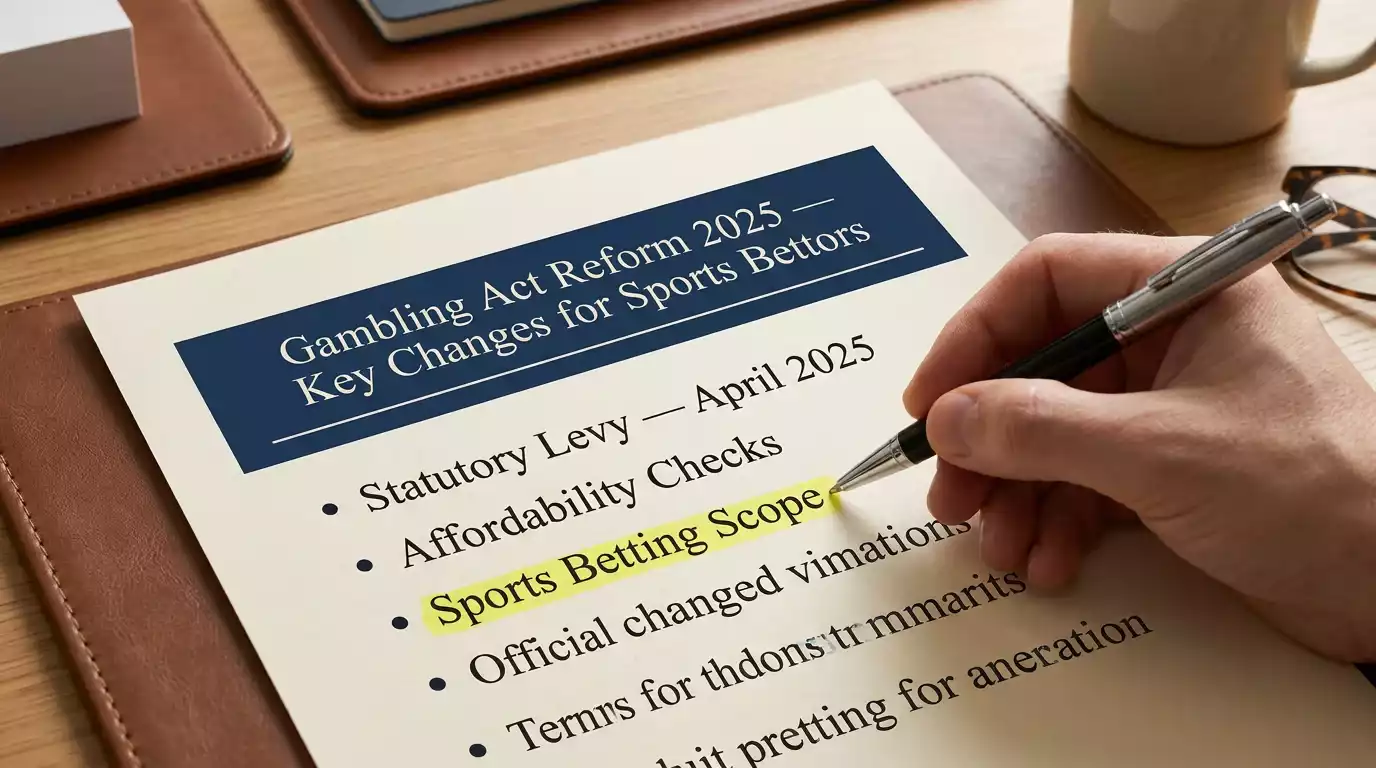
The reform package implemented in 2025 was years in development, tracing back to the Gambling Act review announced in 2020 and the subsequent white paper published in 2023. The implementation in early 2025 marked the transition from policy to practice. For sports bettors specifically, the changes fall into three categories: what directly affects you, what indirectly affects you, and what doesn’t apply to sports betting at all.
What directly affects sports bettors: the Statutory Gambling Levy (from 6 April 2025), enhanced affordability checks at specific financial thresholds, and mandatory safer gambling tools as a standard feature of all UKGC-licensed accounts. These apply whether you’re betting on Wimbledon, Premier League football, or horse racing — sports betting is fully within scope.
What indirectly affects sports bettors: the Statutory Gambling Levy of £100 million per year is funded by UKGC-licensed operators, paid from their licensing income. Operators absorbing this cost have, in varying degrees, adjusted their promotional budgets, reduced their bonus offers, and changed the structure of free bet terms. If you’ve noticed that the free bet offers around Wimbledon 2025 were less generous than in previous years, the levy partially explains this. Andrew Rhodes, the Gambling Commission’s chief executive, framed the regulatory direction clearly: “The customer should come first. That is the basis of sound regulation.” The regulatory intent is consumer protection; the indirect commercial consequence is tighter promotional activity.
What doesn’t apply to sports betting: the slot limits of £5 per spin for players aged 25 and above, and £2 per spin for those aged 18-24, introduced on 9 April 2025, apply exclusively to online slot products. They do not apply to sports betting markets, including Wimbledon betting. The mental model that all 2025 gambling reforms affect all gambling products is incorrect and has caused unnecessary alarm among sports bettors who have received communications from bookmakers about slot limits that have no bearing on their Wimbledon activity.
Affordability Checks Explained: What Happens When You Bet on Wimbledon
Affordability checks are the reform element most likely to directly affect a Wimbledon bettor’s experience. They operate in three tiers of increasing intensity, triggered by spending thresholds and supplemented by financial vulnerability indicators that operators are now required to monitor.
The first tier — “soft markers” checks — is typically invisible to the bettor. When your betting activity reaches certain cumulative thresholds (the specific thresholds are set by operators within UKGC guidance and vary between operators), the system runs automated checks using credit reference data and publicly available financial indicators. No documentation is requested at this stage; no account action is typically taken. The check simply looks for markers of financial vulnerability — county court judgements, insolvency indicators, significant recent credit applications — that might suggest the level of gambling activity is inconsistent with financial capacity.
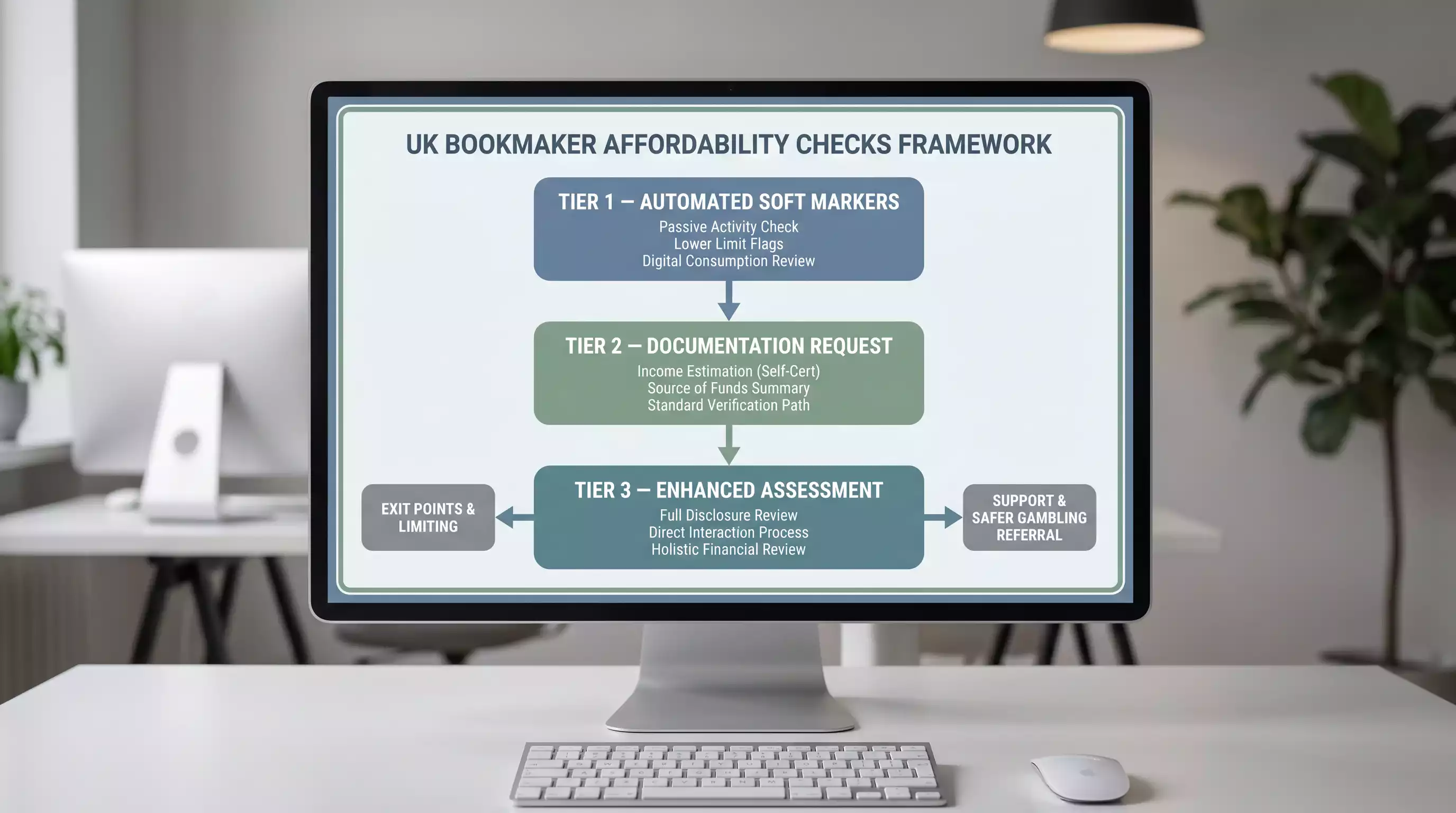
The second tier applies when soft markers are positive or when spending reaches higher thresholds. At this point, operators may request documentation: payslips, bank statements, or other evidence of income. The communication is typically framed as a “responsible gambling check” or “account review.” Responding promptly with the requested documentation is the fastest route through this process. Operators are required to respond within a specified timeframe; if they don’t, you have a formal escalation route through the Alternative Dispute Resolution service the operator must be registered with.
The third tier — enhanced checks — applies to higher-value activity and involves more detailed financial assessment. Most recreational Wimbledon bettors, whose staking profile typically involves £5 to £50 per bet and total tournament activity well below the enhanced threshold, will never encounter this tier.
The practical scenario most relevant to Wimbledon punters: you’ve been a customer at a bookmaker for several years, your annual betting activity is modest, and during Wimbledon fortnight you increase your activity significantly — placing more bets, at higher stakes, across a two-week period. This is a pattern that may trigger tier-one or tier-two checks, not because the activity is inherently harmful but because the algorithm flags a significant change in betting behaviour. Knowing this in advance means you’re not caught off guard; you can respond to any documentation requests without disruption to your Wimbledon betting schedule.
The most practical preparation: ensure your registered address and name on your betting account exactly match your bank account and official documents before Wimbledon begins. Discrepancies in personal details are the most common source of friction in affordability check processes. If you’ve moved address, changed your name, or opened the account with a nickname rather than your full legal name, resolve these before the fortnight starts. What might be a minor inconsistency in an ordinary week can cause a multi-day account restriction at the worst possible moment during a Wimbledon quarter-final.
The 2025 survey data confirms that 47% of UK adults participated in some form of gambling in the period April to July 2025. The vast majority of those interactions generated no affordability check flags. The checks are designed to identify genuinely at-risk patterns, not to interrogate every participant.
The Statutory Gambling Levy: Who Pays and Why It Affects Your Operator
The Statutory Gambling Levy replaced the previous voluntary arrangement under which operators contributed to gambling harm research and treatment. The old voluntary system raised approximately £10 million per year — a fraction of the £100 million the statutory levy is designed to generate annually. This is not a tax on gamblers; it is a levy on UKGC-licensed operators, paid from their licensing income rather than from player funds.
The practical consequence for Wimbledon bettors operates through the commercial decisions operators make in response to the levy. With £100 million leaving the industry annually for research and treatment purposes, operators have less discretionary income to allocate to promotional budgets. Free bet offers have become smaller and more conditional in their terms. Enhanced price promotions appear for shorter windows and with lower maximum stakes. Early payout offers, which were a Wimbledon staple at several major bookmakers, have become less generous in their triggering conditions.
The Remote Gaming Duty paid by UK operators in 2024-2025 reached £1,163 million — a £135 million increase on the previous year, reflecting the growth of the online gambling market. The total tax and levy burden on UK operators in 2026 is substantially higher than five years ago. Understanding this context helps explain why promotional offers are less generous than they were in 2021 or 2022 — it’s not operator parsimony, it’s a structural change in the cost base of running a UKGC-licensed betting operation.
For the bettor, the response is simple: compare promotional terms more rigorously than in the past, because the headline offer is less likely to be the whole story. A £20 free bet with a 3x wagering requirement at minimum odds of evens is worth approximately £10 in expected value. A £10 free bet with no wagering requirement, available on any market at any odds, is worth approximately £10 in expected value. The first offer has a larger headline number; the second is the better instrument.

GAMSTOP, Deposit Limits and Self-Exclusion During Wimbledon
GAMSTOP is the UK’s national self-exclusion scheme, operated independently of individual bookmakers. A GAMSTOP registration blocks access to all UKGC-licensed gambling operators simultaneously — you don’t need to self-exclude at each bookmaker separately. Registrations can be for six months, one year, or five years. Once registered, the exclusion cannot be shortened for the duration of the selected period; it can be extended but not reduced early.
If you’re registered with GAMSTOP and attempt to access a UKGC-licensed bookmaker during Wimbledon, you’ll be blocked at the account creation or login stage. If you’re already a registered customer whose account predates a GAMSTOP registration, the operator is required to close the account when they identify the GAMSTOP status. This is a non-negotiable requirement of UKGC licensing; operators who fail to implement it risk regulatory action.

Partial self-exclusion — excluding from specific products while retaining access to others — is available at the operator level (you can request to exclude from casino products while retaining sports betting access, or vice versa) but not through GAMSTOP (which covers the entire operator licence). Exclusion from a specific product type requires contact with the bookmaker’s responsible gambling team; the request must be implemented within 24 hours under current UKGC requirements.
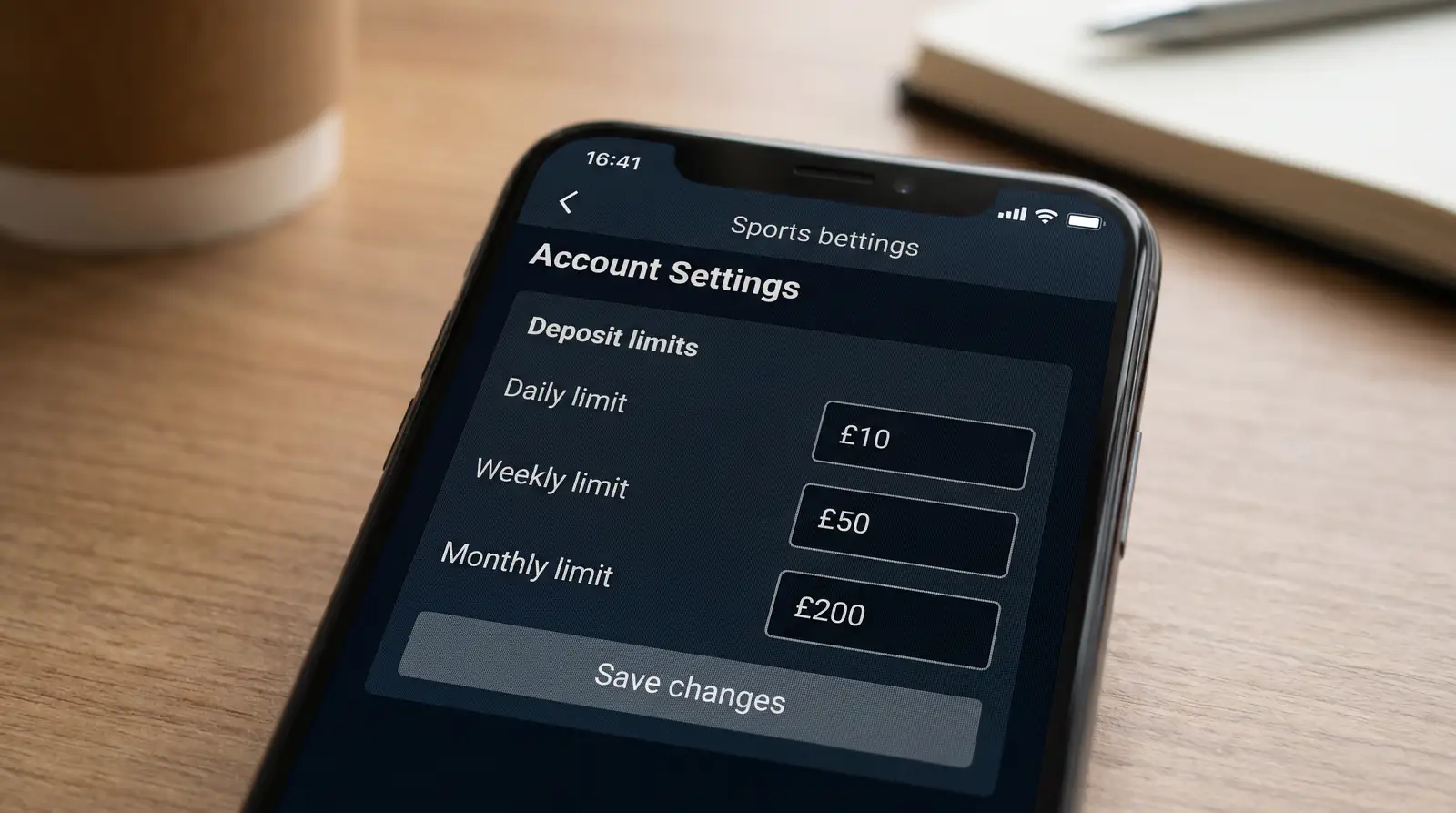
Deposit limits are a practical self-management tool for Wimbledon bettors who want to control their total tournament spend. Setting a daily, weekly, or monthly deposit limit creates a hard ceiling on available funds. The asymmetric timing rule is important: reducing a deposit limit takes effect immediately; increasing a deposit limit requires a 24-hour cooling-off period before the higher limit is active. This asymmetry is deliberate — it prevents impulse increases during high-stakes moments like a Wimbledon final. If you want to raise your deposit limit for finals weekend, you need to request the increase at least 24 hours before you need the additional funds.
The 48% of UK adults participating in gambling (as of Wave 3, July-October 2025) includes the majority of Wimbledon bettors. The regulatory framework for self-exclusion and deposit limits exists as opt-in support, not mandatory intervention. Using these tools proactively, as part of a considered approach to tournament betting, is the practical expression of responsible gambling — not a sign that something has gone wrong.
What UKGC-Licensed Operators Must Do During Major Sporting Events
The regulatory obligations on licensed bookmakers during major sporting events — including Wimbledon — are more specific than the general licensing requirements. This matters because it defines what you can reasonably expect from your bookmaker as a consumer during the fortnight.
Operators are required to monitor in-play betting patterns for signs of problem gambling, including unusually frequent small bets, rapidly escalating stakes, and extended continuous betting sessions. If these patterns are identified, the operator is required to make contact with the customer — not necessarily to restrict access, but to prompt a safer gambling interaction. The interaction might be an in-app notification, an email, or a direct message. Under current UKGC guidelines, operators cannot simply ignore flagged patterns during major events and claim they lack the capacity to intervene.
Advertising standards during Wimbledon are also regulated. Operators are prohibited from using certain types of targeting that might reach under-18s, and live match advertising restrictions apply during children’s viewing hours. This is relevant for bettors because it affects what promotional material you’re likely to see and when.
The “VIP” or high-value customer programme, once a significant feature of the UK betting industry, has been substantially curtailed under 2025 UKGC requirements. Operators are now prohibited from offering certain types of inducements to customers identified as potentially high-risk — and the high-risk identification criteria have been broadened. The practical consequence for most Wimbledon bettors is neutral (most never interacted with VIP programmes), but if you were previously in a bookmaker’s enhanced customer scheme, the terms of that scheme will have changed since 2024.
The non-remote sector — physical betting shops — continues to decline, having fallen to 5,825 locations nationally in the most recent reporting period. During Wimbledon, the majority of betting activity takes place online. This demographic shift means the regulatory conversation has largely moved from in-shop behaviour to online account management, which is where the affordability checks, deposit limits, and GAMSTOP framework operate most actively.
Your Rights as a UK Bettor During Wimbledon Fortnight
UKGC licensing creates specific enforceable rights for UK bettors that do not exist when dealing with unlicensed offshore operators. These rights are most practically relevant when a dispute arises — a settlement disagreement, an account restriction, or a refused payout.
The right to access an Alternative Dispute Resolution service is foundational. If you have a complaint about a bookmaker that the bookmaker’s internal process has not resolved within eight weeks (or has resolved in a way you consider unsatisfactory), you can refer the dispute to the bookmaker’s approved ADR provider. The ADR providers relevant to the major UKGC-licensed Wimbledon bookmakers include IBAS (Independent Betting Adjudication Service). The adjudication is free of charge to the bettor and binding on the operator.

The right to receive a response to a formal complaint within eight weeks is also a UKGC requirement. If you submit a formal written complaint to a bookmaker and receive no response within eight weeks, you can escalate directly to the ADR service without waiting for the bookmaker to engage. Document your complaint and their response (or non-response) from the beginning: screenshots of the relevant bets, any communications about restrictions or refused settlements, and the timeline of events all become material in an ADR case.
Account closure during Wimbledon is within a bookmaker’s rights under their terms and conditions — operators retain the right to close accounts and refuse custom. However, they are required to return your account balance promptly. If a bookmaker closes your account during Wimbledon and retains funds, this is a regulatory matter: contact the UKGC using their formal reporting mechanism. Account closure without return of funds is a breach of the licence conditions that requires regulatory attention, not just a customer service complaint.
Being restricted from placing winning bets is legal under UKGC licensing; operators can set maximum stakes, refuse bets, or decline to offer certain markets to individual customers. It is not a breach of licence. It is frustrating, particularly when it happens during Wimbledon, but it is within the operator’s commercial discretion. The practical response is to use multiple accounts at different UKGC-licensed operators — the analysis of which are best for Wimbledon is covered in the UKGC-licensed bookmakers comparison guide.
One specific practical note on dispute escalation during Wimbledon fortnight: ADR services process cases in the order received, and during major sporting events their caseload increases. If you have a dispute that arises during the first week of Wimbledon and needs resolution before the second week, the timeline may not allow for full ADR adjudication. The most time-sensitive disputes — withheld winnings on specific settled bets — are best addressed with the bookmaker’s complaints team directly, with ADR escalation reserved for cases the bookmaker fails to resolve internally. Keeping clear records of your betting activity, including screenshots of bets placed and odds accepted, is the single most important preparation for any potential dispute.
Articles




Prepared by the bettingonwimbledontennis editorial staff.
