
UK Sports Betting Market 2026: Tennis's Place and Wimbledon's Commercial Weight
 Available in US
The UK gambling industry generated £16.8 billion in Gross Gaming Yield in the financial year April 2024 to March 2025 — a 7.3% increase year on year, and a record for the sector. Online betting alone reached £7.8 billion, growing at 13.1% in the same period. These numbers matter because they provide the structural context for everything that happens when you open a betting account and try to find value on a Wimbledon match. You are participating in one of the world’s most sophisticated legal gambling markets, governed by one of the most active regulatory regimes, and the scale of the market has direct implications for the pricing, liquidity, and product quality available to every UK punter.
Within that enormous market, tennis occupies a specific and growing position that most industry commentary understates. Understanding where tennis sits — and where Wimbledon sits within tennis — gives you a sharper picture of which markets are deeply liquid and tightly priced versus which carry inefficiencies worth exploring.
UK Sports Betting Market: Size, Segments and Growth Drivers
The UK sports betting market online generated $7.371 billion in revenue in 2024, representing 78.47% of all sports betting by revenue — the high share reflecting the decade-long migration from high street betting shops to digital platforms. That migration has accelerated structural changes in the market: the number of non-remote betting shops has declined to 5,825, an 11th consecutive period of decline, while the online sector grows at over 13% annually.
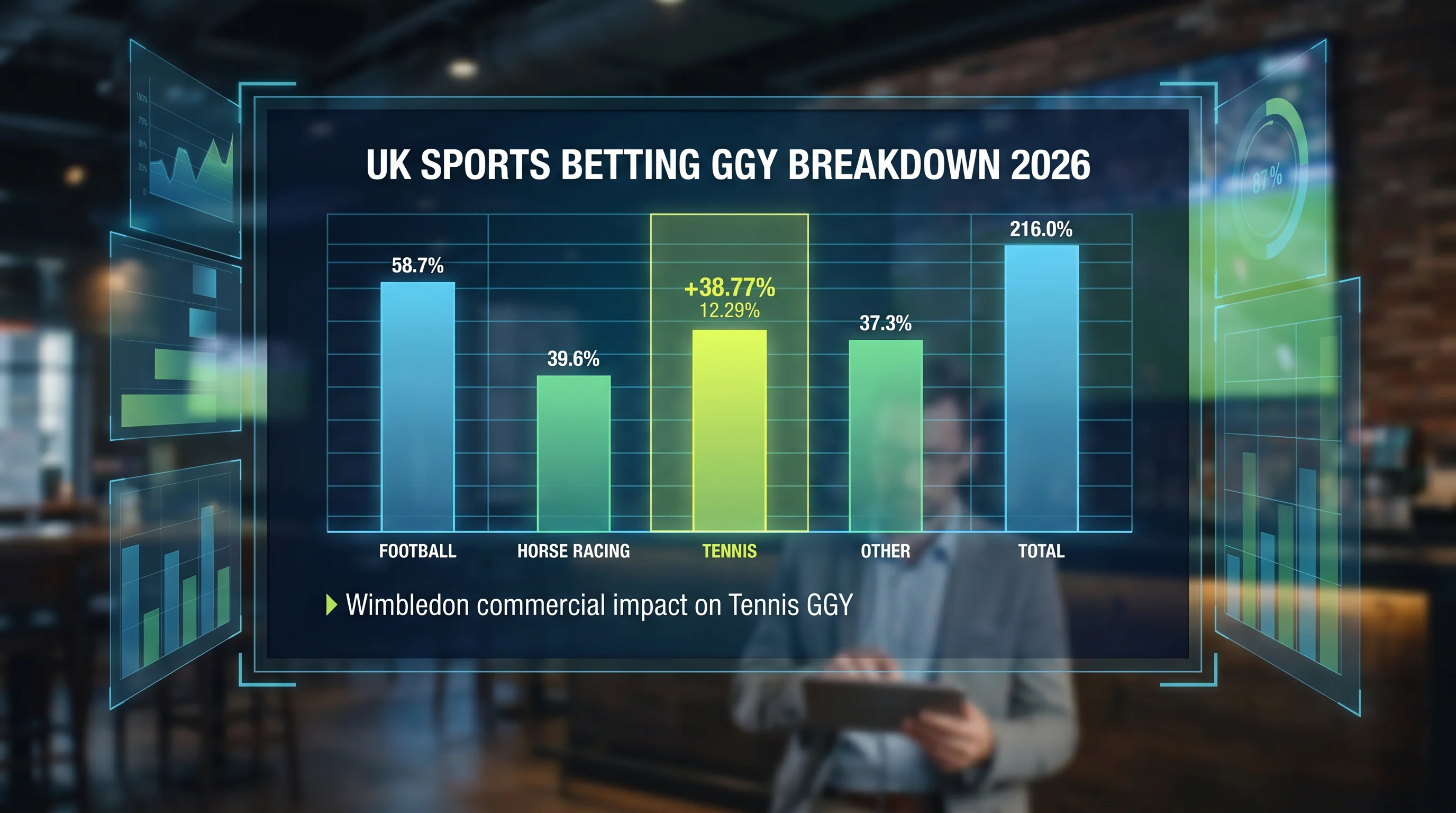
The overall UK sports betting market is projected to reach $21.3 billion by 2030, growing at an 11.4% compound annual rate. This growth is driven by three factors: mobile penetration (the majority of online bets are now placed via smartphone); the expansion of in-play betting products, which now account for over 62% of all online sports betting volume; and the broadening of the betting demographic to include previously underrepresented groups, particularly women and younger adults who are increasingly engaging with tennis as a betting sport alongside football and horse racing.
Football dominates UK sports betting: it attracts roughly 6% of all UK adults as regular bettors, the highest penetration of any sport. Horse racing is second. Tennis sits behind both by active bettor count, but its growth trajectory is significantly faster than either — the CAGR of 13.83% for online tennis betting to 2031 is the highest of any major sport, driven specifically by the Grand Slam format and the availability of continuous in-play markets across the 14-day windows that these tournaments provide.
Tennis Betting in the UK: Share, Seasonality and Wimbledon Peak
The pattern of tennis betting in the UK is profoundly seasonal. Only 7% of UK bettors wager on tennis throughout the year; 22% bet exclusively at the four Grand Slams. This means the market’s total tennis betting volume is highly concentrated in four two-week windows per year, with Wimbledon producing the dominant share of that volume among UK punters.
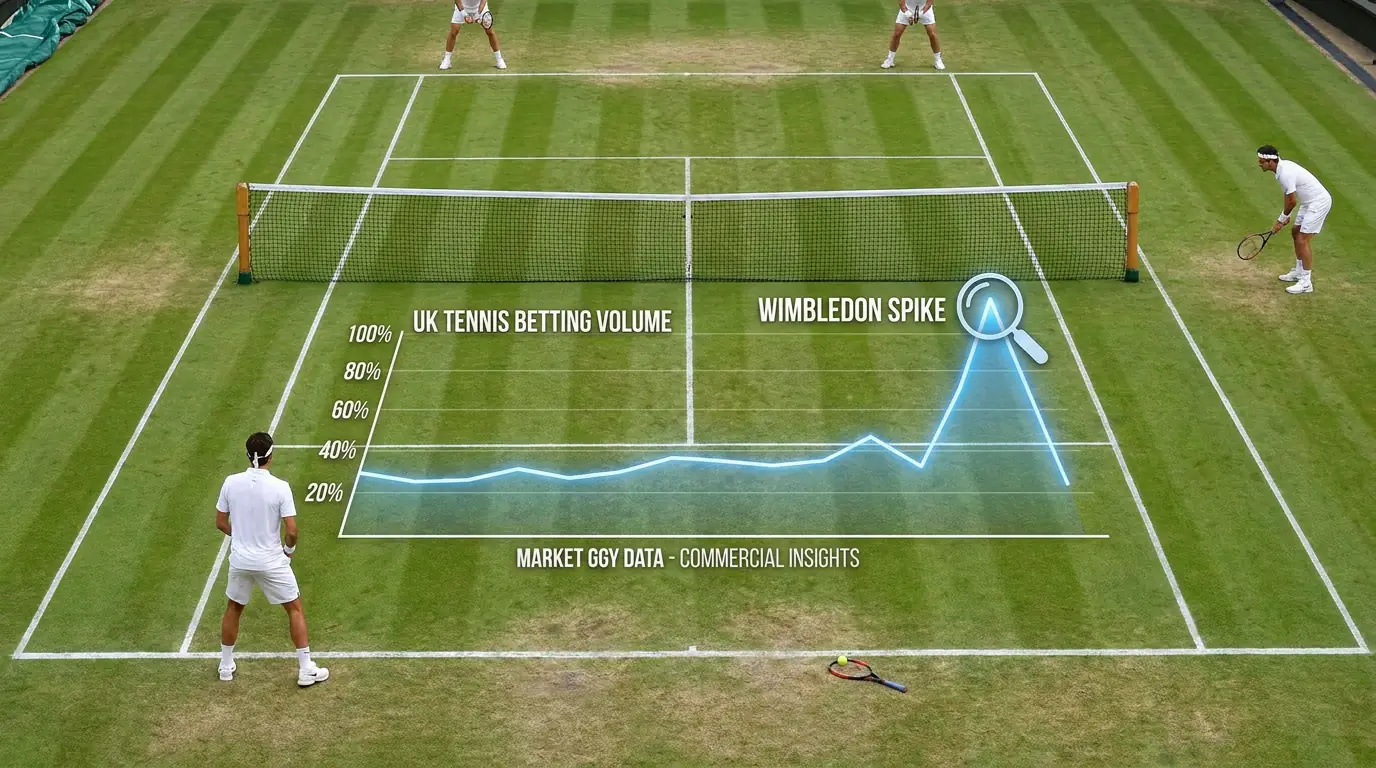
Wimbledon represents 11% of all UK events by planned betting participation — behind the Grand National (51%), FIFA World Cup (43%), Cheltenham Festival (29%), and FA Cup Final (25%), but ahead of other Grand Slams when considered individually by UK audience data. That 11% figure understates the true commercial weight of Wimbledon betting because it measures planned participation rather than actual volume: the BBC’s 7.5 million peak UK viewership at Wimbledon drives real-time betting activity during matches that planned participation surveys do not fully capture.
The seasonality creates a specific market dynamic: operators who invest in their tennis products are concentrated on the Wimbledon window, and the quality of pricing, market depth, and product range at most UK bookmakers reaches its annual peak during the Championships fortnight. This is the time when new customers receive the most competitive welcome offers, when market depth is greatest, and when in-play product quality is highest. As a punter, this is the optimal window for exploring which operator best serves your betting style.
Wimbledon’s Commercial Scale vs. Other UK Betting Events
Wimbledon’s total revenue of approximately $555 million in 2024 makes it the most commercially significant single tennis event in the world. The $1.2 billion market valuation of the Wimbledon segment within the global Grand Slam betting market reflects a specific dynamic: the tournament’s BBC broadcasting relationship (generating £44 million annually in rights fees) ensures that approximately 7.5 million UK viewers watch each major match on free-to-air television. Free-to-air visibility drives betting volume at a disproportionate rate — events that require subscription viewing attract meaningfully lower in-play betting activity per viewer because the viewer-to-bettor conversion rate is lower among subscription audiences.


The comparison with the Grand National is instructive. The Grand National attracts 51% of UK bettors by planned participation — more than four times Wimbledon’s 11% — but it generates that volume in a single day. Wimbledon’s 14-day format distributes betting volume across a much longer window, creating a sustained period of elevated tennis betting activity rather than a single spike. For operators, this means Wimbledon is a more valuable commercial event per betting day than the Grand National in absolute betting volume terms.
Andrew Rhodes, CEO of the Gambling Commission, noted in February 2025 that “online betting, in particular, follows the pattern of major market-forming events.” Wimbledon is one of the clearest examples of this phenomenon in the UK betting calendar: the tournament’s scale, commercial ecosystem, and broadcasting reach create a betting environment that is categorically different from any other tennis event.
The practical implication for UK punters: the Wimbledon betting market in 2026 is operating within the most professionally regulated, most commercially developed, and fastest-growing tennis betting environment in the world. The UKGC-licenced operators competing for Wimbledon business are incentivised by commercial competition to offer the best products, deepest markets, and most competitive pricing in their history. Whether you are placing your first Wimbledon bet or your hundredth, understanding the structural context of the market — its size, its growth drivers, and where Wimbledon sits within it — gives you a clearer picture of the environment you are navigating. For the regulatory context that governs this market and what it means for your access and protections, the detailed analysis is at UK gambling regulation and Wimbledon betting.

Frequently Asked Questions
Articles




Written by the editors at bettingonwimbledontennis.
