
Wimbledon 2026 Men's Singles Outright Odds: Reading the Market Before the Draw
 Available in US
Every year, roughly three weeks before the first ball is struck at SW19, I sit down with the men’s singles ante-post market and try to find where the money is mispriced. It is one of the most interesting puzzles in sports betting — not because the answer is always there, but because the process of looking forces you to think clearly about what grass-court tennis actually rewards. The prize fund for the 2026 Championships stands at a record £53.55 million, up 7% on last year, and that scale attracts a deep, liquid outright market that moves for reasons both good and arbitrary. Understanding why the odds are where they are matters more than simply backing whoever is shortest.
The men’s singles draw at Wimbledon is unique among the four Grand Slams in one underappreciated way: the All England Club uses its own seeding formula, which weights grass-court performance separately from the ATP rankings. That means the man who arrives at SW19 seeded first may not be the player the market favours, and the gap between seeding position and bookmaker price is itself a signal worth examining.
How Wimbledon Men’s Outright Odds Are Built
I spent a week earlier this year talking to a trader at one of the larger UK operators about how they construct the pre-tournament men’s singles line. The process is less algorithmic than most punters assume. The starting point is the ATP ranking, adjusted by a proprietary grass-court coefficient that weights matches played on grass over the previous 18 months more heavily than hard-court or clay results. On top of that, the team layers in injury intelligence, draw scenarios once seedings are confirmed, and — critically — the position of the early money.

Wimbledon generated roughly $555 million in total revenue in 2024, a figure that reflects the deepest media and sponsorship ecosystem of any Grand Slam. That commercial weight means more money flows through the Wimbledon outright market than any comparable tennis event, which in turn means bookmakers have more reason to shade their lines tightly and react quickly to incoming bets. A £10,000 wager on a shortlisted favourite 12 weeks before the tournament can shorten his price by as much as two points overnight. By the time the draw is made, the market has often already processed several such moves.
What this means practically: the initial prices posted in January or February are rarely the sharpest. They are placeholders, designed to attract recreational interest while the sharp money is still forming opinions. The smart entry windows come later — specifically around the Queen’s Club and Halle draws in late June — when there is actual grass-court data to anchor a position.
The Grass Swing: Queen’s Club and Halle as Form Guides
Here is the friction I keep returning to every year: Queen’s Club is treated by the market as a highly predictive event, but the correlation between winning at Queen’s and winning Wimbledon is weaker than punters think. Over the 12 editions from 2013 to 2024, the Queen’s champion went on to win Wimbledon just three times. That is a 25% hit rate on an event that sometimes reduces a favourite’s price by 40% or more in the days after the final. Halle, which runs concurrently, is arguably a better form guide because it draws a slightly different field and the surface plays faster — closer to the speed of the new Wimbledon grass preparation they have been phasing in since 2021.
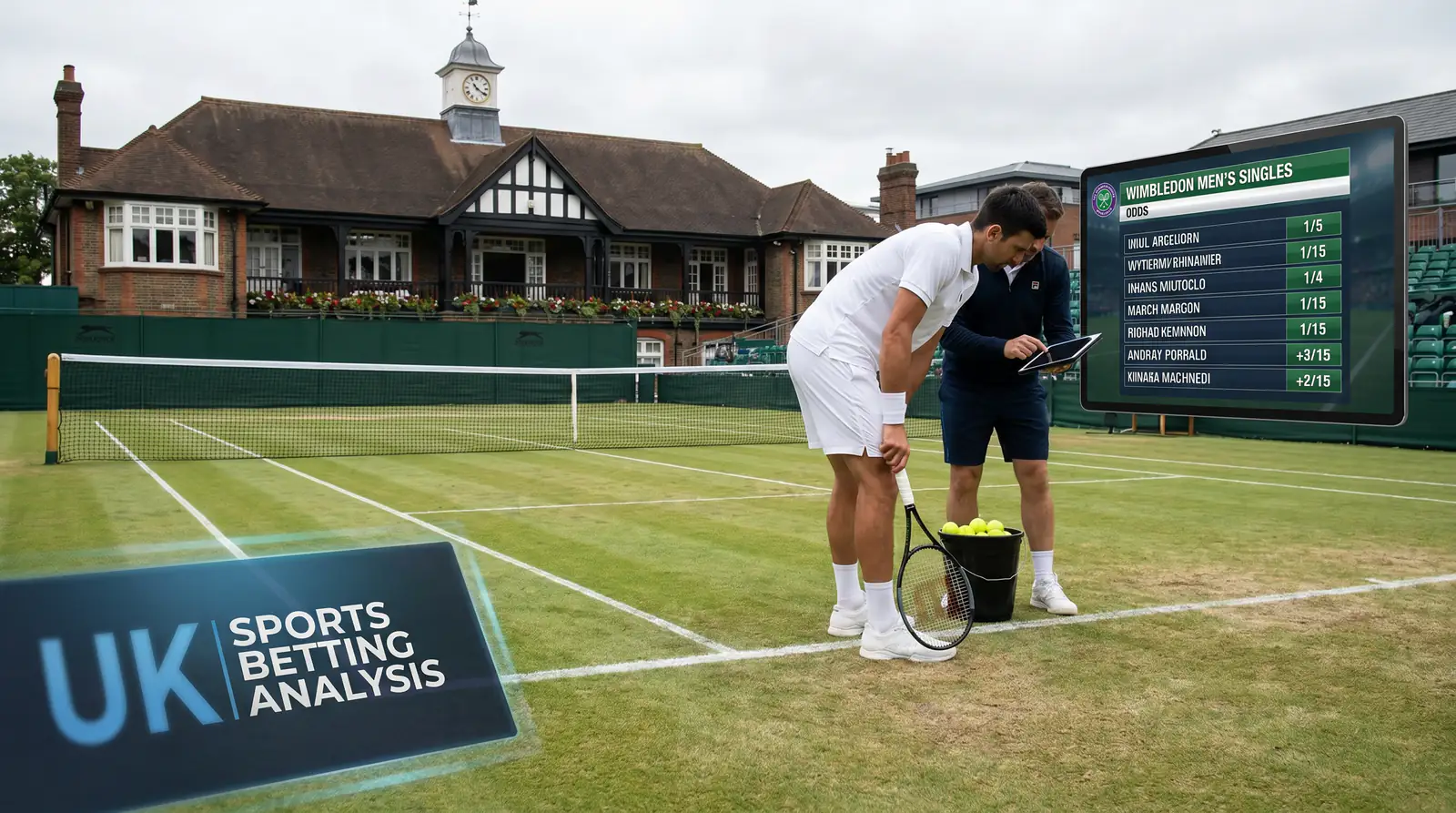
The pattern I look for is not a winner, but a player who reaches the final or semi-final at both Queen’s and Halle — or who plays deep at one and pulls out of the other due to precautionary management rather than injury. A player managing his body intelligently heading into Wimbledon is more interesting to me than one who grinds through five sets at Queen’s and arrives at SW19 carrying fatigue.
The other variable I track is serve statistics. On grass, first-serve points won and ace rate are disproportionately predictive of match outcomes compared to clay or hard court. A player whose first-serve-in percentage drops below 60% under pressure is vulnerable on this surface in a way that his overall ranking simply will not capture.
Ante-Post Entry Points: Before and After the Draw
The men’s singles ante-post market has three distinct entry windows, each with a different risk-reward profile. The first opens in January and runs until roughly the end of the clay season — this is when prices are most generous but least informed. Backing a player at this stage is a bet on your own analysis being better than the market’s; it can pay off, but the no-runner risk (a player withdrawing before the tournament begins) is at its highest.
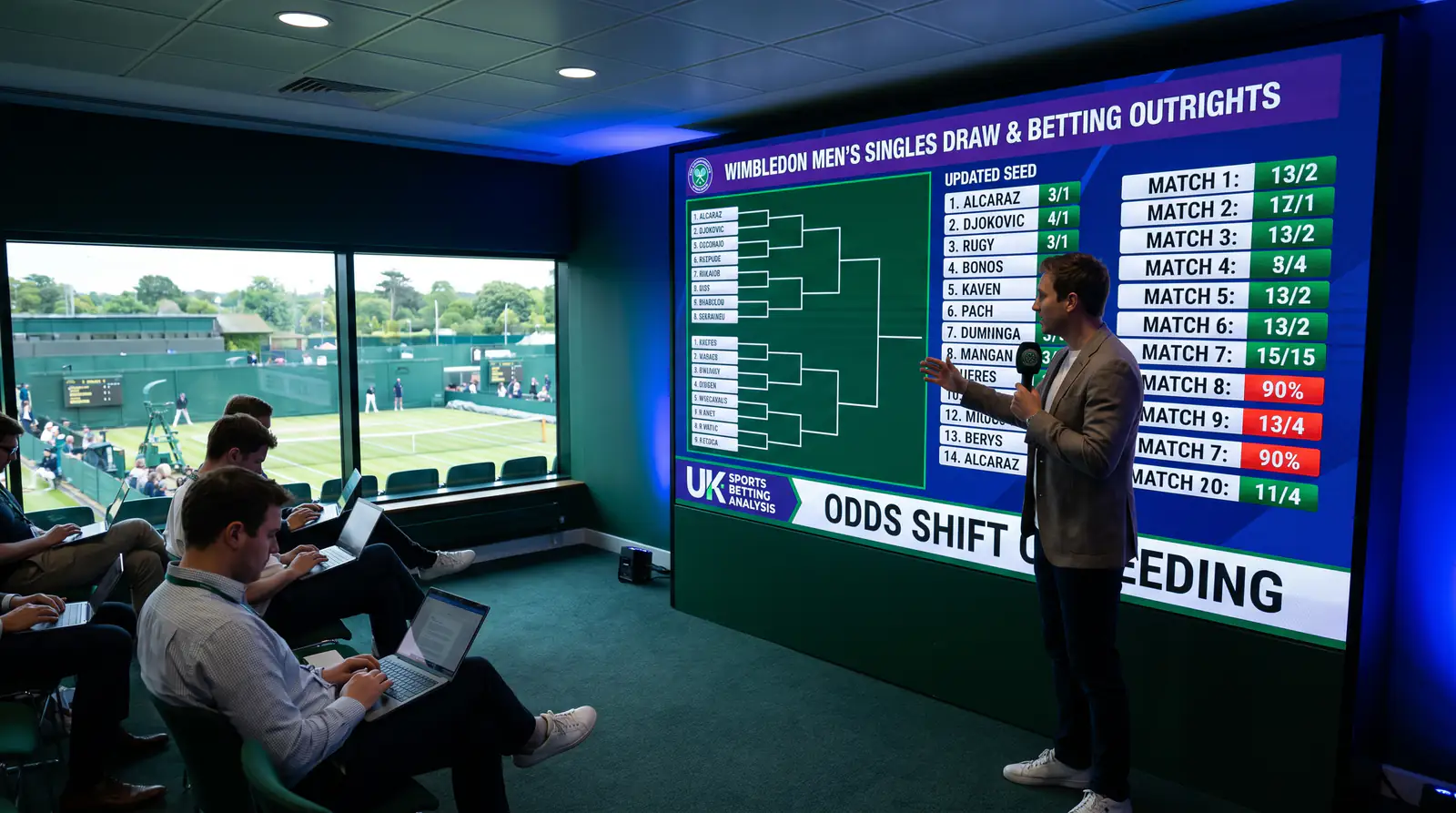
The second window opens after the grass swing results come in and closes at draw day. This is the period when prices tighten most sharply, and it is the window where the majority of sharp money moves. You are trading off some price for significantly better information — you know who is fit, who is in form on the surface, and roughly what section of the draw they will land in once seedings are confirmed.
The third window is the 48 hours after the draw is announced. Draw position matters more in the men’s event than most punters account for. A top seed landing in the same quarter as the second and third seeds faces a demonstrably harder path to the final than a top seed who draws a quarter containing only one other top-eight player. I have seen price movements of 15-20% in both directions on draw day alone, and in my experience the market often overcorrects immediately after the draw, then partially reverts over the following week as the initial excitement settles.
Does Backing the Favourite Offer Value in Men’s Wimbledon?
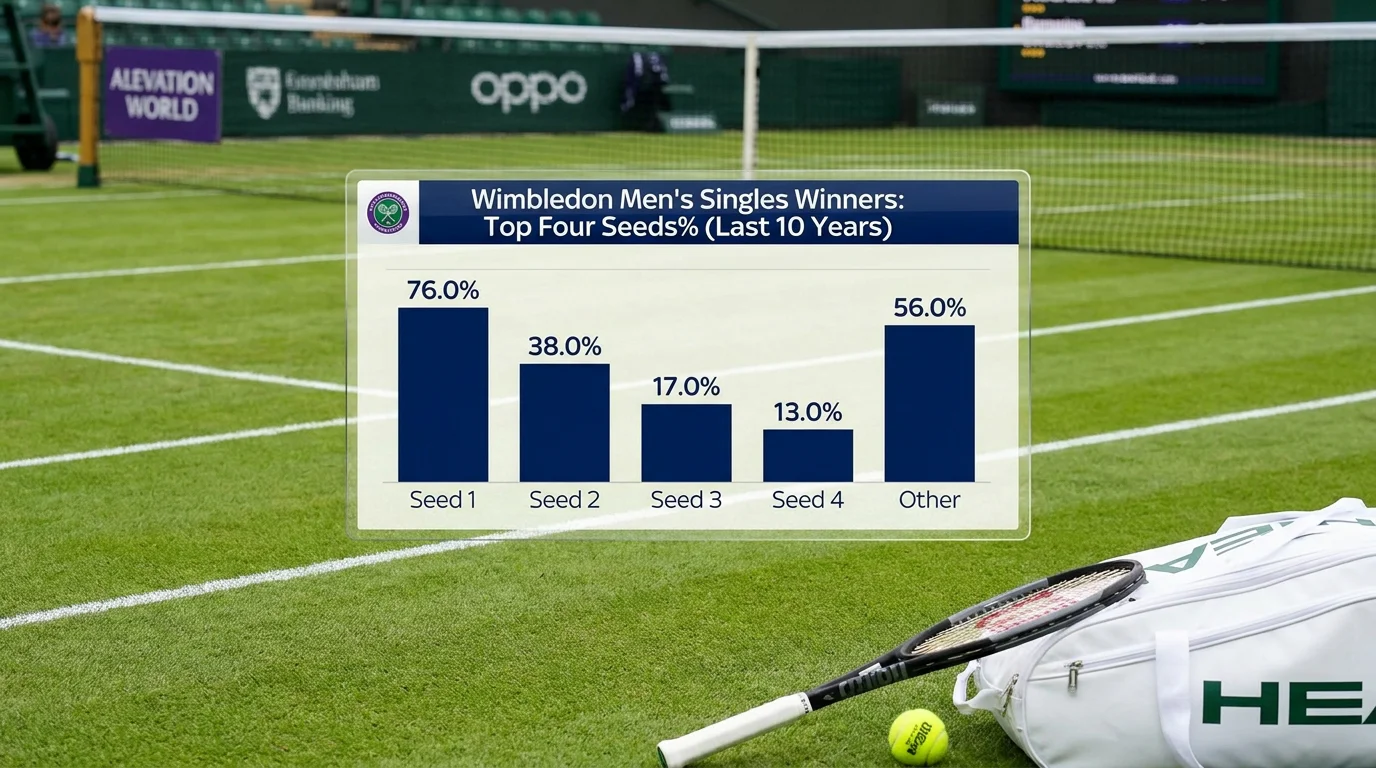
Player form is the dominant factor for 37% of UK bettors when assessing Wimbledon markets, according to the 2025 YouGov survey, and this broadly tracks with what the data shows about actual outcomes. Men’s Wimbledon is more dominated by a narrow group of elite grass specialists than any other Slam. The top four seeds in the men’s draw have won 17 of the past 20 editions. That is an extraordinary concentration of results, and it has a direct implication for outright value: the market prices favourites tightly because the record justifies it.

But tightly priced does not mean no value. The question is not whether to back the favourite, but at what price. I have a personal rule: I will back the men’s singles favourite ante-post only if his price is longer than his implied probability suggests, given his grass-court record over the previous two seasons. This sounds circular, but the calculation is concrete. Take his grass win percentage, apply a conservative discount for uncertainty, and convert to fair odds. If the market price is longer than my fair value by 15% or more, I consider the bet. If it is shorter, I look elsewhere.
The “elsewhere” in the men’s market is usually the next tier — players ranked 5th to 12th in the draw who have a genuine grass-court game but are priced longer than their ability warrants because they lack the commercial profile to attract large amounts of recreational money. For a deeper dive into how individual betting markets are structured and when outright odds shift most sharply, the full analysis is at Wimbledon betting markets explained.
Frequently Asked Questions
Articles



Created by the "bettingonwimbledontennis" editorial team.
