
Wimbledon Ante-Post Betting: The Right Time to Lock In Your Outright Stake
 Available in US
Wimbledon ranks 11th among UK betting events by planned participation — behind the Grand National, FIFA World Cup, Cheltenham Festival, and FA Cup Final — but within the tennis betting segment, it is the dominant event by volume and market depth. That market depth means the ante-post movement on the Wimbledon singles outrights is genuine and trackable, and getting the timing right on your outright bets can make the difference between a price of 12/1 and 6/1 on the same player. The question of when to bet matters almost as much as who to bet on.
Wimbledon Ante-Post Timeline: January to Draw Day
The Wimbledon ante-post market opens formally at most major UK operators in late December or early January, immediately after the Australian Open draw is announced. The January prices are the most generous you will see for the year on any given player — the market is establishing placeholder positions, and the field of information is at its most uncertain. A player priced at 14/1 in January may be at 7/1 by draw day in late June, not because they have improved as a player but because market consensus has gathered around them and compressed the price.
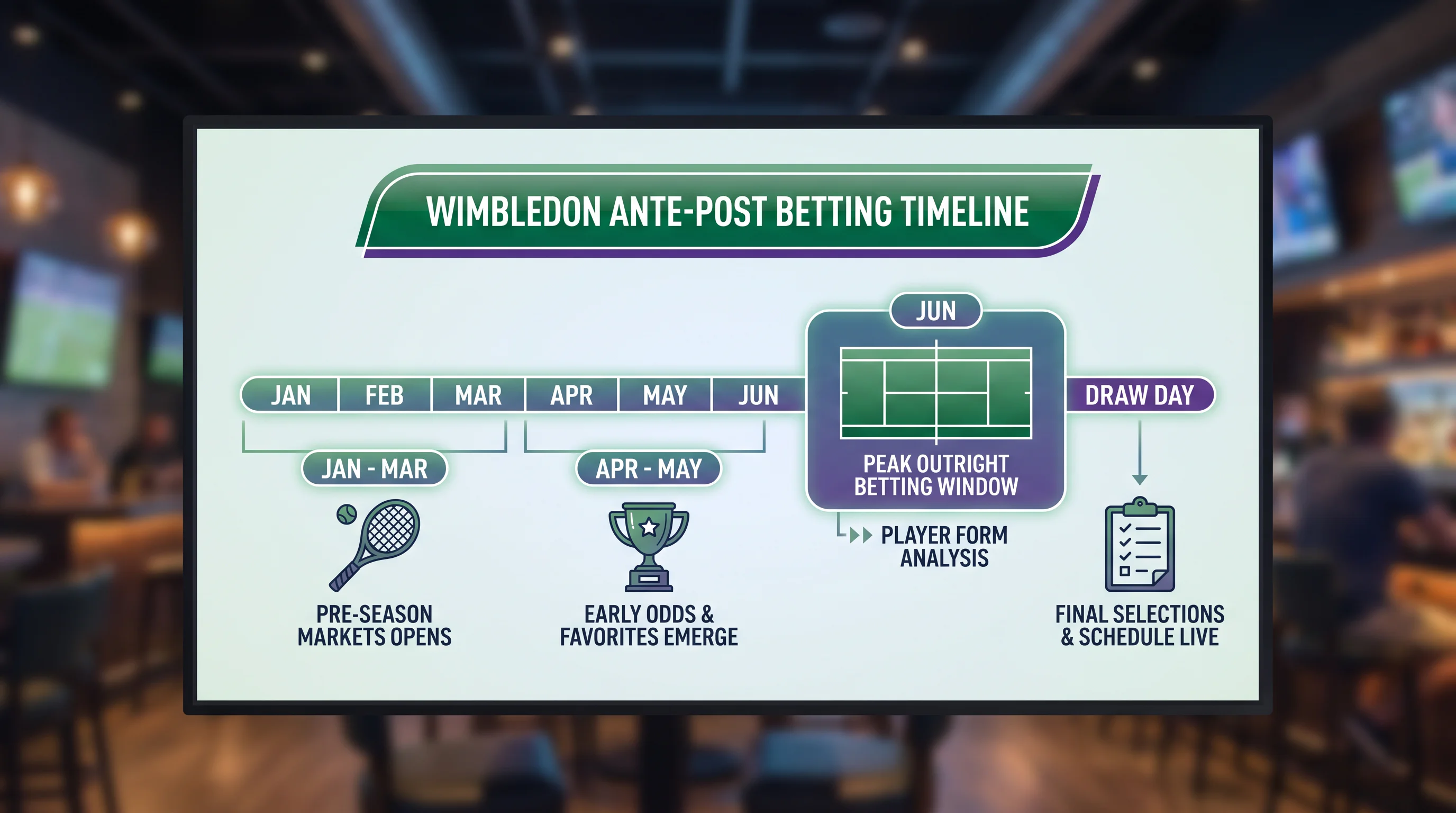
January through March is the first strategic window for ante-post betting. The information available is limited — no grass events have been played, no warm-up form data exists — but the prices compensate for this uncertainty. The bet is fundamentally analytical: you are backing your own assessment of grass-court ability against a market that is priced primarily on ATP or WTA rankings and historic Wimbledon performance. The risk is real: a player who looks excellent in January can arrive at Wimbledon carrying a shoulder injury that developed during the clay season, and if the operator’s terms do not include a non-runner rule, that ante-post bet becomes a loss.
April and May — the clay season — is the period of greatest market inertia. Unless a player has an exceptional result or suffers a major injury during the European clay swing, prices move relatively little. The French Open result in late May creates the first significant price movement of the cycle: a deep run at Roland Garros by a player with decent grass credentials can shorten their Wimbledon price by 20-30%, while a clay specialist who shows no grass transfer typically sees their price lengthen as the market adjusts its assessment of their Wimbledon prospects.
June is where the ante-post market becomes genuinely interesting. The Queen’s Club and Halle events provide the first grass-specific data of the season, and operators react quickly to results. The window between the Queen’s and Halle draws being announced (typically the week before those events) and the Wimbledon draw being confirmed (the last Friday before the tournament begins) is the most analytically productive period for ante-post betting.
How Wimbledon Outright Prices Move Before the Tournament
Wimbledon’s commercial profile — roughly $555 million in annual revenue with nearly half coming from broadcasting rights — means the tournament attracts serious sharp money into the ante-post market from professional bettors and syndicates. This money moves prices in predictable patterns that a careful observer can track.
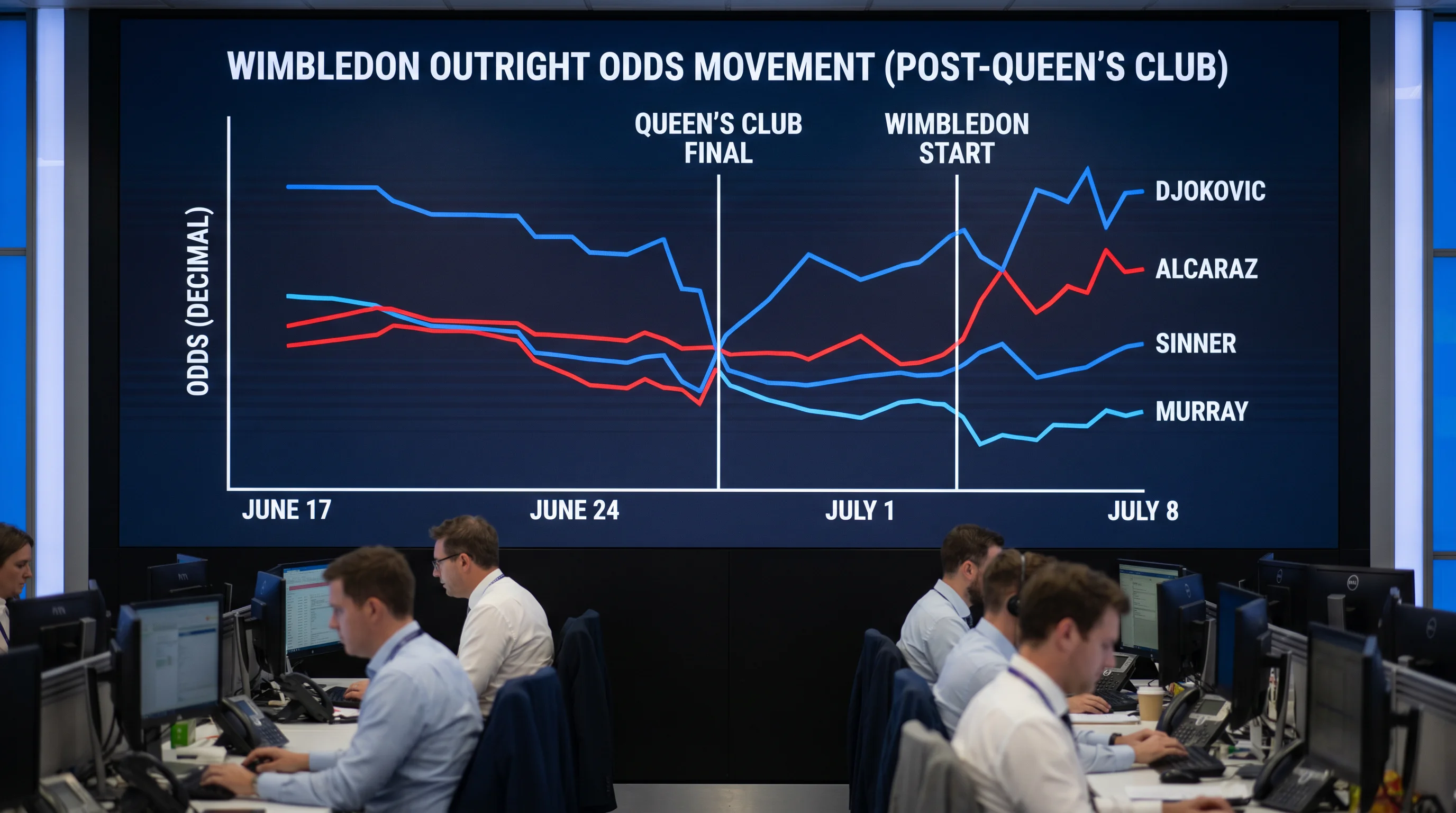
The most consistent pattern: a player who reaches the Queen’s Club final sees their Wimbledon outright price cut by 15-30% within 24 hours of the final result. The market overreacts to Queen’s Club outcomes because it is the most visible pre-Wimbledon form signal, even though the correlation between Queen’s success and Wimbledon success is weaker than most assume. This overreaction creates a specific opportunity: if you have identified a player who you believe will perform well at Wimbledon but who has a modest Queen’s result, their price may actually lengthen slightly after the Queen’s final — and that is the moment to act.
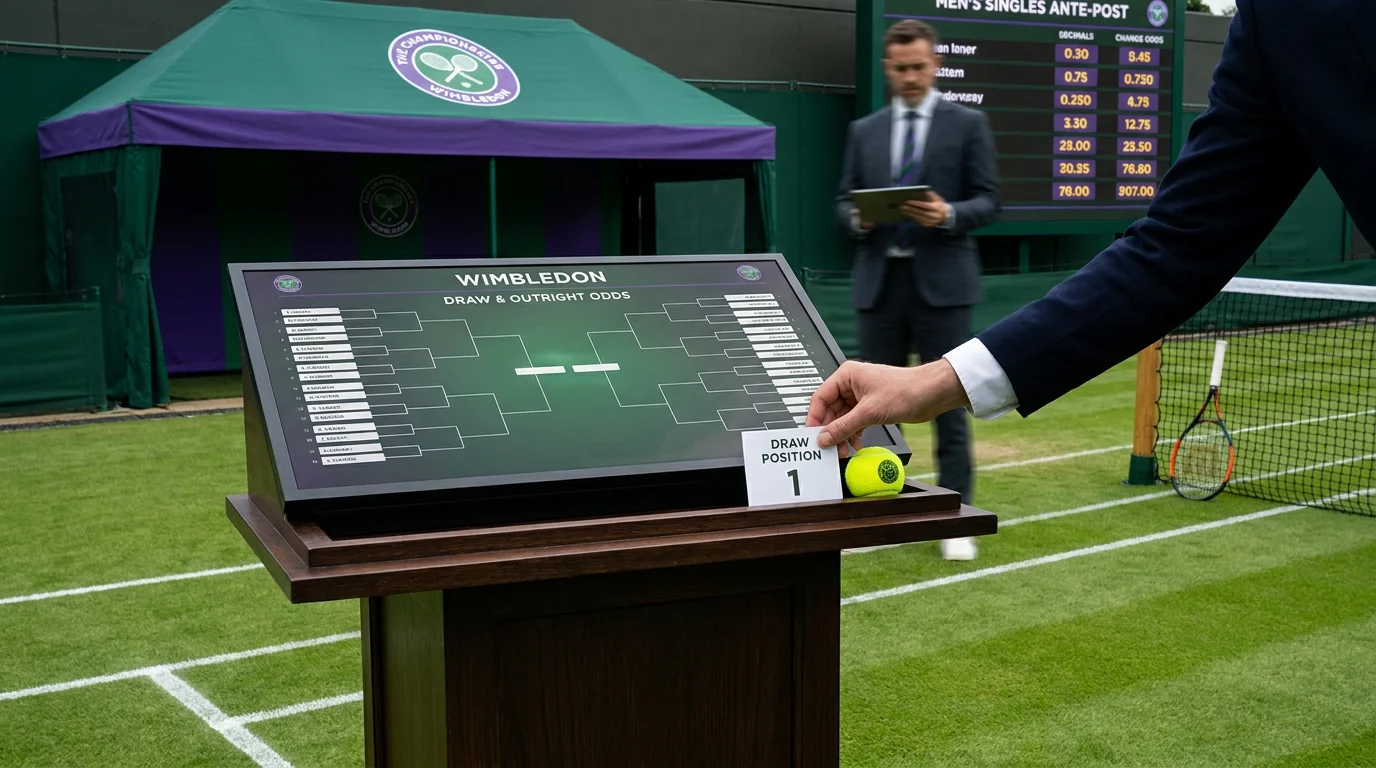
The draw announcement is the second major price-movement event. Players who land in a favourable quarter of the draw — avoiding the other top seeds until the semi-final or final — see immediate price cuts. Players who draw into a brutal quarter see their prices extend. The market processes draw position information very rapidly, typically within two to four hours of the draw announcement. The genuine opportunity, again, is in the overcorrection: players who are shortened excessively because of an ostensibly “easy” draw, when in reality their section contains several dangerous lower-seeded grass specialists who could create problems in rounds three and four.
Non-Runner Risk in Wimbledon Ante-Post Markets
Ante-post betting on Wimbledon outrights carries withdrawal risk that does not exist in match betting. The six-month gap between the January market opening and the tournament start means injury, illness, or personal circumstances can prevent a player from competing. At that point, the ante-post bet settles based on the operator’s terms — either a stake return (non-runner, no-bet) or a losing settlement (ante-post rules apply).
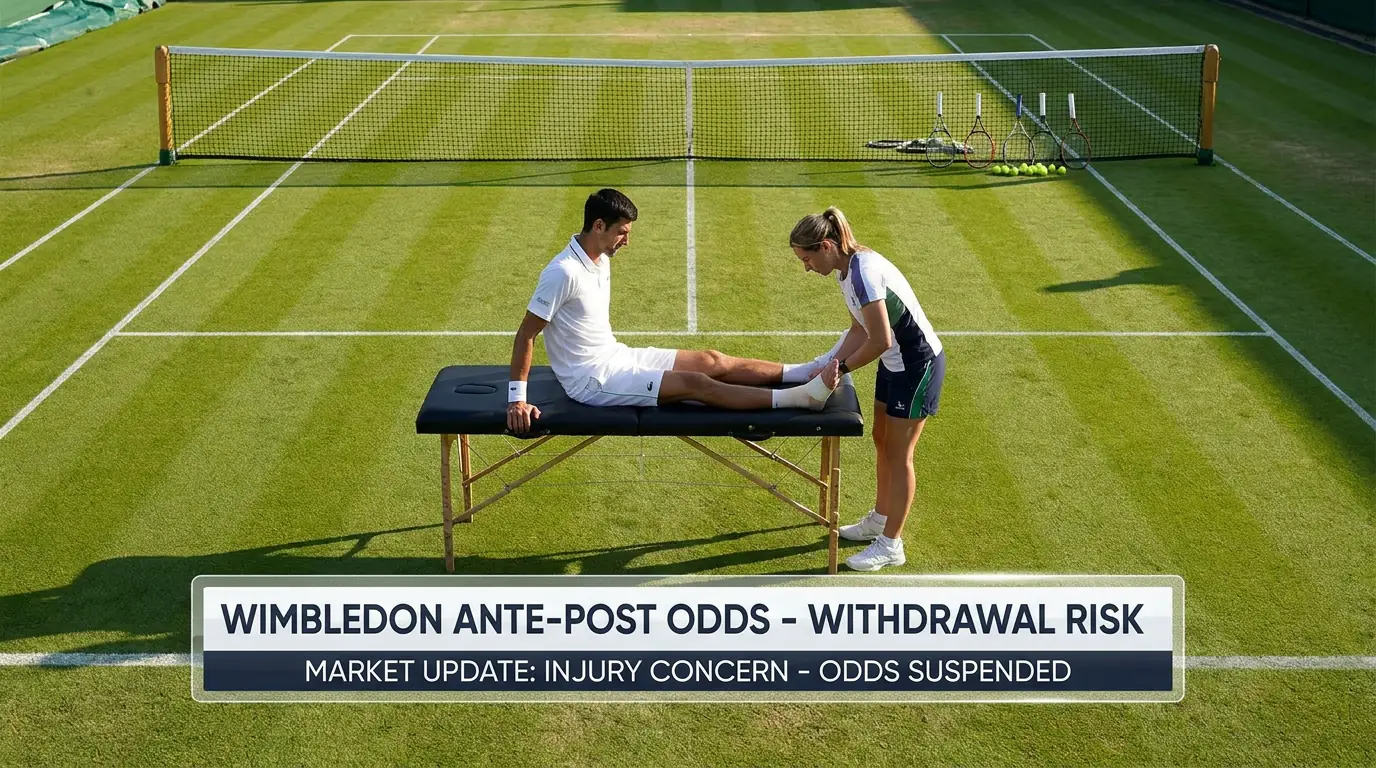
The operators’ terms on this vary, and the difference is significant. A UKGC-licensed bookmaker who applies non-runner, no-bet rules returns your stake if your Wimbledon ante-post selection does not participate in the tournament. One who applies standard ante-post rules settles the bet as a loss regardless of the reason for non-participation. Before placing any significant ante-post outright bet at Wimbledon, confirm which rule your operator applies. Most major UK operators now offer non-runner, no-bet on Wimbledon singles outrights as a standard feature, but confirm rather than assume.
The withdrawal risk is highest for players who play the most demanding clay-court schedules immediately before the grass season. Players who reach the French Open final or who play five-set matches deep into the clay season arrive at the grass swing carrying accumulated fatigue that increases injury probability. This correlation between clay-court ambition and Wimbledon withdrawal risk is a structural feature of the calendar that informed ante-post bettors price in at the selection stage.
Ante-Post vs. In-Play: When Each Approach Offers Better Value
Ante-post and in-play are fundamentally different risk-reward instruments, and the better approach depends on the specific bet you are trying to make.
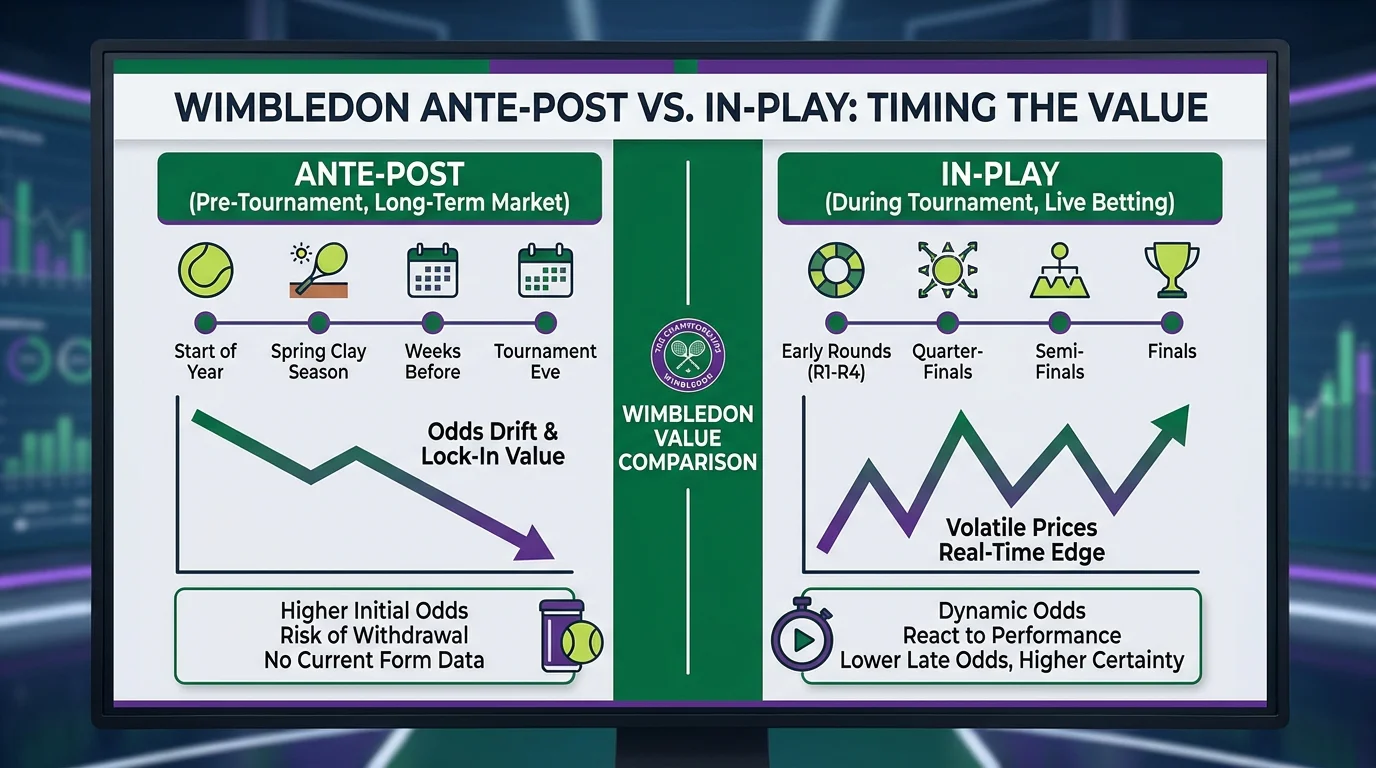
Ante-post is superior when: you have genuine conviction about a player’s grass-court ability that differs meaningfully from the market’s assessment; you are willing to accept withdrawal risk in exchange for the higher price available months before the tournament; and you believe the price will shorten significantly as information flows into the market over the following months.
In-play is superior when: you want to use actual match data — how the player is serving on the day, how the opponent is returning, whether the conditions are favouring one style over another — to inform your bets; you prefer to reduce the information uncertainty at the cost of a lower entry price; and you are specifically betting on match dynamics rather than tournament outcomes. In-play betting on Wimbledon matches offers opportunities that no ante-post model can replicate, because the real-time data from the court is unavailable before the match starts.
The most profitable approach across a tournament combines both: ante-post outright positions established at value prices during the entry windows I have described, supplemented by in-play match betting during the fortnight that responds to actual performance data. For the mechanics of how the men’s singles outright market specifically behaves before and after the draw, the detailed analysis is at Wimbledon 2026 men’s singles outright odds.
Frequently Asked Questions
Articles




Written by the editors at bettingonwimbledontennis.
