
Grass Court Tennis Betting Strategy: A Statistical Approach to Wimbledon
 Available in US
Nine years of analysing Wimbledon markets has given me a fairly clear picture of how UK punters approach their selections — and where the consistent mistakes are made. The most expensive one isn’t backing the wrong player. It’s applying the wrong analytical framework: taking a player’s general ranking or their recent hard-court performance and projecting it directly onto Wimbledon without adjusting for the specific variables that grass courts change. Grass is not simply “a faster surface.” It systematically reshapes probability distributions in ways that are measurable, repeatable, and — if you know what to look for — exploitable.
The 2025 YouGov/OLBG survey of 2,180 UK adults who had bet on Wimbledon previously found that 37% cite player form as their primary decision factor. Only 12% prioritise grass-court statistics specifically. That gap — between general form and grass-specific form — is where a statistically grounded approach to Wimbledon betting earns its keep.
How Grass Changes the Probability Landscape
I once watched someone argue, with considerable conviction, that grass-court statistics were “basically the same” as hard-court statistics because “tennis is tennis.” This is the equivalent of arguing that Formula One and rally driving are basically the same because both use cars. The surface variables at Wimbledon produce genuinely different match outcomes, and the numbers confirm it.
Wimbledon’s natural grass produces a lower ball bounce and a faster playing surface than either clay or hard courts. The direct mechanical consequences are: shorter average rally length, a higher ace rate, and more frequent service holds. When rallies are shorter, the server’s advantage over the returner is amplified — a well-placed first serve is harder to get back into play. When service holds are more frequent, breaks of serve become higher-stakes inflection points that disproportionately influence set and match outcomes.
Ace rates on grass at Wimbledon consistently exceed those at the US Open and Australian Open for the same players. The return differential between first-serve and second-serve points won is larger on grass than on other surfaces because the lower bounce and faster pace make aggressive second-serve returns more risky. Double fault rates, by contrast, are similar across surfaces for most players — meaning the second-serve “weakness” on grass is more often a function of the returner’s reduced leverage than the server’s increased error rate.
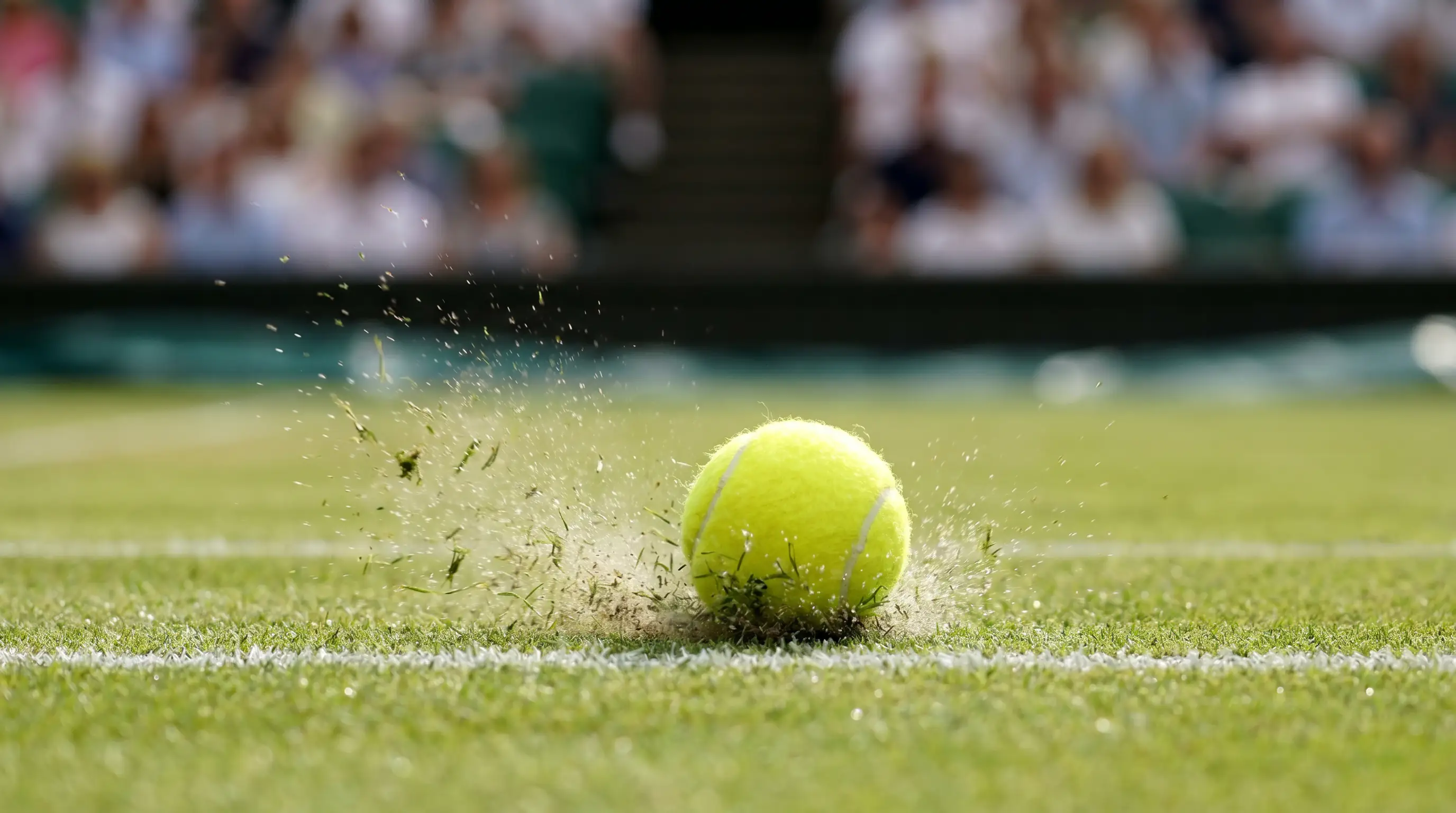
As Unibet’s official Wimbledon analysis observed: “Fast serves, short rallies and unpredictable results make it an ideal event for bettors” — precisely because the surface creates conditions where the standard probability model (built on a broader data set including slower surfaces) systematically misprices certain player matchups. The unpredictability they refer to is not randomness; it is the amplified variance of a surface that rewards specific attributes more sharply than the ranking system captures.
The Form Hierarchy: What UK Bettors Actually Use to Pick Wimbledon Winners
The survey data is clear: form is primary, intuition is secondary, grass statistics are tertiary, and head-to-head records are fourth. What the data doesn’t tell you is whether this hierarchy is correct — and I’d argue it isn’t, or at least it isn’t as constructed by most punters.
Player Form: Recent Results on Grass
Recent results on the grass swing — Queen’s Club, Halle, ‘s-Hertogenbosch, Eastbourne — are the most direct form inputs available. A player who won Queen’s Club is not automatically a Wimbledon contender, but a player who won Queen’s Club and beat two top-20 opponents to do so has demonstrated specific grass-court competence that matters. The relevant question isn’t “did they win” but “who did they beat, and how did they beat them?”
Service statistics from grass-swing matches deserve specific attention. A player recording first-serve percentages of 70%+ and winning 80%+ of first-serve points on grass is demonstrating the exact attribute that Wimbledon rewards most. Compare this to their equivalent stats on clay or hard courts: if the grass numbers are materially better, you’re looking at a player whose game genuinely suits the surface rather than one who’s riding form momentum from a different context.

The limitation of recent form is sample size. The ATP grass swing before Wimbledon is short — Queen’s Club runs for one week, Halle for one week — and a first-round exit at Queen’s tells you relatively little about a player’s readiness for Wimbledon if it came against a better-ranked opponent in a tight three-setter. Context matters. Result alone does not.
Grass-Court Statistics Over Two to Three Seasons
A player’s grass-court win percentage over the previous two or three seasons is a more stable predictor of Wimbledon performance than any single tournament result. The sample covers roughly 20-40 matches on grass depending on how deep that player has run in Wimbledon and the grass warm-up events, which is enough to identify genuine grass-court ability versus surface-specific inconsistency.
The specific statistic to calculate: grass-court matches won as a percentage of grass-court matches played, filtered to matches against opponents of similar or higher ranking. This removes the noise of first-round wins against qualifiers and focuses on performance in competitive grass-court environments. A player with a 68% win rate on grass against top-50 opponents is quantitatively a better Wimbledon proposition than a player with a 75% overall grass win rate driven primarily by wins against lower-ranked opponents.
Head-to-Head Records on Grass
H2H data is the most over-weighted factor in Wimbledon betting by the punting public and the most under-weighted by systematic analysts — not because H2H is irrelevant but because grass-specific H2H is what matters, and the grass-specific sample is often too small to be statistically meaningful. Two players who have met eight times on various surfaces might have a 4-4 H2H record that tells a story — but if only one of those matches was on grass, the surface-specific H2H is a single data point, not a pattern.
Only 7% of UK bettors wager on tennis throughout the year; 22% bet only at the four Grand Slams. Among the majority of punters who engage with tennis primarily at Wimbledon, the H2H narrative (presented compellingly by broadcast commentators) creates false confidence in a metric with limited predictive validity at the match-by-match level. When the grass H2H is genuinely large — four or more matches between the same players specifically on grass — it carries real information. When it consists of one or two matches, it’s decorative.

Serve Dominance and Its Impact on Wimbledon Betting Markets
If there is one variable that analytically separates grass-court betting from all other surfaces, it’s serve dominance — and yet it’s systematically under-weighted in most punters’ selection process. Here is the specific mechanism and its betting implications.
A player who wins 82% of service points on grass is holding serve with sufficient reliability that their route through a match is almost entirely determined by break-of-serve conversion in return games. Against an opponent winning 78% of service points, the probability distribution for that match is dominated by a single question: who converts the one or two genuine break opportunities that the surface allows? This is a different analytical problem from a hard-court match where service break rates are 25-35% and momentum swings are more frequent and more reversible.

In set betting markets at Wimbledon, this has a specific implication. A match between two dominant servers — where breaks of serve are rare — is more likely to produce a 7-5 or 7-6 set score than a 6-3 or 6-4. The statistical distribution of set scores in serve-dominant matches tilts toward the narrow end. A bookmaker pricing set betting on such a match based on general ATP statistics will under-price the narrow scoreline options (6-7 range) and over-price the comfortable scorelines (6-2, 6-3). As Unibet’s guide on Wimbledon noted: players with strong serves and athletic playing styles warrant specific attention at SW19 — and this is why.
The ace leaders at Wimbledon are not simply generating inflated statistics; they are structurally reducing the information content of each return game, which makes each individual rally within a return game disproportionately important. For in-play bettors, this means the value of information acquired during a match is higher at Wimbledon than on other surfaces: a double fault at 30-40 in a service game against a dominant server represents a larger probability shift than the same event in a rally-based hard-court match.
One specific application for pre-match set betting: when a match features two players with starkly different serve profiles — a heavy server against a returner-dominant player — the probability distribution is asymmetric and bookmakers often misprice it. The serve-heavy player who is priced at 4/1 for the match might have a 35-40% chance of winning 3-0 in sets if they hold serve comfortably. That 3-0 outcome at correct set score might be priced at 12/1 or longer — significantly above the implied probability. This is the specific junction where surface knowledge converts to betting edge.
ATP/WTA Seedings vs. Grass-Court Reality
Wimbledon’s seeding procedure is not identical to the ATP or WTA rankings — and the distinction matters for betting. AELTC uses a modified formula that includes grass-court performance over the previous two seasons, meaning a player who has performed significantly above or below their overall ranking on grass will be seeded differently from their pure ranking position. This is a feature, not a quirk, and understanding it unlocks some early-round betting value.
In practical terms: a player ranked 15th in the world who has won the Halle title three times and reached the Wimbledon quarter-finals twice in the past two years will be seeded higher at Wimbledon than their ATP ranking suggests. Conversely, a clay-court specialist ranked 8th might be seeded 10th or 12th because their grass record doesn’t support the ranking position. The betting implication is that when you see a “seeded” player at Wimbledon priced as if their seed reflects pure ability, check whether that seed is inflated or deflated by the grass modifier.
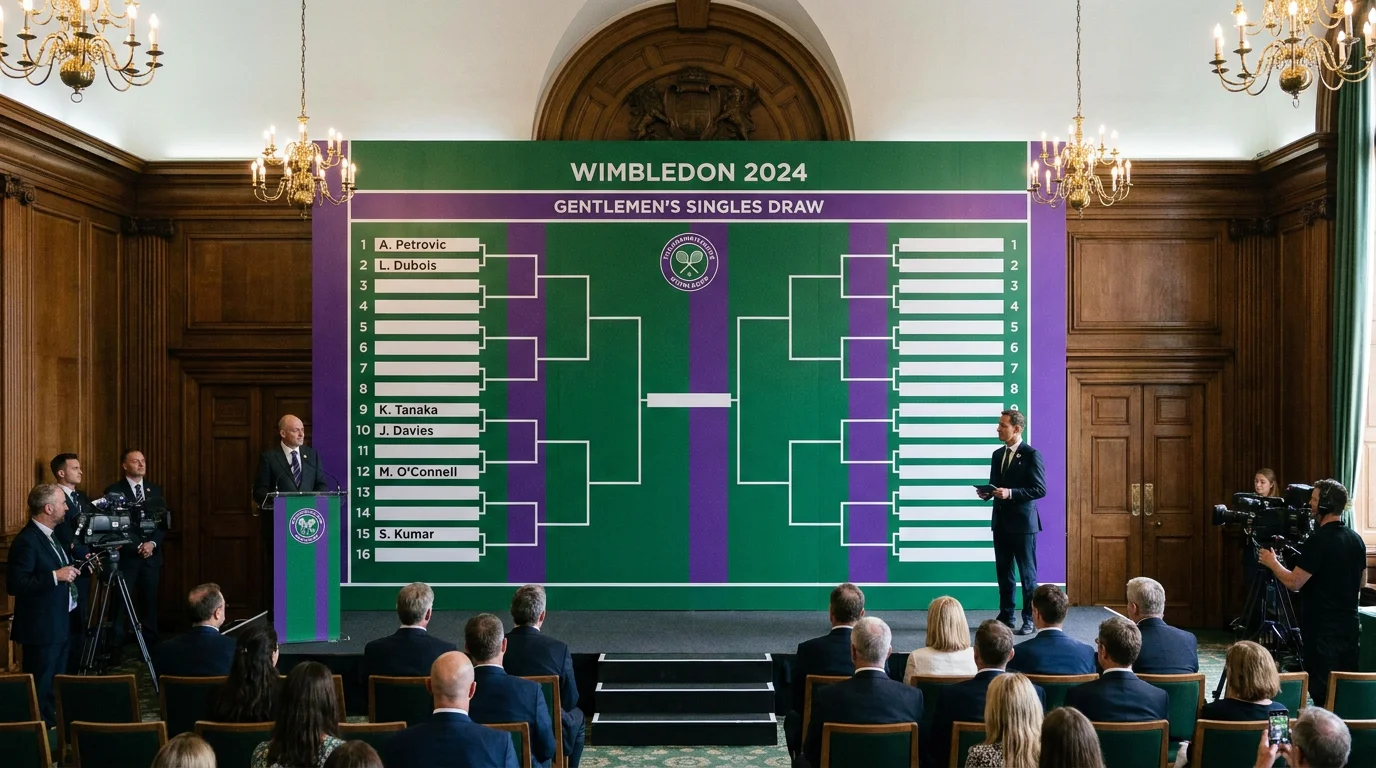
Seeded player first-round exit rates at Wimbledon are meaningfully lower than at the Australian Open or French Open — partly because the seeding procedure is grass-adjusted, and partly because the 128-player draw means even the 32nd seed is likely to open against a qualifier or lucky loser. But the rate at which players seeded 17-32 exit before the third round is not trivial. The Wimbledon draw has a prize fund of £53.55 million for 2025 — the incentive to compete is there — but a top-25 seed drawn against a grass-court specialist wild card in round one is a genuine risk at short prices.
The betting implication for match betting in rounds one and two: treat seedings as a starting point, not a conclusion. A seeded player priced at 1/5 who has been seeded based on their general ranking (not grass-specific performance) against an unseeded grass-court specialist is a market that deserves scrutiny. The seeding provides a reassuring narrative; the grass-specific statistics may tell a different story. Always check whether the seed is an accurate reflection of grass ability before accepting short odds as genuine value.
Underdog Patterns at Wimbledon: Rounds, Surfaces and Value Windows
Wimbledon underdogs are not distributed randomly across rounds. The data, when you look at it across multiple editions, reveals consistent patterns about when and where the surface most reliably disrupts seeding expectations — and these patterns are directly applicable to betting strategy.
First and second rounds carry the highest rate of lower-seeded upsets at Wimbledon, particularly on the men’s side. The mechanism is specific: an unseeded player with a strong serve and limited clay-court pedigree who has spent the last three weeks practising on grass (rather than playing a heavy clay schedule) is, in grass-specific terms, better prepared than their ranking suggests. Against a seeded player who is still in physical recovery from a deep clay-court run, the first-round matchup is more open than the odds imply. The pricing in these markets often reflects ATP ranking rather than surface-specific preparation — which is where the value appears.
The women’s draw at Wimbledon is structurally more open than the men’s. The WTA’s depth is genuine across surfaces, but on grass specifically the surface’s variance compounds the existing parity in the women’s game. Unseeded or low-seeded finalists appear at Wimbledon on the women’s side with a frequency that the outright market systematically under-prices. For detailed analysis of specific upset data by round and seeding, the Wimbledon upsets history article covers the full dataset.

Correct set score betting and set handicap are the most efficient ways to play underdog value at Wimbledon because they don’t require the underdog to win — they require the match to be competitive. A 50/1 outsider in the outright market is, plainly, unlikely to win the tournament. That same player has a non-trivial probability of winning a set against a seeded opponent in the second round, and a further non-trivial probability of winning two sets or pushing to five sets. Set betting and match handicap markets on these matchups often price the competitive outcome at odds that don’t fully reflect this probability.
The third and fifth rounds are where mid-seeded underdogs — players seeded 17 through 32 — produce the most betting value historically. By these rounds, the draw has cleared enough that their opponents are predictable (typically top-eight seeds or another mid-seed), and yet the match prices remain compressed toward the favourites based on seeding alone. A 25th seed who has come through rounds one and two against opponents of roughly equal grass ability is in better form-specific condition at the point of their round-three match than their price suggests.
Pre-Tournament Betting Checklist: Seven Grass-Court Variables to Assess
Before placing any pre-tournament Wimbledon bet, I work through seven variables in this order. The order matters because each subsequent variable is most informative when the earlier ones have already been assessed.

First: grass-court win/loss record over the previous 12-18 months, filtered to matches against top-50 opponents. This is the foundational number — everything else is a modifier.
Second: Queen’s Club and Halle results in the current year. Not just the outcome but the quality of opposition faced and the match-specific serve statistics. A semi-final exit at Queen’s against the eventual winner is informative differently from a second-round exit against a qualifier.
Third: first-serve percentage and first-serve points won on grass this season. If these numbers are notably higher than the player’s hard-court equivalents, it’s genuine grass-court suitability, not just form.
Fourth: physical condition and injury status. Grass-court conditions are harder on the body — the court surface requires different movement mechanics than hard courts. A player coming off a hard clay season with a lower-limb injury who hasn’t played grass since the previous year is a risk at any price.
Fifth: ranking momentum. A player who has risen 15 places in the rankings over the past three months is in better form across the board than their current seeding might suggest. Momentum matters because confidence and physical conditioning are both partially reflected in it.
Sixth: H2H on grass specifically. Apply the statistical significance test: four or more grass-court meetings is meaningful data; fewer than that is anecdote. Note the direction of the relationship in the surface-specific matches, not the overall H2H.
Seventh: Wimbledon draw position. Two players with equivalent grass-court ability and form profiles but different draw sections can have meaningfully different probabilities of reaching the final. The player drawn to face the second seed in the semi-final (as opposed to the fourth seed) carries more risk regardless of their own quality. For outright and each-way betting, draw position is the final adjustment to an already-formed view — not a starting point.
Articles



Created by the "bettingonwimbledontennis" editorial team.
