
Wimbledon Bet Builder: How to Combine Markets Without Destroying Your Value
 Available in US
In-play betting now constitutes 62.35% of all online sports betting volume, and the Bet Builder — also called same-game multi or SGM depending on your operator — has become one of the most popular pre-match products by volume during Wimbledon. The appeal is obvious: you select multiple outcomes from a single match, the odds multiply, and the headline return looks exciting. The problem, which the promotional material does not emphasise, is that poorly constructed Bet Builders are among the worst-value bets you can place at Wimbledon — not because the product is inherently bad, but because combining correlated markets inflates the mathematical loss without the punter realising it. Understanding correlation is the essential skill that separates a profitable Bet Builder approach from an expensive habit.
How Wimbledon Bet Builder Works at UK Bookmakers
A Bet Builder allows you to combine multiple selections from the same match into a single bet. Unlike an accumulator (which combines selections from different matches), all legs of a Bet Builder apply to one specific Wimbledon match. Typical available markets that can be combined include: match winner, number of sets, total games over or under a specified number, whether there will be a tie-break in a specified set, player A to win first set, number of aces in the match, and player-specific markets like player A to hit over or under a specified number of winners or double faults.

The operator calculates the combined odds by multiplying the individual odds of each leg together, then applying a margin that reflects the correlation between the legs. This correlation adjustment is where the product becomes complex. When you select “Player A to win” and “Player A to win in straight sets,” these two outcomes are positively correlated — when A wins, she is more likely to win in straight sets than when she loses. The operator adjusts the combined odds downward to account for this positive correlation, because the joint probability of both outcomes is higher than the product of their individual implied probabilities would suggest.
The critical implication: combining correlated markets does not give you the full multiplicative benefit of the individual odds. The operator extracts an additional margin reflecting the correlation, on top of the overround already built into the individual market prices. This double margin is the hidden cost of poorly constructed Bet Builders.
Which Markets Combine Well in a Wimbledon Bet Builder
The best Bet Builder combinations at Wimbledon are those where the legs are either genuinely independent of each other or where the correlation works in the bettor’s favour — that is, where positive correlation means the joint probability is higher than it might appear, and the operator’s adjustment understates the actual value.

The most genuinely independent combination available in Wimbledon Bet Builders is player A to win combined with a tiebreak to occur in a specific set. Whether a particular set goes to a tie-break is relatively weakly correlated with who wins the match overall — a player can win a match in straight sets with one or two tie-breaks, or without any tie-breaks. This independence means the combined odds are less aggressively adjusted than correlated combinations, and the leg adds genuine multiplicative value.
A second strong combination type is match winner combined with total games in the match exceeding or falling below a threshold. If you believe a match between two big servers on Centre Court will be tight and dominated by serve games — predicting a high total game count — combining “Player A to win” with “total games over 38” captures a specific match dynamic. The two legs are related but not tightly correlated: A can win while the match still produces many games, particularly in a three-set match decided by a couple of breaks across all three sets.
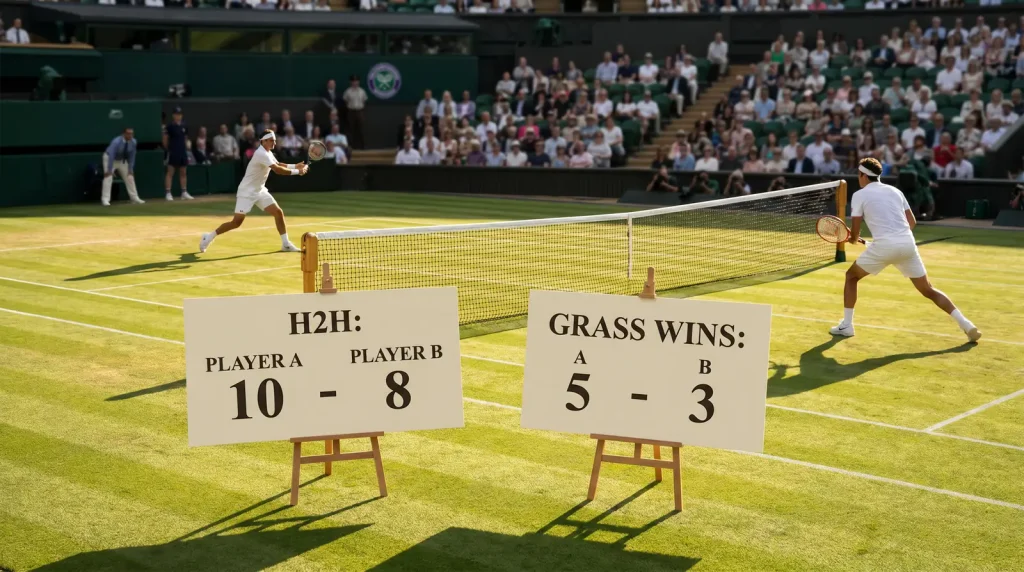
A third combination worth exploring: first set winner combined with match winner. On grass, the player who wins the first set wins the match at a significantly higher rate than on clay or hard court — the serving conditions make it difficult to recover from a set down, particularly for players who do not have elite returning ability. A first set winner who is also the match favourite will be slightly compressed in the Bet Builder (positive correlation), but the adjustment is typically modest enough that the combination still adds value compared to backing the match winner alone.
Correlated Markets to Avoid When Building a Wimbledon Multi
Player form is the primary factor for 37% of UK Wimbledon bettors, and the Bet Builder mistakes that most obviously reflect poor form analysis involve stacking outcomes that are logically interconnected in ways the punter does not realise.
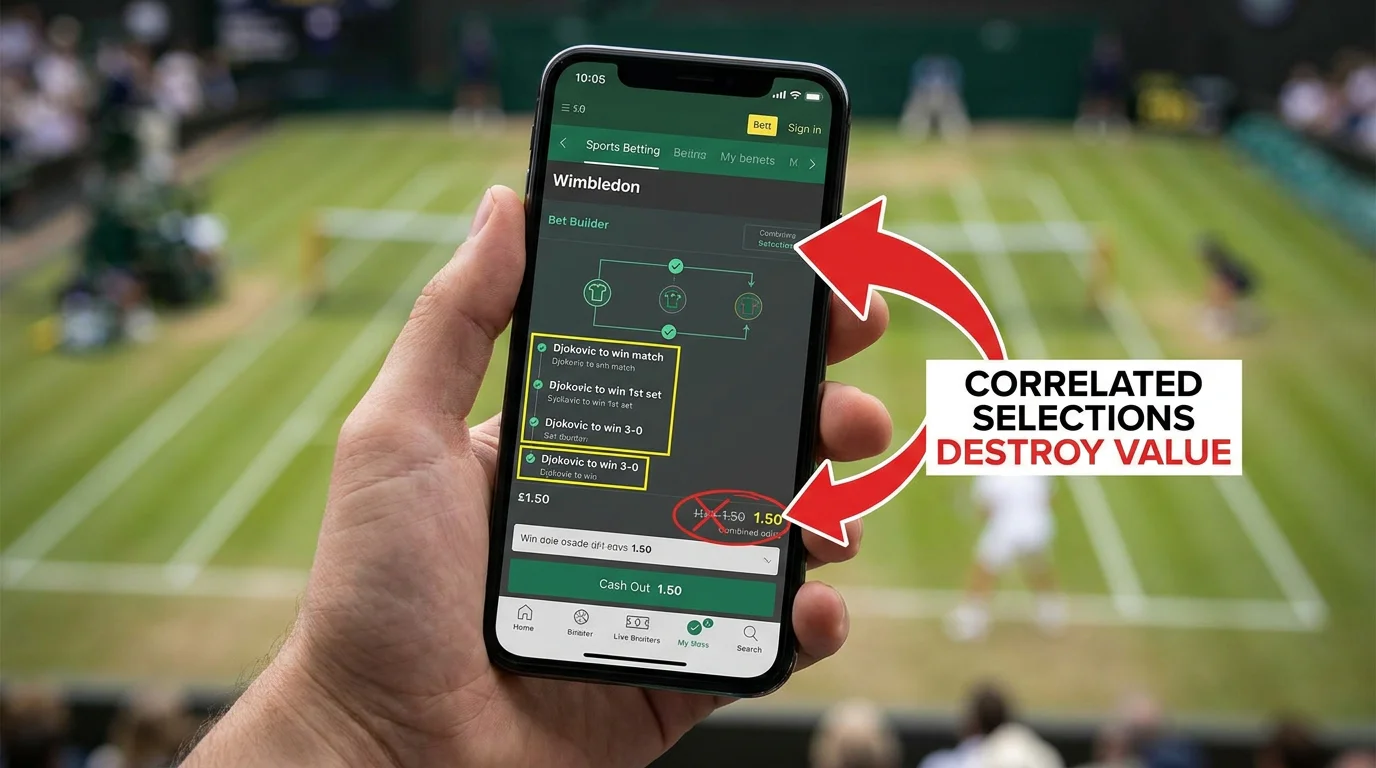
The classic poor combination: “Player A to win” plus “Player A to win in straight sets” plus “Player A to hit over 15 aces in the match.” All three of these outcomes tend to occur together when Player A dominates the match. They are heavily positively correlated: when A is dominant, she wins, wins in straight sets, and hits many aces. The operator’s correlation adjustment on a three-way positive cluster like this can reduce the effective odds dramatically — you might expect 8/1 from multiplying individual odds, but receive 3/1 after the correlation penalty.
Similarly risky: combining “match to be decided in a tie-break” (or over a specific game total) with “Player A to win.” A match that goes to multiple tie-breaks is, by definition, tight — which means both players are competitive, which is correlated with the underdog winning. Backing the favourite to win AND for the match to be highly competitive creates a mild logical tension that the market prices as correlation against you.
The general rule: any Bet Builder legs that would all be more likely under the same match scenario — both driven by Player A dominating, or both requiring an exceptionally tight match — will carry an operator correlation adjustment that reduces the value below what the individual odds suggest. Spread your legs across different match scenarios, and the Bet Builder product delivers its best-value version.
A Worked Bet Builder Example on a Wimbledon Centre Court Match
Take a hypothetical Centre Court match: a top-four seed against an unseeded grass specialist. The pre-match market has the seed at 2/9 to win. You believe the match will be tight in set one — the unseeded player has a strong grass serve and will compete hard — but the seed’s overall quality will prevail in three or four sets.
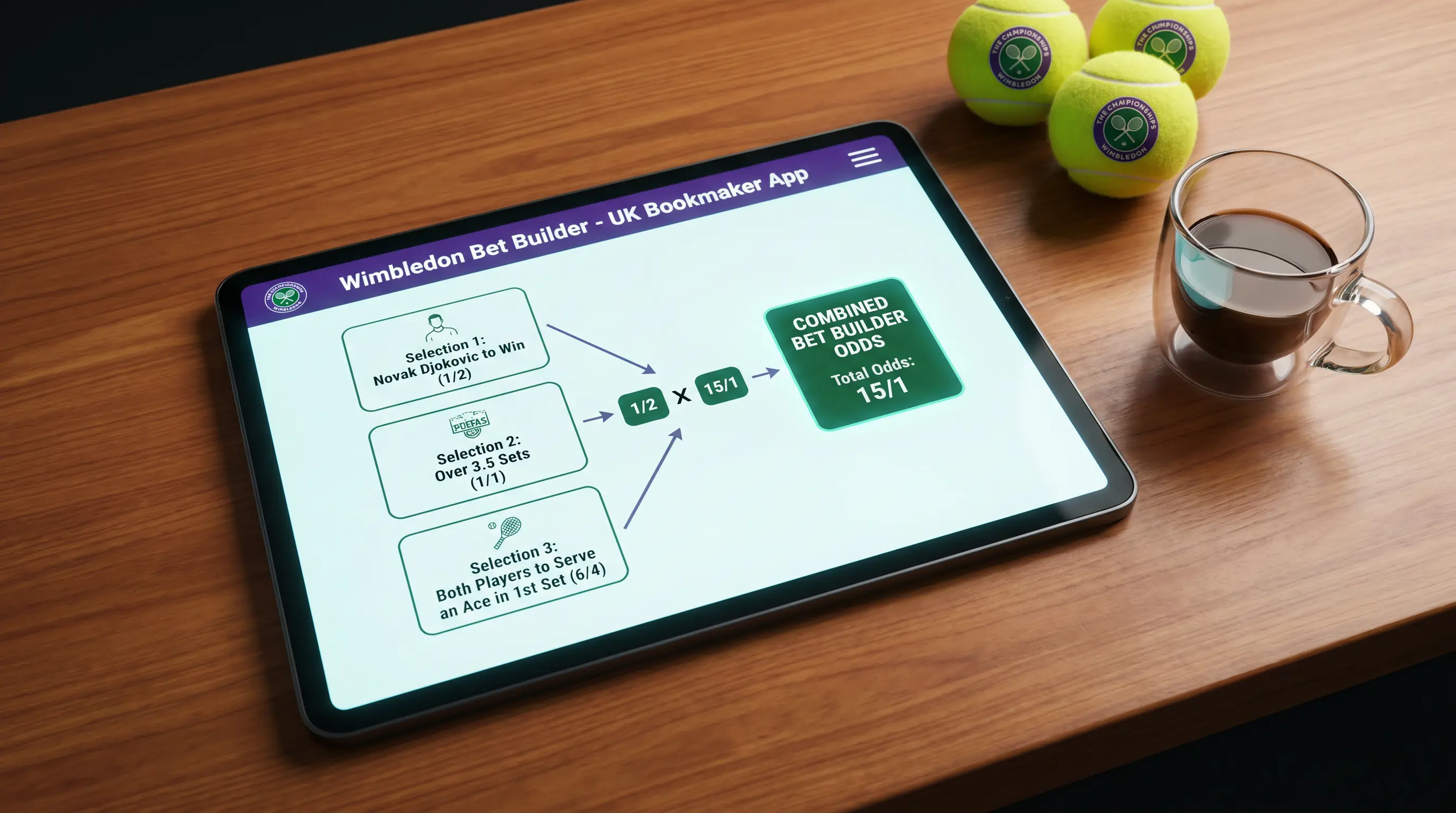

A well-structured Bet Builder might be: seed to win the match (leg 1), plus first set to go to a tie-break (leg 2), plus total match games over 32 (leg 3). The seed winning is your core conviction. The tie-break in set one reflects your belief that the unseeded player will be competitive early. The game total over 32 reflects a tight three or four-set match dynamic. These three legs are not tightly correlated: the seed can win while the first set is close and the match lasts a reasonable number of games. The operator’s correlation adjustment should be modest, and the combined return — if correctly priced — might be 5/2 or 3/1 on what would otherwise be a 2/9 win bet.
That is the value of a well-constructed Bet Builder: it transforms a low-margin win bet into a higher-returning position that rewards specific match knowledge, without excessive correlation cost. For the full market framework and how different market types compare in terms of overround and value potential, the resource is at Wimbledon betting markets explained.
Frequently Asked Questions
Articles



Written by the editors at bettingonwimbledontennis.
