
Head-to-Head Records at Wimbledon: How Much Do They Really Influence the Odds?
 Available in US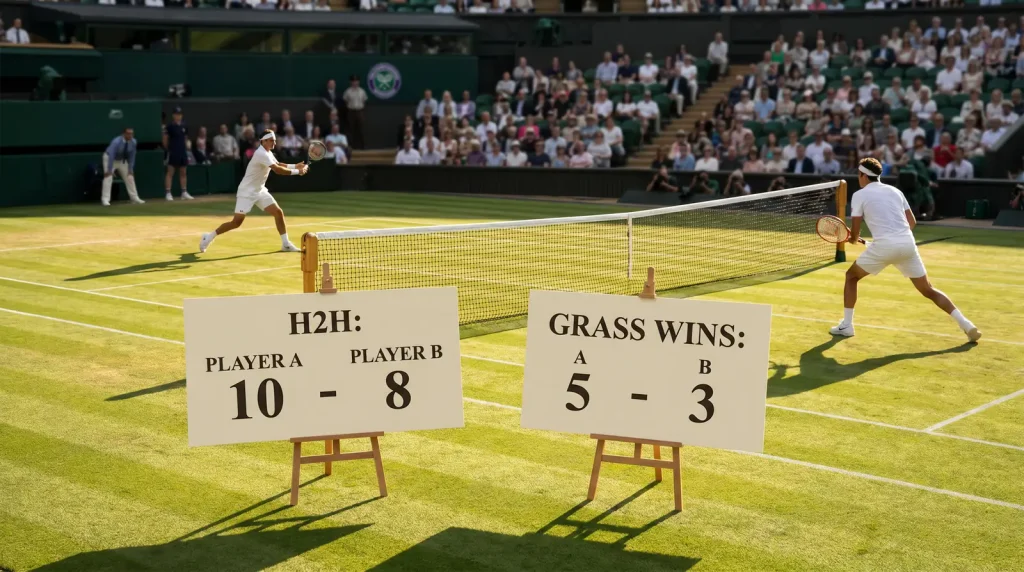
Head-to-head record is the fourth factor cited by UK bettors when assessing Wimbledon matches — cited by 10% of survey respondents, behind player form (37%), intuition (19%), and grass-court statistics (12%). That ranking makes intuitive sense: H2H is real information, but it is also the most frequently misapplied piece of data in tennis betting. An all-surface H2H of 8-2 in favour of Player A against Player B sounds decisive. On a close examination, if seven of those ten matches were played on clay or hard court, and the two grass matches split 1-1, the H2H record on the specific surface of Wimbledon is a coin flip — and the 8-2 headline figure has misled your analysis.
All-Surface vs. Grass H2H: Why the Distinction Matters for Wimbledon Bets
The distinction between all-surface and grass-specific H2H is not merely technical — it reflects a genuine difference in what the two datasets tell you. All-surface H2H reflects the aggregate competitive history between two players across all match conditions, surfaces, and match formats. This is a broad measure of who has the better overall game between the two players. Grass-specific H2H, by contrast, tells you specifically how these two players have competed on the one surface that generates the unique serving and movement conditions of SW19.
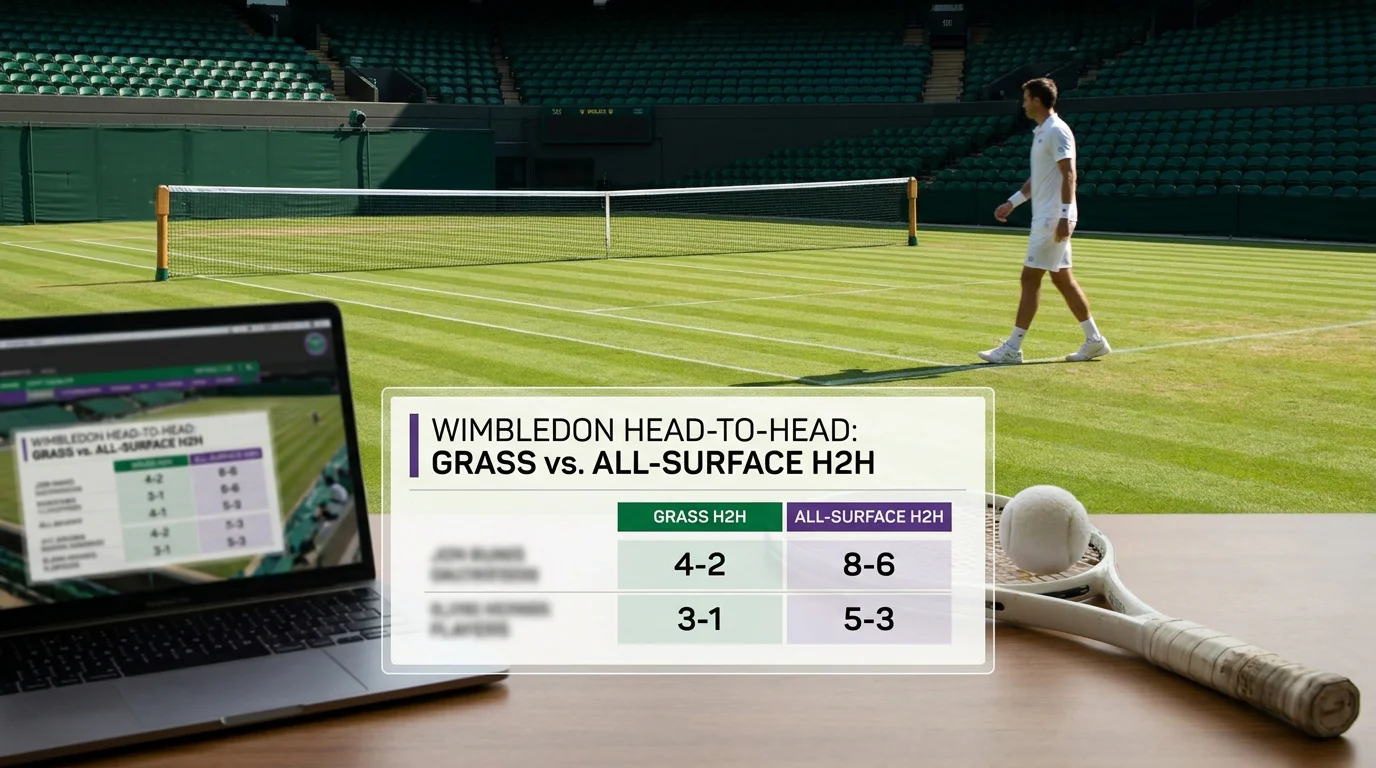
On clay, baseline-to-baseline rallies dominate most matches. Heavy topspin, slide-and-recover movement, and endurance are the decisive factors. A player with a dominant clay-court game will accumulate H2H wins on clay against opponents whose clay-specific skill set is weaker, regardless of how those opponents might perform on grass. If an all-surface H2H includes 12 clay-court matches and two grass-court matches, it is telling you 85% about clay-court dynamics and 15% about grass-court dynamics — which is exactly the wrong ratio for assessing a Wimbledon match.
The correct approach: filter all H2H data to grass-surface matches only. This will often dramatically reduce the sample size, sometimes to zero or one match, but the reduced sample at least reflects the right conditions. A grass H2H of 1-0 in favour of Player A against Player B — based on a single Wimbledon match three years ago — is more relevant to predicting the current Wimbledon outcome than an all-surface 7-2 that includes six clay matches and one hard court final.
Small Sample Size: When Grass H2H Records Are Statistically Meaningless
The grass season in professional tennis is the shortest of the three main surfaces: approximately six to eight weeks per year, including qualifying events. Most players play four to eight competitive grass-court matches per season. In a career that spans five to ten years at the top level, a player might play 40-80 competitive grass matches in total. The overlap with a specific opponent on grass — two players who happen to meet at Wimbledon or Queen’s Club — might generate two, three, or four data points over an entire career.
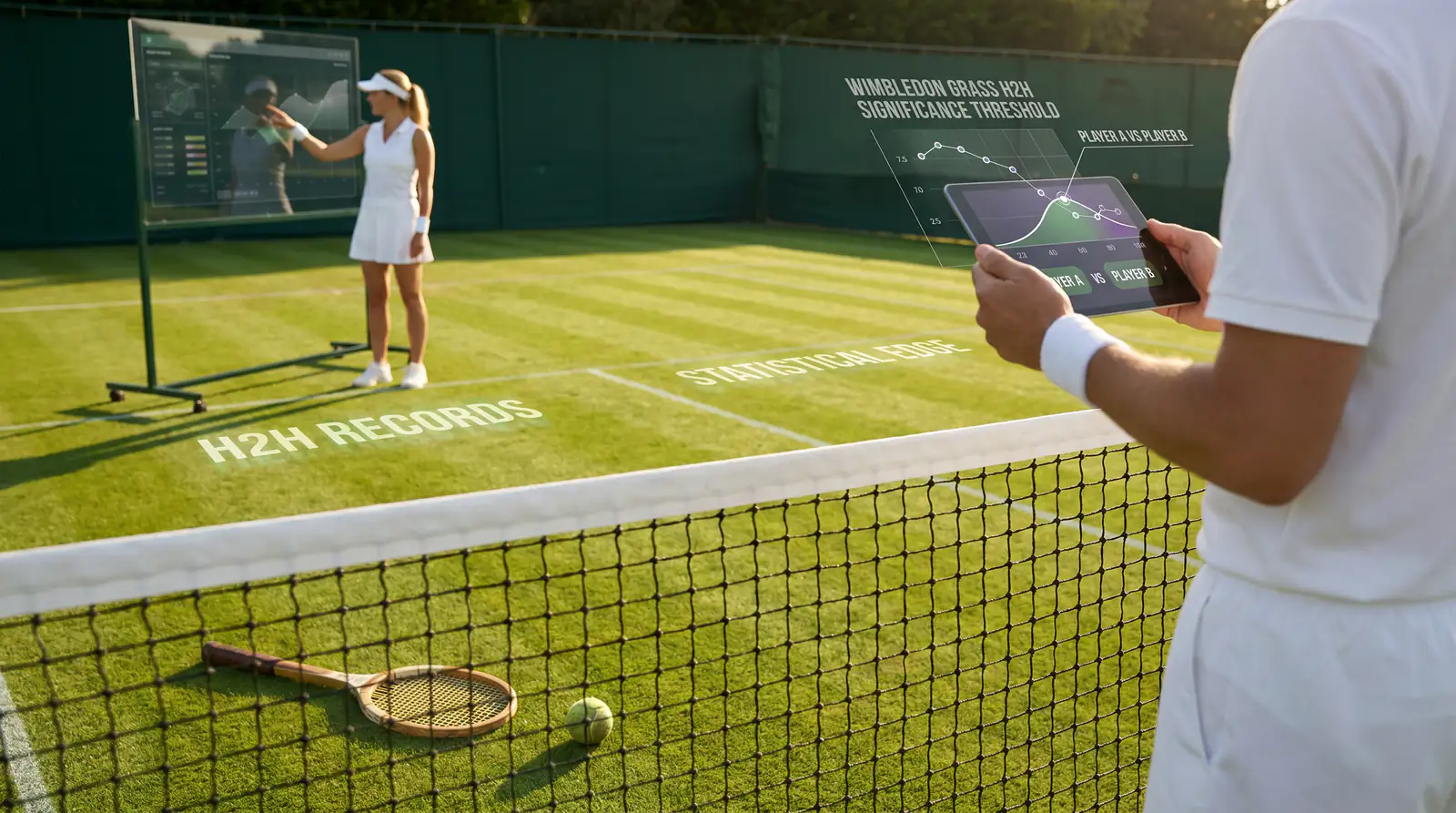
Two to four data points are not a statistically meaningful sample for predicting future outcomes. The variance across two to four matches is too high to derive reliable probability estimates. If Player A beat Player B in their only grass match three years ago, that result carries real information — but its confidence interval is enormous. The player who won might have been in exceptional form on the day; the loser might have been managing an injury; the conditions might have been atypical. Any one of these factors explains a single match result without implying anything systematic about the underlying grass-court ability comparison.
The statistical threshold for a grass H2H record to carry meaningful predictive weight is approximately eight or more matches on the surface. Below that threshold, the record tells you something about the history between these players — useful context — but should not independently drive the betting decision. Above that threshold — which is rare outside of long-running elite rivalries — the grass H2H record begins to provide genuinely predictive information about grass-specific competitive dynamics.
When Bookmakers Overweight H2H in Wimbledon Odds
Only 7% of UK bettors follow tennis throughout the year — the market is dominated by seasonal participants during the Grand Slams. Seasonal bettors without deep tennis knowledge naturally reach for the most easily available data when assessing Wimbledon matches, and H2H records are among the most prominently displayed statistics on pre-match pages at every major UK bookmaker. This creates a systematic bias: casual bettor money flows toward the player with the better overall H2H record, compressing their price, regardless of whether that record is grass-specific or all-surface.
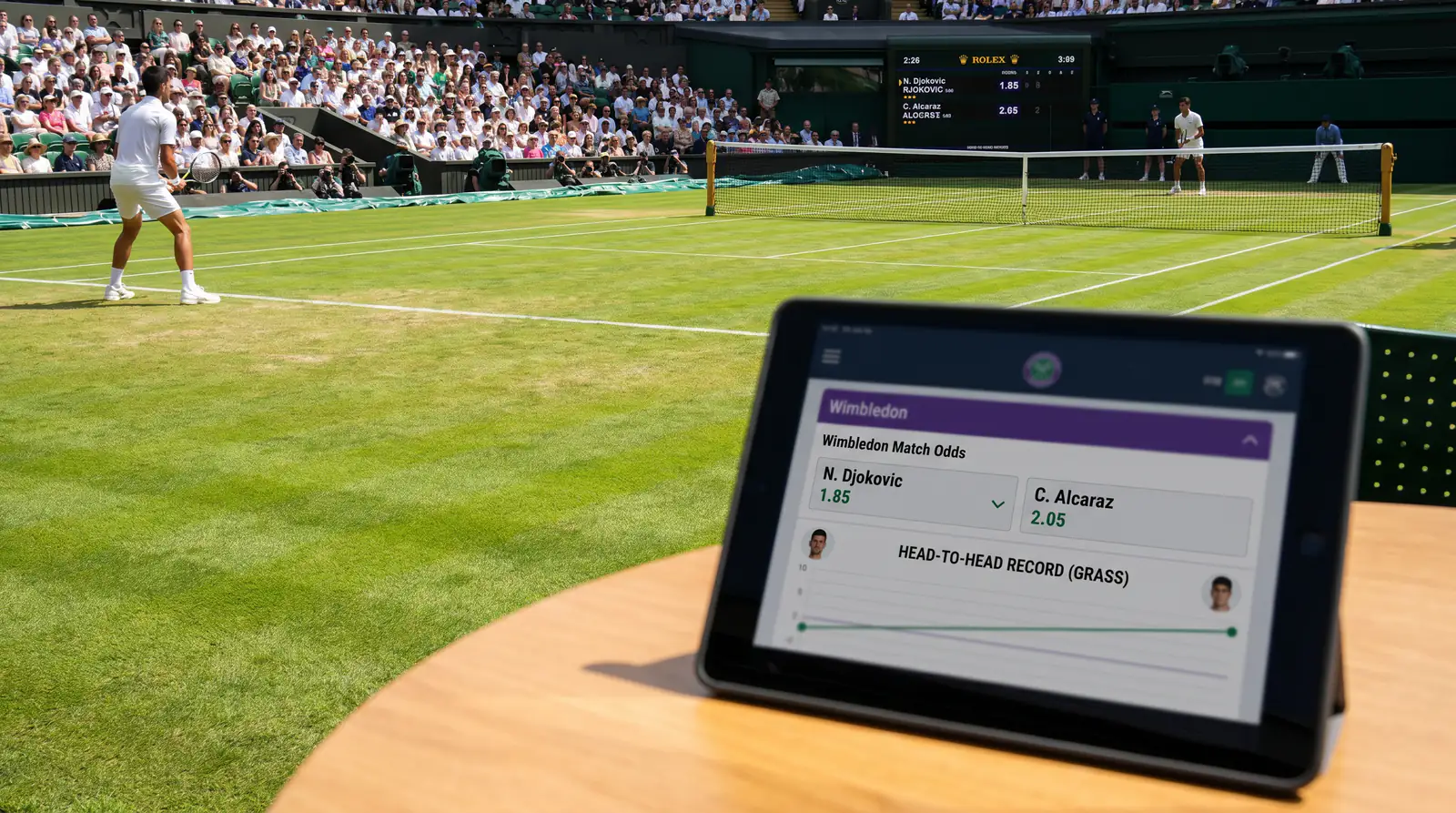
The operator trading teams, aware of this bias, sometimes shade their Wimbledon prices in the direction of the H2H leader to capture the recreational money, then use sharp position limits to manage the risk from knowledgeable bettors who recognise the mispricing. The result is that in matches where the all-surface H2H points one way but the grass-specific record and current form point the other, there is frequently a value case for the side the narrative underweights.
The most clearly exploitable situation: a player with a poor all-surface H2H record against a specific opponent, but who has genuinely superior grass-court credentials, is consistently underpriced in the recreational-money-driven market. Finding these situations requires disaggregating the H2H record by surface — five minutes of work that most casual bettors skip. That five-minute difference is the edge.
A second exploitable scenario occurs at the draw announcement. When two players with a famous rivalry are drawn in the same quarter, the press immediately surfaces their all-time H2H record. If one player leads overall but the other has the better grass record, the narrative tends to favour the overall leader — and the market follows the narrative. Prices are set in the first 24-48 hours after the draw, before analysis settles, and this is often when the surface-specific mismatch between the narrative and the data is widest. Betting against the narrative in these scenarios, backed by thorough grass H2H analysis, has been one of the more consistent value sources I have found at Wimbledon over the years.
For the complete framework integrating H2H with form, grass statistics, draw position, and in-play dynamics as a complete Wimbledon betting approach, the analytical foundation is at grass court tennis betting strategy.


Frequently Asked Questions
Articles


Written by the editors at bettingonwimbledontennis.
