
Betting on Wimbledon Qualifying Rounds: The Under-Served Market UK Punters Miss
 Available in US
At Wimbledon 2026, even the player who loses in round one of the main draw earns £66,000. For a player ranked 180th in the world trying to qualify for that main draw through three rounds of grass-court qualifying, the financial stakes are significant — not the £66,000 which they have not yet reached, but the opportunity to compete for it. The qualifying event at Wimbledon runs the week before the main draw on the Aorangi courts, and it is one of the most underanalysed, underserviced, and potentially valuable betting markets in professional tennis. The lack of coverage is precisely the opportunity.
Only 7% of UK bettors wager on tennis throughout the year — the majority are seasonal, concentrating their activity around the Grand Slams. That seasonal concentration means qualifying markets are overlooked by the recreational bettors who typically comprise most of the money in the main draw markets. The consequence is wider spreads, less sharp pricing, and more exploitable mispricing for bettors willing to invest the analytical preparation the market demands.
Which UK Bookmakers Offer Wimbledon Qualifying Markets
Market availability for Wimbledon qualifying is significantly more limited than for the main draw. At most major UK UKGC-licensed bookmakers, qualifying round coverage is minimal or non-existent for match-by-match betting. The operators who do cover it — primarily the larger platforms with dedicated tennis trading teams — typically offer match betting and game handicap markets on selected qualifying matches, but not outright markets for the qualifying event itself.
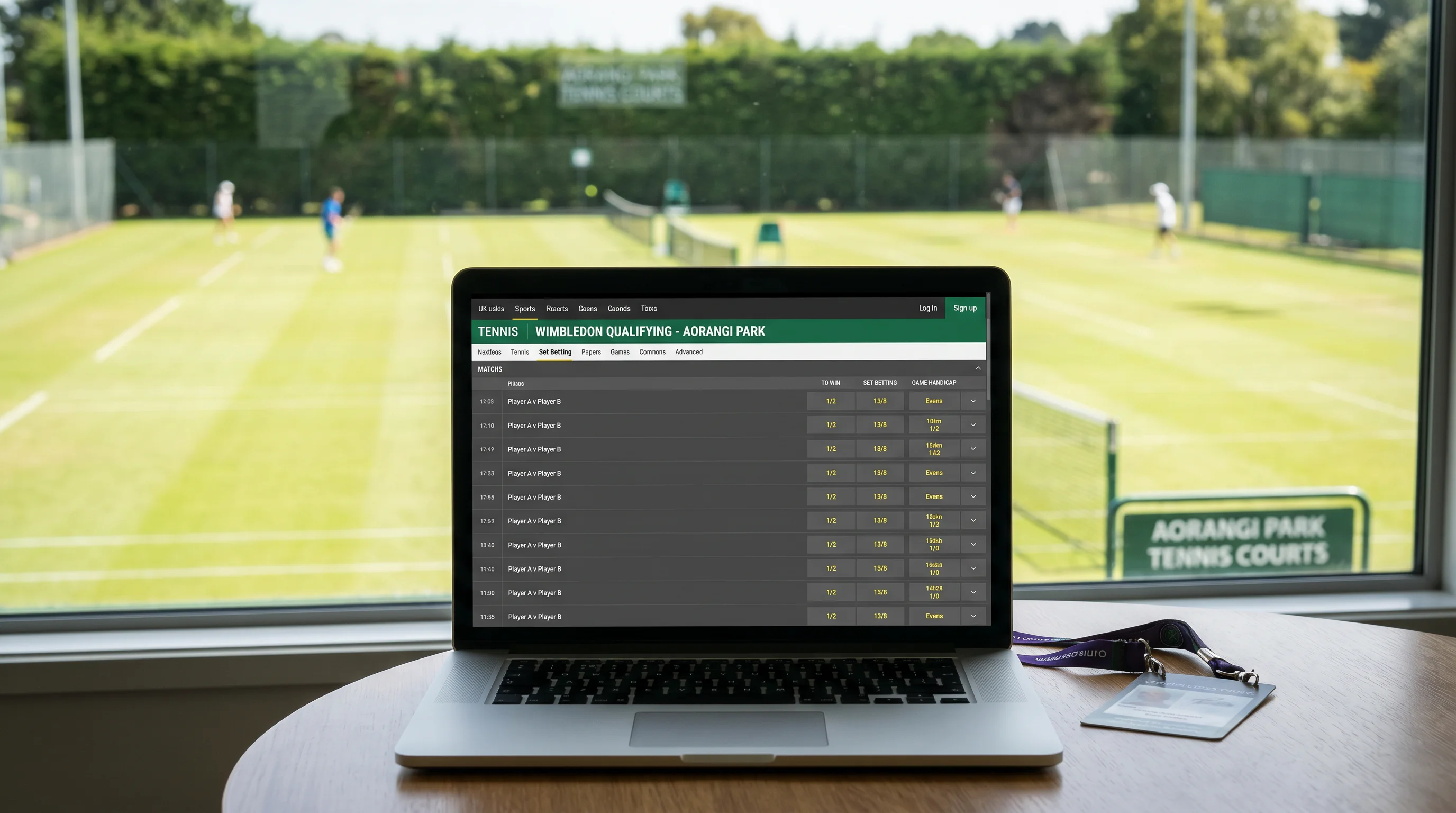
Betfair Exchange is again the most useful platform for qualifying round betting, because the exchange model allows bettors to set their own prices rather than accepting operator quotes. Liquidity in qualifying exchange markets is thin — £200 to £500 per market is common, compared to tens of thousands in main draw markets — but this thin liquidity also means a small, well-researched position can achieve excellent prices before the market prices in the available information.
The practical advice: check availability at your preferred operator in the week before Wimbledon begins. Do not assume the market is not there; operators add and remove markets regularly, and some will have qualifying coverage that does not appear in their standard navigation. Search directly for “Wimbledon qualifying” in the tennis section of the betting platform.
Assessing Form in the Wimbledon Qualifying Draw
The players competing in Wimbledon qualifying are typically ranked between 120th and 250th in the world on the ATP/WTA tour, plus a category of wild-card entries and former top players returning from injury. The information available to assess their grass-court form is genuinely limited compared to main draw players — they play fewer matches on the tour, receive less press coverage, and are not featured in the major analytics platforms that cover the main draw extensively.

The most reliable information sources I use for qualifying assessment are: ATP/WTA head-to-head records on grass specifically; results from the smaller grass-court Challenger events that run in the weeks before Wimbledon qualifying (the Surbiton Trophy and Nottingham are the most useful); and serve statistics from those events. A qualifier who won two tight three-set matches in Surbiton before heading to SW19 is in different grass form than one who lost in straight sets and has not played on grass since Wimbledon last year.
The qualifying draw at Wimbledon is structured to produce three rounds of matches, with grass conditions identical to the outer courts of the main venue. Players who have spent time practising on the Aorangi courts before qualifying begins — which is observable from practice schedule announcements — have an additional readiness advantage over those arriving cold. This information is available from tennis media and social channels but requires active monitoring in the days before qualifying begins.
Bet Types Available on Wimbledon Qualifying Rounds
Where qualifying markets exist, the most commonly available bet types are match betting (player A or player B to win the match), first set winner, and game handicap. Set betting and correct score are typically unavailable for qualifying matches at all but a small number of specialist platforms.

Only 7% of UK bettors follow tennis throughout the year, meaning the market for qualifying bets is dominated by the small number of enthusiasts who track the Challenger-level game closely. That concentration of knowledge creates a different dynamic than in the main draw, where recreational money provides a constant flow of bookmaker-friendly volume. In qualifying markets, the operators are more cautious — their pricing teams have less data and less market feedback — which paradoxically can produce better value for the rare bettor who has done the specific research required.
Game handicap betting on qualifying matches can be particularly interesting when one player has a demonstrably superior grass-court serve. On the Aorangi courts — which are slightly slower than the main venue courts — serving conditions still heavily favour the dominant server, and a handicap of -4.5 games at 10/11 or better can represent solid value in the right matchup.
The Lucky Loser Angle: Niche Value or Illusion?
The lucky loser system at Wimbledon — where players who lose in the final qualifying round are eligible to replace late withdrawals from the main draw — creates an interesting but difficult market to exploit. Lucky losers typically enter the main draw late, sometimes days before their first match, giving operators minimal time to price their matches accurately. In theory, this creates value. In practice, the challenges are significant.
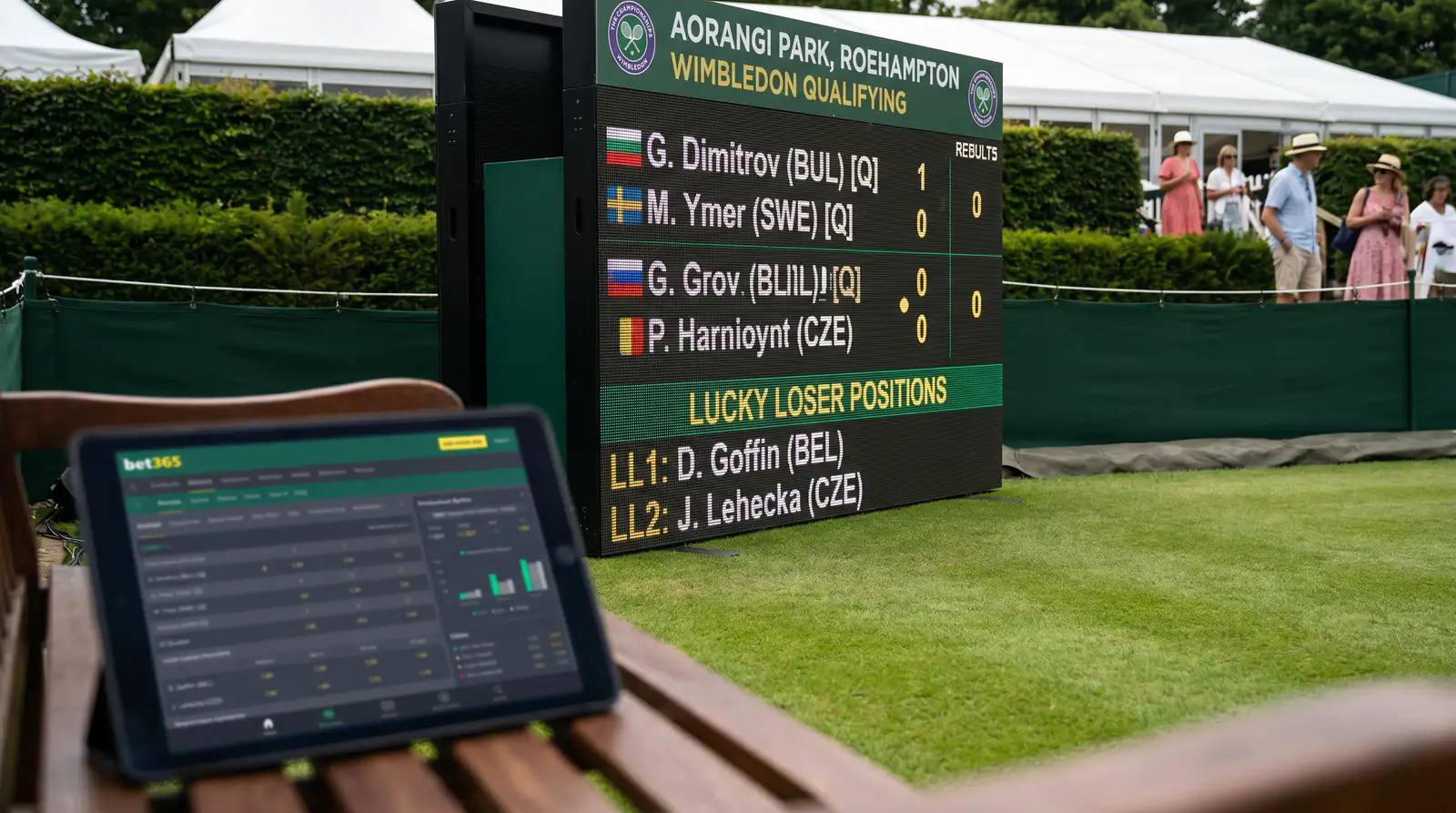
The main draw entry for a lucky loser typically comes with 12-24 hours notice, and the market price for their first match is often set quickly and imprecisely. A lucky loser facing a top-20 seed will be priced in the standard range for a qualifier against a seed — perhaps 5/1 or 6/1 — regardless of whether that specific lucky loser has particularly strong grass credentials that justify a shorter price. The analytical window is narrow, but a bettor who has tracked the qualifying draw closely and knows which lucky loser has been showing the best grass-specific form is in a better position to act on this information than the market is to price it.
The realistic assessment: lucky loser betting is a niche within a niche, accessible only to bettors who have followed the qualifying draw matches closely and can act quickly once main draw entry is confirmed. It is not a systematic strategy; it is an occasional opportunity for those already watching qualifying closely. For the broader context of how qualifying and early-round betting fits into the overall Wimbledon betting market, the full framework is at Wimbledon betting markets explained.

Frequently Asked Questions
Articles




Written by the editors at bettingonwimbledontennis.
