
Wimbledon Cash-Out Strategy: The Mathematics of When to Settle Early
 Available in US
Cash-out was, for years, the feature I used most during Wimbledon and understood least. I pressed the button because I was nervous, or because a match felt like it was sliding, or occasionally because I was heading out and wanted the position closed before I lost access to my phone. None of those are the right reasons to cash out. Cash-out is a mathematical decision — a comparison between the guaranteed amount offered and the expected value of holding your original bet — and framing it that way changes how you use it completely. In-play betting now accounts for over 62% of online sports betting volume, and cash-out decisions are among the most frequently faced choices for anyone betting actively during Wimbledon. Getting this right across a fortnight adds up.
How Wimbledon Cash-Out Works: Full, Partial and Auto Options
Cash-out allows you to settle a bet before its natural conclusion — before the match ends, or in the case of outright bets, before the tournament concludes. The operator calculates the cash-out value by applying the current in-play odds to your original stake, then deducting their margin. The result is the amount you receive if you accept.
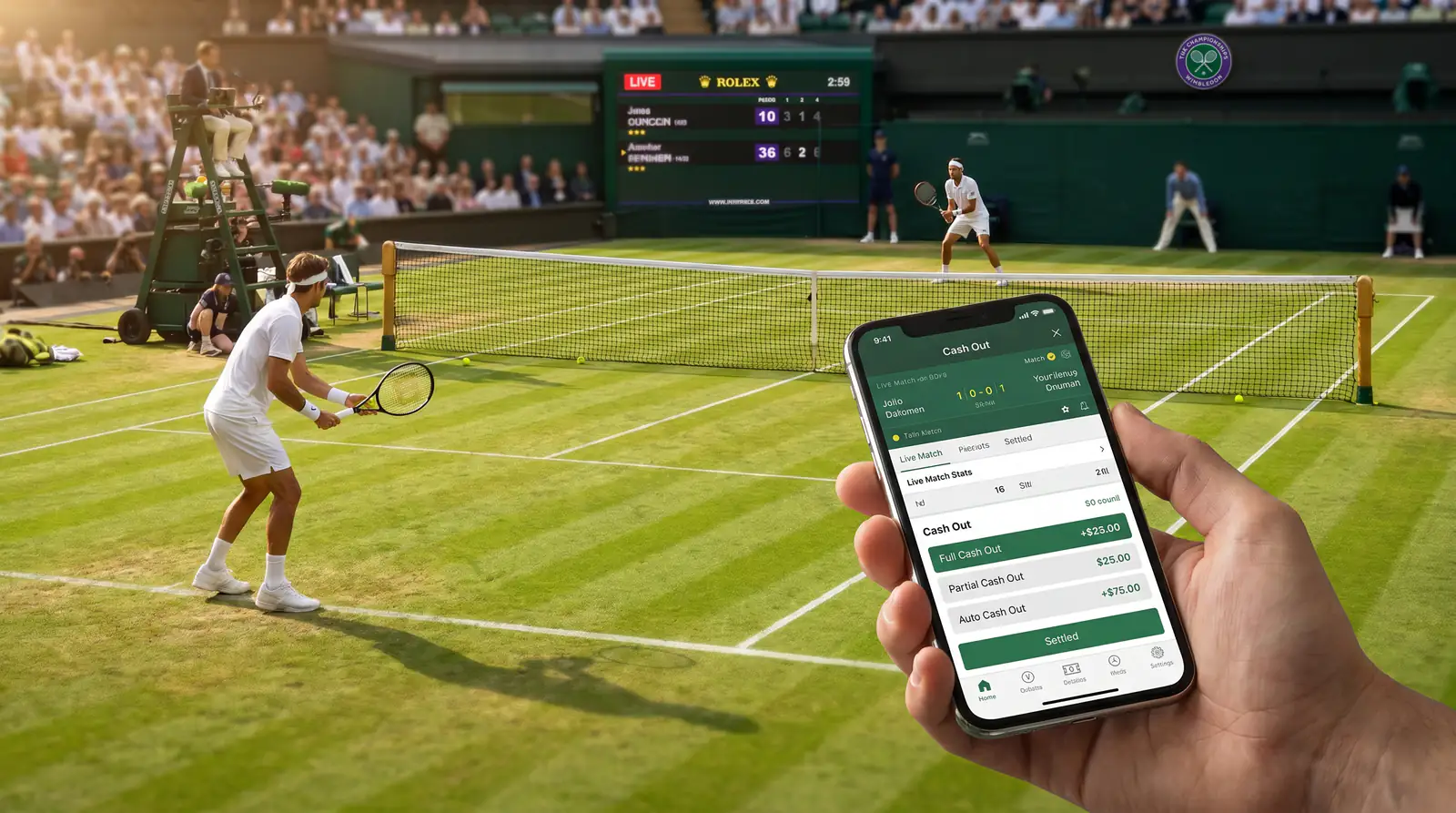
Full cash-out closes your entire position. You receive the offered amount and have no further stake in the outcome. If you backed a player to win a match at 2/1, and they are now leading two sets to one with the cash-out offer representing a profit of 60% of your maximum potential win, a full cash-out crystallises that 60% with certainty and eliminates the risk of a reversal.
Partial cash-out settles a proportion of your original stake, leaving the remainder active. If you full cash-out for 60% of your potential win, you receive that amount. If you partial cash-out 50% of your stake, you receive 50% of the cash-out value and retain 50% of your original bet. The retained portion continues to ride the outcome of the match or tournament. Partial cash-out is the most flexible tool because it allows you to lock in a guaranteed return while keeping some exposure to further upside — exactly the right approach when you are reasonably confident in the outcome but not sufficiently certain to close entirely.
Auto cash-out allows you to pre-set a trigger — a cash-out value at which the system automatically closes your bet. This is useful for protecting gains when you cannot monitor a match in real time. You set the auto cash-out at, say, £50 on a £10 bet, and if the in-play market reaches that value before you have a chance to review the bet, it executes automatically. The practical limitations of auto cash-out are discussed below.
The Maths Behind Partial Cash-Out at Wimbledon
The most useful framework for partial cash-out decisions is what I call the “guaranteed return floor” calculation. Before using partial cash-out, decide what your minimum acceptable outcome is from the original bet. On a £20 stake with a potential return of £80, you might decide your floor is breaking even — getting your £20 back — or achieving a modest profit, say £30. Once you have a floor in mind, partial cash-out becomes a tool for guaranteeing that floor while retaining some upside.
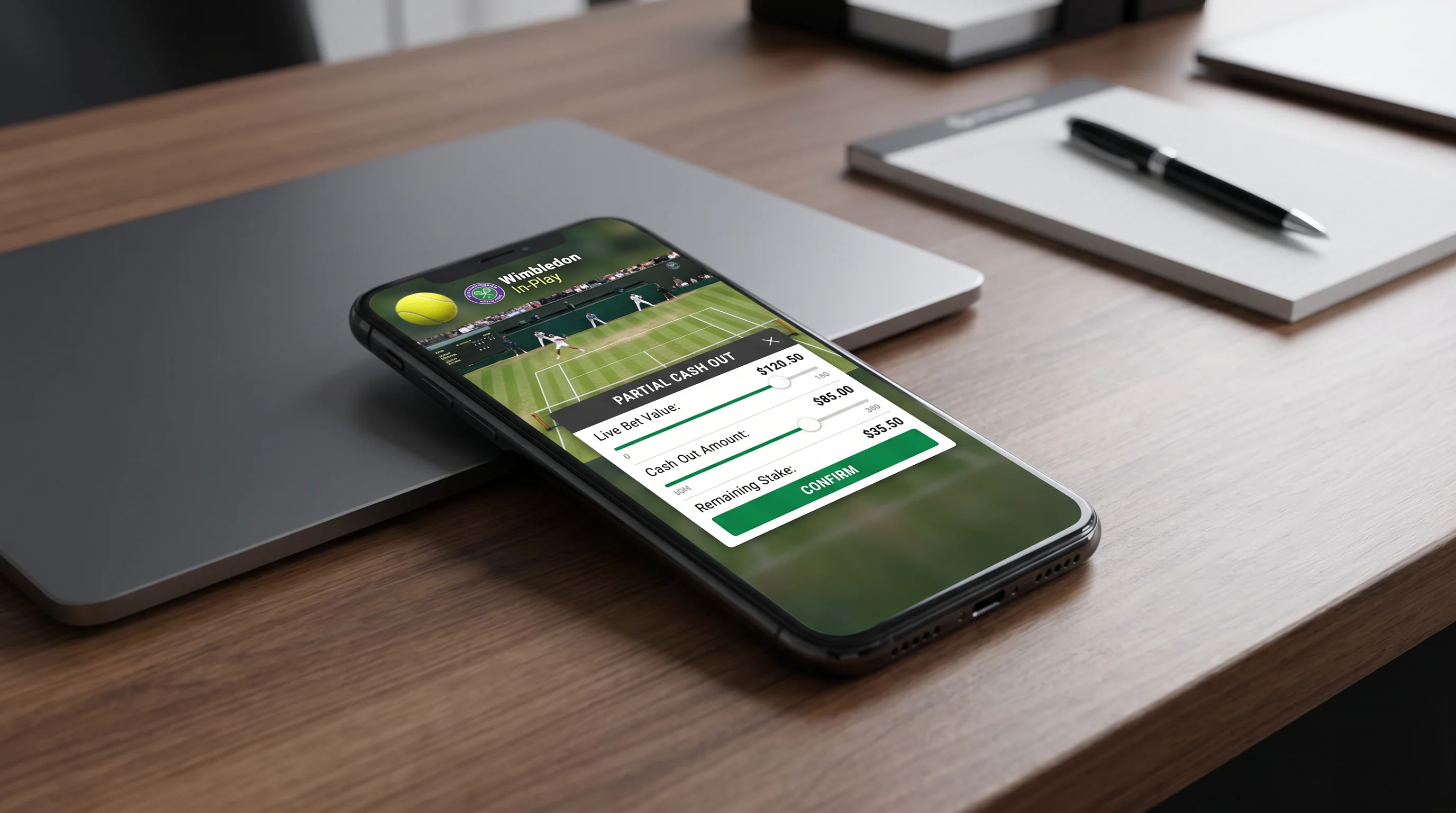
Here is a worked example. You bet £20 on a player at 3/1 (potential return £80 including stake). They are one set up and in the second set, and the cash-out offer is £48. You could full cash-out for £48 — a profit of £28 — or you could partial cash-out 50% of the position. Partial cash-out at 50% on a £48 offer means you receive £24 and retain a half-stake bet. If your player wins, you receive roughly £40 on the remaining half-stake (the exact amount depends on the operator’s calculation method). If they lose, you keep the £24 from the partial cash-out.
The partial cash-out at 50% therefore guarantees £24 (a £4 profit on the original £20) while preserving the possibility of an additional £40 return if the player wins. The floor has been guaranteed; the ceiling remains partially open. This is almost always a better outcome structure than full cash-out at a moment of significant uncertainty, because it respects both the risk you feel in the moment and the potential value remaining in the original bet.
For ante-post outright bets — which represent the largest individual bets many punters place on Wimbledon — partial cash-out is particularly powerful in the later stages of the tournament. If a player you backed ante-post at 10/1 reaches the semi-final, they are typically priced at approximately 2/1 to win the title at that stage. Cash-out offers at this point may be substantial. Partial cash-out of 70% allows you to bank most of the profit while retaining meaningful exposure to a final result that would represent a very large payout. Typical Wimbledon betting stakes run from £5 to £50 for most UK punters — at these levels, a well-timed partial cash-out on an ante-post winner that reached the semi-final can represent a return many times the original stake, with zero remaining risk on the retained portion.
When Holding Your Wimbledon Bet Beats Cashing Out
The cases where holding your original bet is mathematically superior to cashing out are more common than the emotional experience of watching a Wimbledon match suggests.
The clearest case: when the cash-out value represents a significant discount to fair value. Operators apply margin to cash-out offers in the same way they apply margin to pre-match odds — the offered amount is consistently less than the fair mathematical value of your position. The discount varies by operator and market but typically runs at 3% to 8% of fair value. Over a full Wimbledon fortnight with multiple betting positions, accepting cash-out offers that are 5% below fair value at every opportunity is the equivalent of paying a substantial additional tax on your overall betting activity.
If your player leads two sets to love in a best-of-five match, the statistical probability of them winning from that position is approximately 95%. The fair cash-out value of a winning bet at this stage should represent approximately 95% of the potential win. If the offered amount is only 85%, you are being offered 10% below the position’s mathematical worth. Holding is the correct decision — not because you are certain of the outcome, but because the offered price does not adequately compensate for closing.
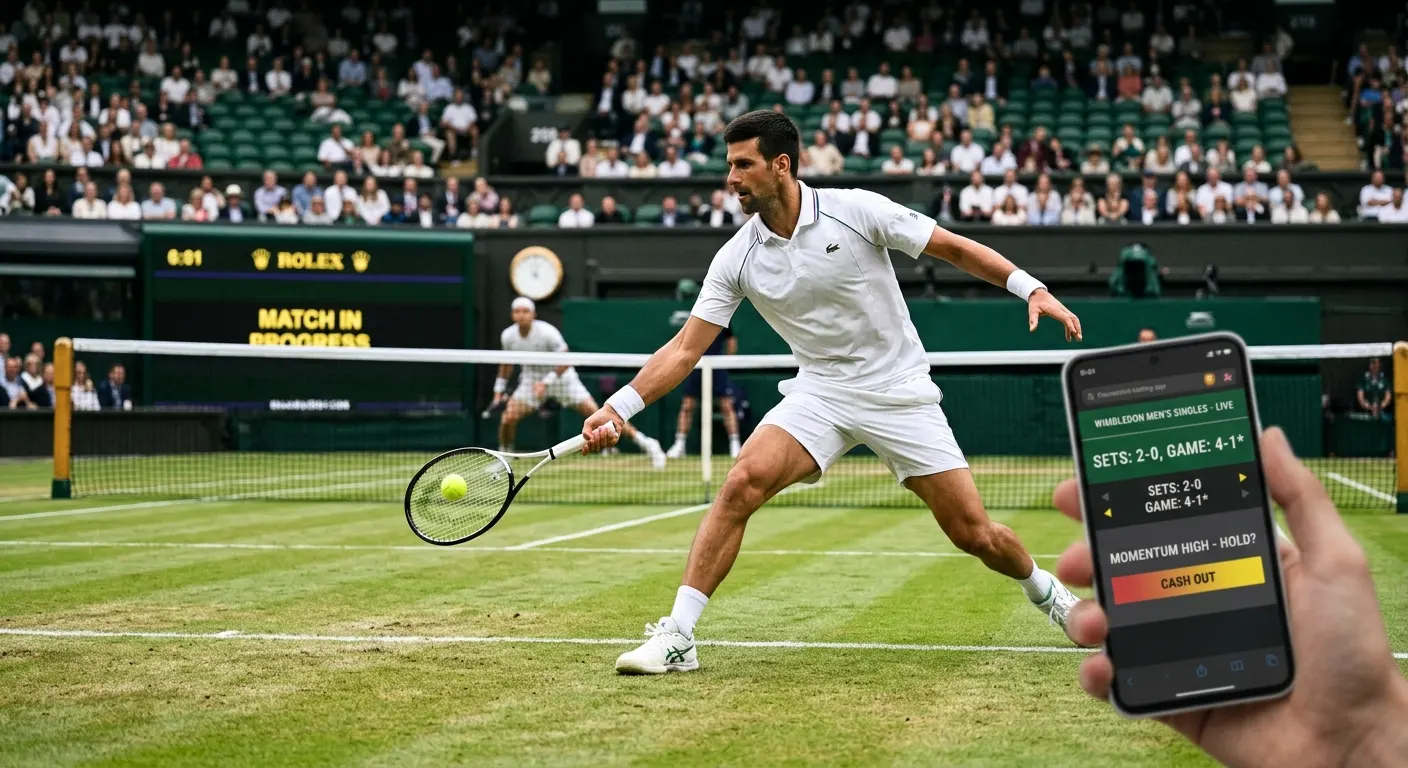
A second case: when you have information the market does not. This happens during Wimbledon matches more than at any other event. If you are watching live and observing that a player who appears to be struggling in a mid-set break-of-serve situation is physically moving well and hitting clean, while the market has priced the momentum shift strongly, the cash-out offer may undervalue your position. Your direct visual assessment of the player’s actual state — as opposed to the score-based momentum calculation the market is using — can identify moments where holding is superior to the algorithmically-derived cash-out value.
Auto Cash-Out: Is It Right for Wimbledon Bets?
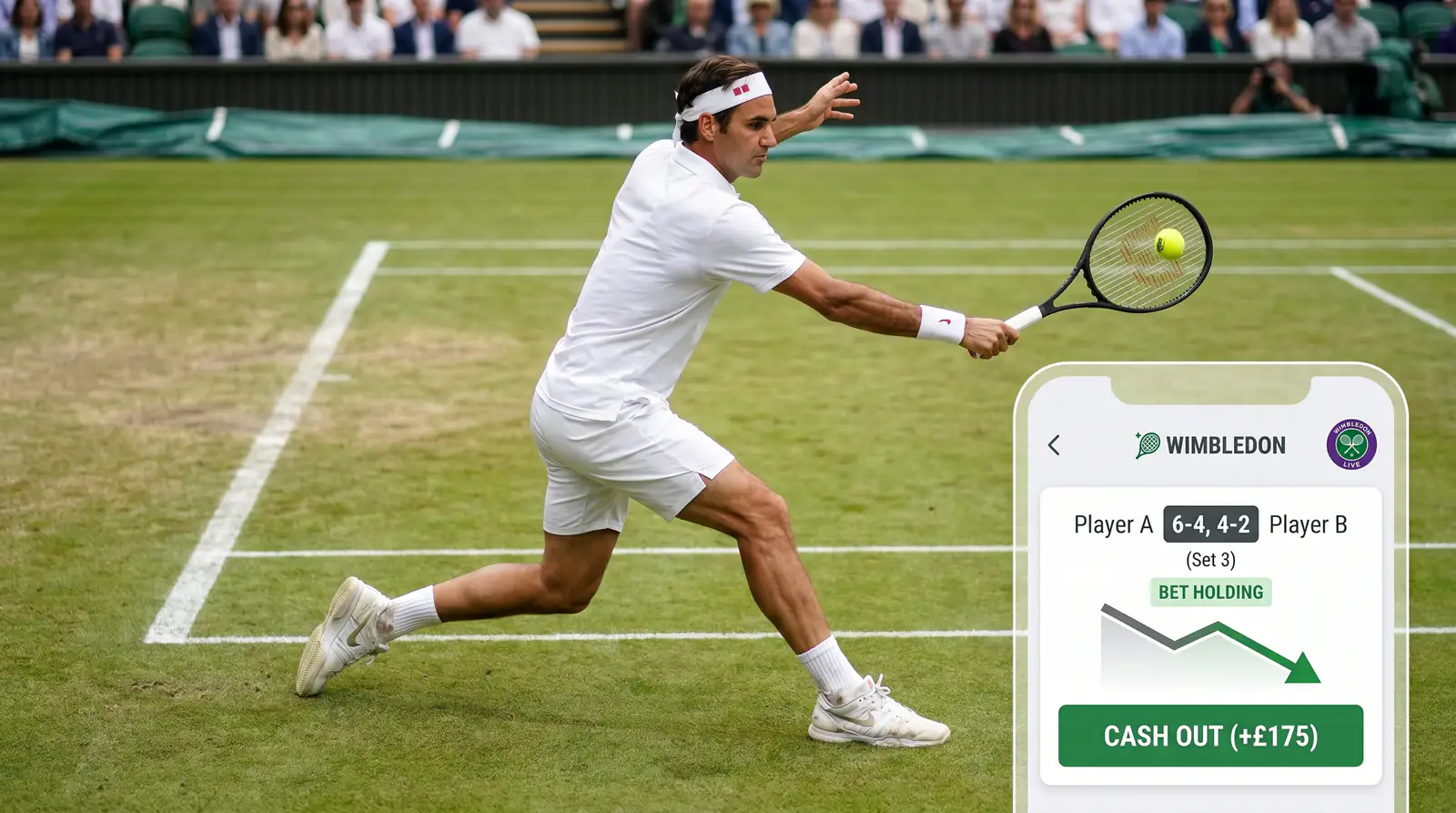
Auto cash-out solves a real problem: you cannot always monitor a live bet throughout a long Wimbledon match. Enabling auto cash-out at a profitable threshold protects gains when you are not watching. In that narrow application, it is a sensible tool.
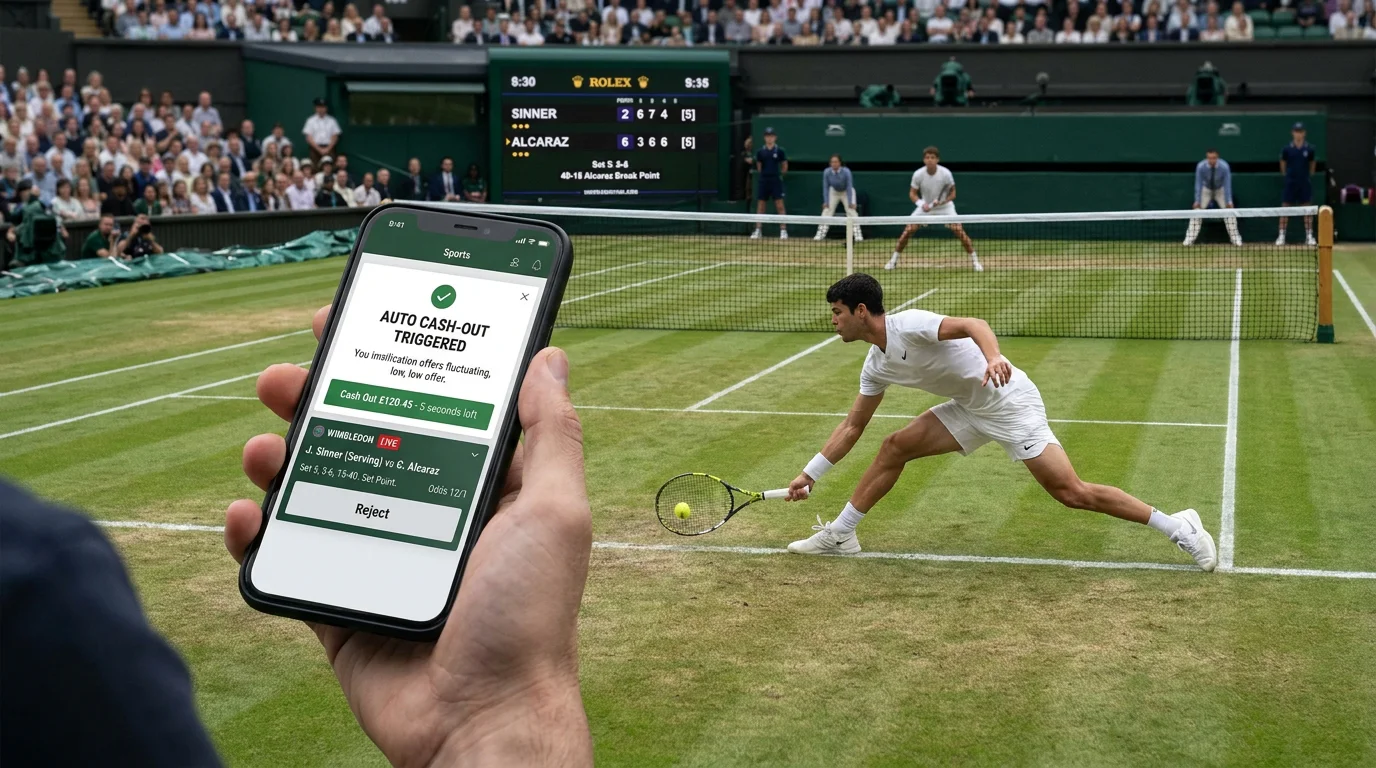
The limitations are specific to Wimbledon. Tennis matches have momentum swings that produce sharp cash-out value fluctuations. A player who is briefly broken in a set may trigger an auto cash-out at a lower value during the temporary market dip, even though the overall match trajectory favours them heavily. A rain delay that pauses play can temporarily distort in-play pricing in ways that cause auto cash-outs to execute at poor values. These are mechanical risks that are less prevalent in a single-score sport like football, where momentum reads more linearly.
My approach to auto cash-out on Wimbledon bets is conservative: I use it only on outright or ante-post positions where I will not be available to monitor the later stages of the tournament, and I set the trigger at a value high enough that I would be genuinely satisfied with the result rather than merely relieved by it. On live match bets, I prefer manual decisions because the dynamic nature of a Wimbledon match rewards real-time observation over pre-set triggers. The full context for using live betting tools during the tournament is at Wimbledon in-play betting.
Articles



Written by the editors at bettingonwimbledontennis.
