
Wimbledon 2026 Women's Singles Odds: Betting an Historically Open Draw
 Available in US
Ask any experienced UK punter which Wimbledon outright market they find more interesting to analyse, and most of them will say the women’s draw without hesitation. Not because it is easier to predict — it emphatically is not — but because the pricing is structurally more exploitable. The men’s event consolidates value in a narrow group of grass specialists. The women’s draw disperses it. And the market, partly because it attracts less sharp money, is slower to update. Wimbledon’s market valuation sits at approximately $1.2 billion as the premier Grand Slam property, meaning the women’s singles outright attracts serious liquidity — but it still lags the men’s market in terms of trader sophistication at the majority of UK operators.
In nine years of analysing Wimbledon betting markets, the women’s draw has produced more sub-5% implied-probability winners than any other Slam. That statistic alone should tell you something about how to approach the outright market: not as a race to identify the likely winner, but as a search for the overpriced contender hiding somewhere in the second tier of the draw.
Why the Women’s Draw Produces More Surprises at SW19
The fundamental difference between the men’s and women’s Wimbledon results over the past decade is surface specificity. In the men’s event, the players at the very top of the ATP rankings tend to have the serve-and-volley attributes — or at least the serve dominance — that grass disproportionately rewards. The gap between a top-4 seed and a top-20 seed on grass is smaller than on clay, but the top-4 seeds still have structural advantages that show in results.
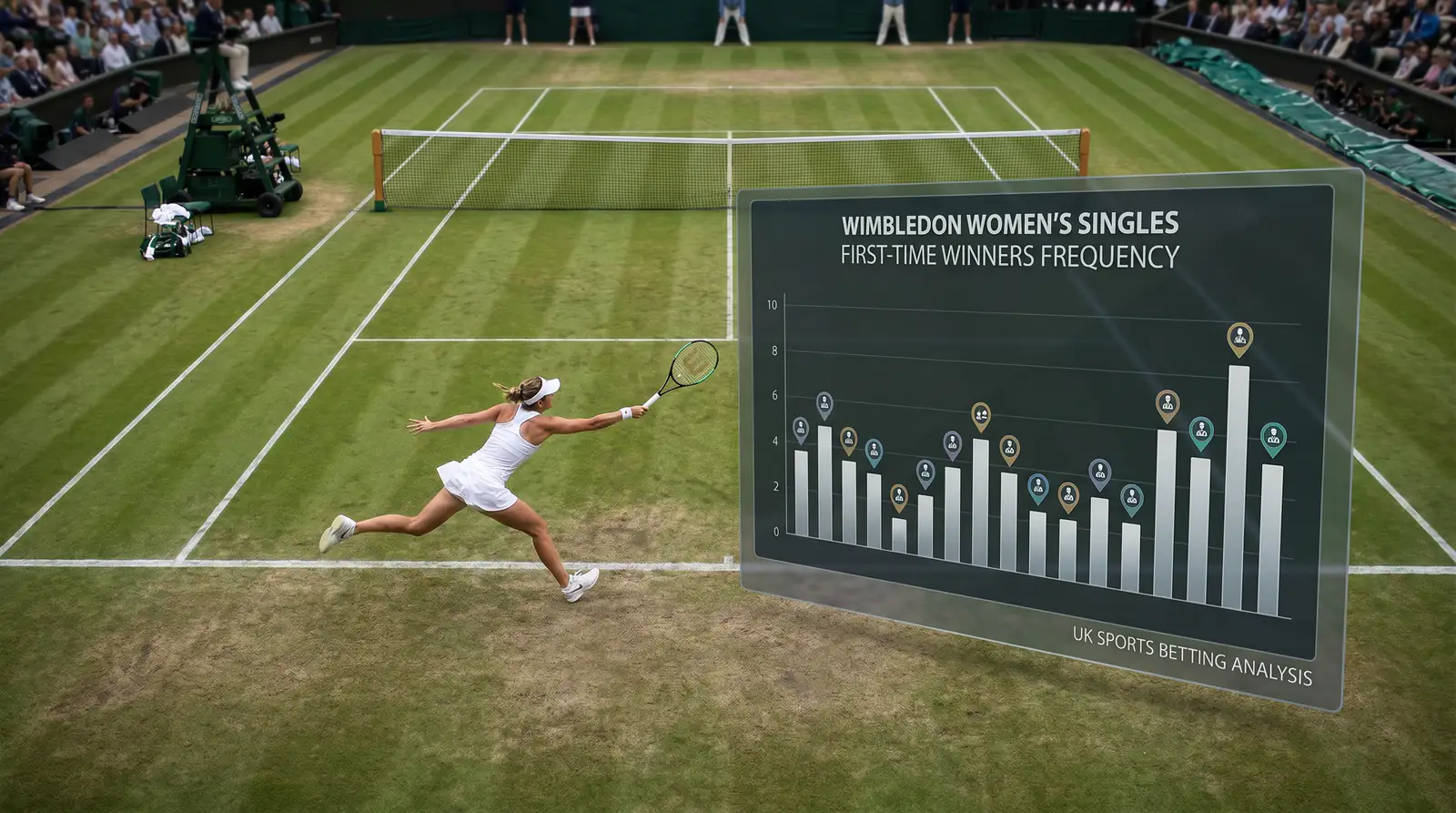
In the women’s game, the picture is different. The WTA tour does not produce the same concentration of genuine grass specialists at the top of the rankings. Many of the world’s top women built their games primarily on hard courts, and arrive at SW19 without the deep grass-specific experience the surface demands. Meanwhile, players ranked 15th to 35th in the world — some of whom have been developing their grass game for years — regularly defeat higher seeds because the ranking system does not fully capture grass-court ability. The draw is seeded on WTA rankings with minimal grass adjustment, which creates systematic mispricing that a careful analyst can exploit.
Between 2017 and 2024, four different women won the Wimbledon singles title. Two of those winners were ranked outside the top 10 at the time of the tournament. One reached the final having never previously reached a Grand Slam quarter-final. The men’s draw, over the same period, was won by players ranked first or second in the world in all but one instance.
First-Time Wimbledon Winners: What the Betting Record Shows
The most profitable framing for the women’s outright market is the “first-time winner” angle, and not in the way most recreational punters use it. The instinct is to look for young players making their Wimbledon debuts — which is usually the wrong search. First-time Wimbledon winners in the women’s draw are more commonly experienced grass players who have been knocking on the door for two or three years, have the right game for the surface, and arrive in a year when the top of the draw has an atypically easy path or when the outright favourite is carrying a minor physical concern.

Identifying these players requires looking at serve statistics, grass win percentage over the previous two seasons, and the draw structure in detail. A player with a grass win percentage of 70% or above over 18 months who is priced at 12/1 or longer is worth serious analysis, regardless of her WTA ranking. The ranking is the market’s lazy proxy for ability; the grass record is the actual data.
Surface Records to Check Before Betting Women’s Wimbledon
Player form is the number-one factor for 37% of UK bettors who have previously wagered on Wimbledon, but the form metric they are typically using — recent match wins across all surfaces — is too blunt for this specific market. The statistics I check before sizing a women’s Wimbledon outright position are, in order: grass win percentage in the last 18 months; first-serve points won on grass; break points saved per service game on grass; and the result at the Birmingham Classic, Eastbourne, or Bad Homburg — the main women’s warm-up events that provide the most recent grass-specific data.

The Birmingham Classic (known as the Rothesay Classic) deserves particular attention because it draws a high-quality field and often produces the best indicator of who is comfortable on early-summer grass. A player who wins or reaches the final there, and who has the broader grass record to support it, commands serious attention in the Wimbledon outright market at almost any price below 20/1.
One common mistake is over-indexing on the French Open result, which finishes just two weeks before Wimbledon qualifying begins. The surfaces are as different as any two Grand Slams — Roland Garros is slow, high-bouncing red clay; Wimbledon is the fastest grass surface in professional tennis. A player who peaks on clay in late May and arrives at Wimbledon fatigued from a deep French Open run is often a weaker Wimbledon candidate than her outright price implies.
Each-Way Opportunities in a Wide-Open Women’s Draw
Given the structural openness of the women’s draw, the each-way market offers genuine value in a way it rarely does in the men’s event. If a bookmaker is offering each-way terms of 1/4 odds for places one through four, and you have identified a player with realistic semi-final prospects at 16/1, the each-way return on a £10 stake is £10 at 4/1 (£50 total) if she reaches the final four — even if she does not win the title. That is a very different risk profile to backing her to win outright.

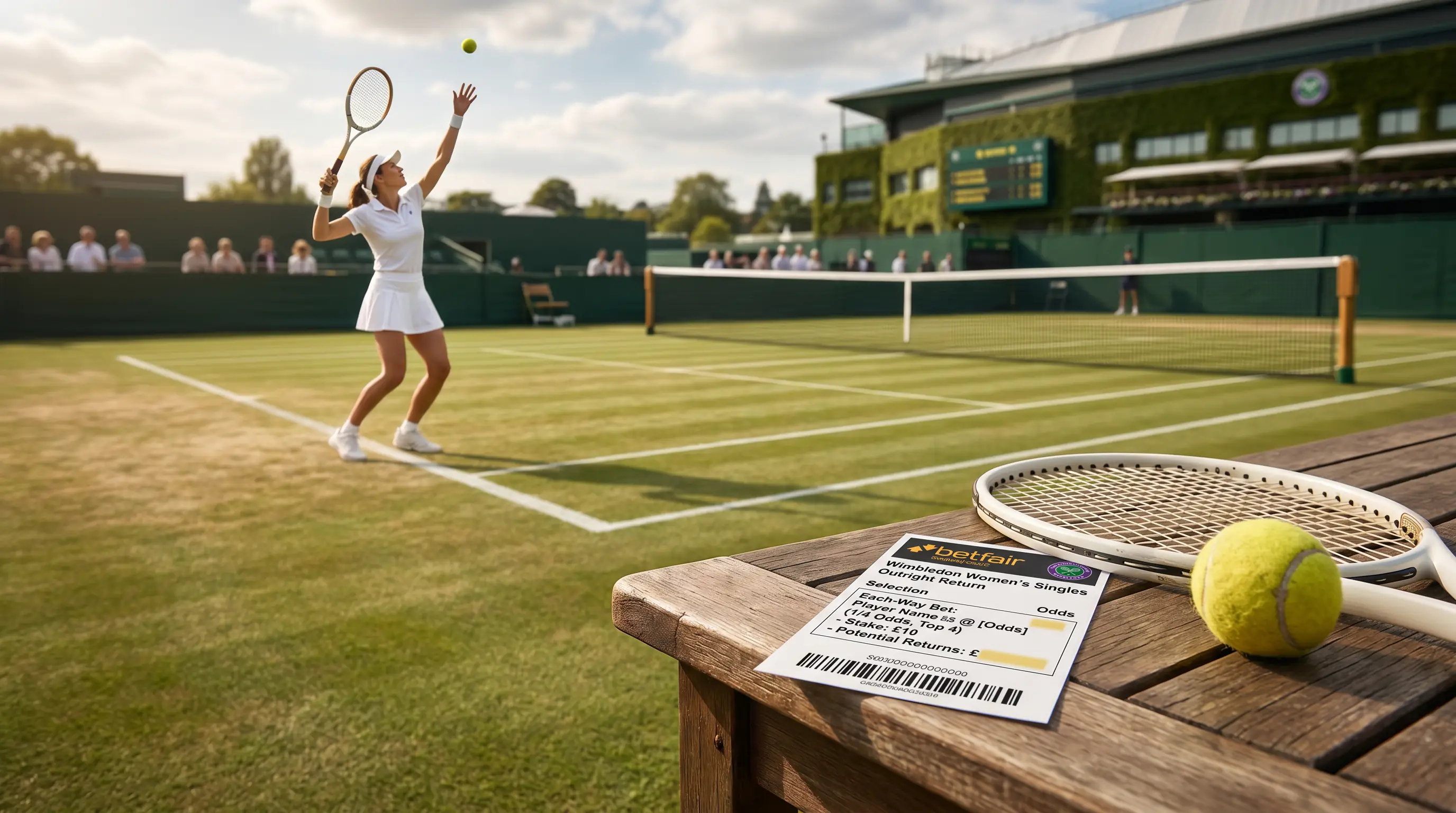
The key is confirming the place terms before committing. Operators vary significantly: some offer four places, others three, and the fraction ranges from 1/4 to 1/5. The difference matters. A player who genuinely has a 25% implied probability of reaching the semi-final at 16/1 represents strong each-way value at 1/4 for four places, but marginal value at 1/5 for three. The calculation takes two minutes; skipping it is one of the most common mistakes in the outright market.
For a full breakdown of how each-way terms work across different Wimbledon markets and which conditions generate the most value, see the dedicated guide to grass court tennis betting strategy.
Frequently Asked Questions
Articles



Created by the "bettingonwimbledontennis" editorial team.
